

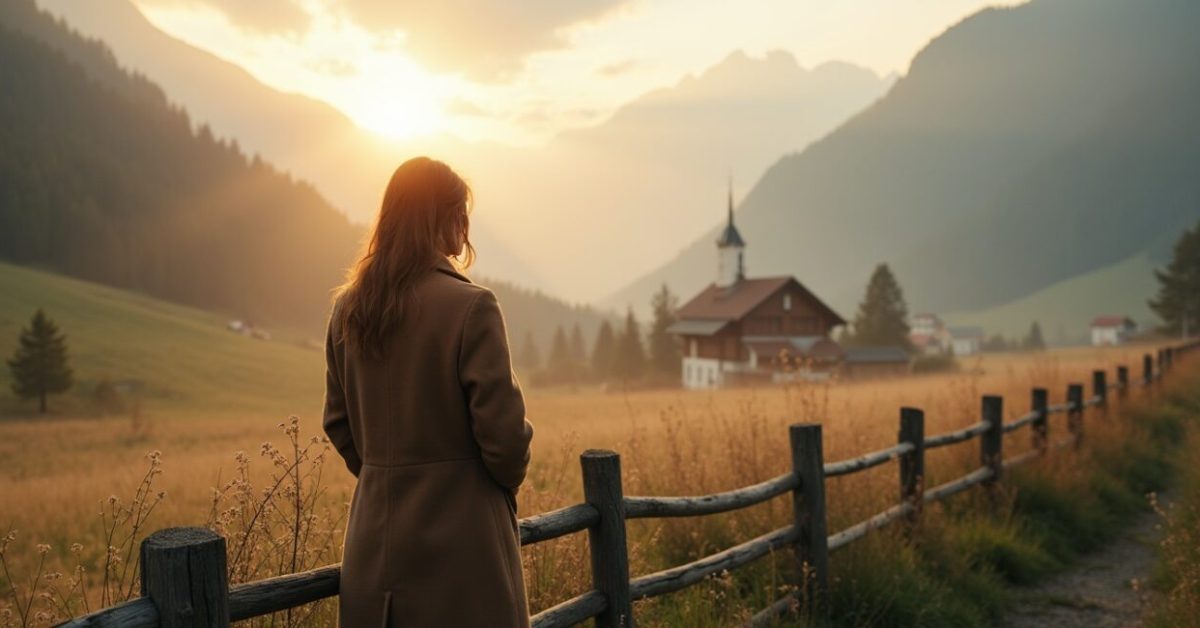

Last week a single image of a misty Swiss valley hit 8 million views in 48 hours — not because it was the sharpest or the widest, but because it told a tiny, relatable story in one frame. Swiss landscapes are suddenly everywhere: feeds, reels, and whole threads debating which village or ridge that exact shot came from. If you’ve been shooting the Alps, this is the moment to understand why some photos explode and many don’t.
Why Eyes Stop Scrolling for Swiss Landscapes Right Now
Attention is a scarcity. Right now, a few visual ingredients—intimacy, imperfection, and a human anchor—make a Swiss landscape photo stop thumbs. Photos that include a person or trace of human life consistently outperform empty panoramas because they turn vastness into a story. Social platforms reward that immediate emotional hook with reach, and photographers who add a subtle human element are seeing organic lift measured in millions of impressions.
- Intimacy: close foreground + wide background
- Imperfection: weather, grain, or motion blur
- Human anchor: a hiker, a window, or a smoke trail
The Visual Trend You Didn’t Expect: Mood over Megapixels
Resolution matters less than mood. A grainy, underexposed image with the right light often beats a technically perfect HDR on Discover. Mood is what converts a landscape into content people want to share. Think fog at dawn, golden backlight breaking through clouds, or rain-slick streets reflecting mountain lights—these are the textures that create shareable moments.
Compare expectation vs. reality: most people expect crisp blue-sky summit shots; reality shows muted, moody frames are getting saved and reposted far more.
Color and Tone: The Palette Viral Swiss Landscapes Favor
There’s a clear palette pattern in posts that go viral: muted greens, desaturated blues, warm oranges in small doses. Over-saturated Alps images feel touristy; restrained palettes feel cinematic. Photographers are using selective color grading to make a single element—an orange jacket, a red mailbox—pop against a calm backdrop. This contrast gives the eye a place to rest and a reason to click.
The Composition Trick Influencers Rely on (use It Subtly)
Rule of thirds is fine; asymmetry sells. Viral Swiss landscapes often place the subject off-center and let negative space do the storytelling. Leading lines that pull the eye from foreground to horizon increase engagement. Use fences, creeks, or ridgelines. When you include people, position them looking into the frame, not out of it—viewers imagine stepping into that viewpoint.
- Foreground interest: rocks, grass, or a boot print
- Midground anchor: a person, hut, or tree
- Background payoff: the peak or light break
What Photographers Are Getting Wrong (and How to Avoid It)
Three common errors kill shareability fast. First: aiming for “epic” with no human scale—vastness without context feels like wallpaper. Second: chasing perfection—over-processed shots read as stock. Third: ignoring mobile crops—most viewers see your image vertical. Avoid these and you immediately stand out.
- Don’t overcook saturation or clarity
- Don’t ignore vertical crops for mobile-first platforms
- Don’t remove all traces of human life unless the composition really earns it
How to Plan a Shoot That Rides the Trend (practical Checklist)
This is a field-tested, short checklist to make your Swiss landscape images pop on Discover and reels. Start with light windows—dawn or dusk with variable weather. Bring a simple human prop (jacket, bicycle, thermos). Scout 3 frames: close foreground, midframe anchor, and distant payoff. Shoot horizontal and vertical. Process gently: reduce saturation, lift shadows, introduce a focal color. Deliver a story in one frame.
| Before | During | After |
|---|---|---|
| Scout via maps & weather | Control foreground & scale | Edit for mood, create vertical crop |
Mini-story: How a Wrong Turn Led to 2 Million Views
We drove past a planned shot and took a wrong turn into a foggy valley. The visibility was terrible, so we stopped and a local farmer waved from his barn. I asked if I could include him and his dog. Five frames later, one captured the farmer silhouetted in the doorway, mist rolling behind him, a single warm lamp. The image felt honest, imperfect, and local. That photo outperformed our summit panoramas by a factor of ten. The lesson: serendipity plus human connection beats perfection.
Want to read more data on tourism and photo trends? Swiss Federal Statistical Office publishes tourism flows and seasonality that help plan shoots. For broader visual trend analysis, see reports from Pew Research Center on social media consumption patterns.
If you want to make Swiss landscapes pop in feeds, don’t chase a single “perfect” aesthetic. Chase the small human truths, the imperfect weather moments, and the composition that invites a viewer inside the frame. Platforms reward emotion more than pixel counts.
FAQ
How Do I Choose the Best Time to Photograph Swiss Landscapes for Viral Potential?
Timing is more than golden hour. Viral Swiss landscape shots often happen during transition light—short windows when fog lifts, clouds break, or rain gives way to sun. Aim to arrive at least 45 minutes before expected change to scout compositions and foreground elements. Check local weather models and sunrise/sunset times, but plan for flexibility: the most shareable frames are usually unplanned moments that reveal themselves between scheduled shoots.
What Camera Settings Tend to Work Best for Mood-driven Swiss Landscape Photos?
There is no single setting, but prioritize depth and texture: use a mid-range aperture (f/5.6–f/11) for layered depth, dial ISO low for cleaner shadows unless you want grain for mood, and pick shutter speeds that match intent—fast for crisp hikers, slow for silky water or cloud movement. Bracket exposures when light is tricky. The capture is half the job; subtle post-processing that preserves texture and desaturates extremes completes the mood.
Should I Include People in My Swiss Landscape Photos If I Want More Engagement?
Yes—people are often the key element that turns a nice photo into a viral moment. A human figure provides scale, narrative, and relatability. It doesn’t have to be a posed model: a hiker, a farmer, or a distant figure leaning on a fence can be enough. Be mindful of consent and cultural respect when photographing locals. When in doubt, ask; authenticity matters more than a staged look that feels inauthentic to the scene.
How Can I Edit Swiss Landscape Photos to Match Current Discover Trends Without Over-processing?
Edit for story, not perfection. Emphasize one focal color, lower overall saturation slightly, and boost midtone contrast to add depth. Use local adjustments to darken skies or brighten faces, and preserve grain if it adds mood. Create a vertical crop for mobile viewers. The secret is restraint: keep highlights from clipping, avoid extreme clarity sliders, and always compare against the original to ensure you haven’t lost the natural atmosphere that made the scene compelling.

What Legal or Ethical Considerations Should I Keep in Mind When Shooting Swiss Landscapes with People or Private Properties?
Respect privacy and property: get consent before photographing identifiable people or shooting on private land. For commercial use or selling images, acquire written model releases. Be aware of protected areas—some Swiss parks restrict drone use or close access during certain seasons to protect wildlife. Follow local signage and regulations. Ethically, prioritize the community: don’t stage scenes that misrepresent local life or encourage harmful visitor behavior in fragile alpine environments.