

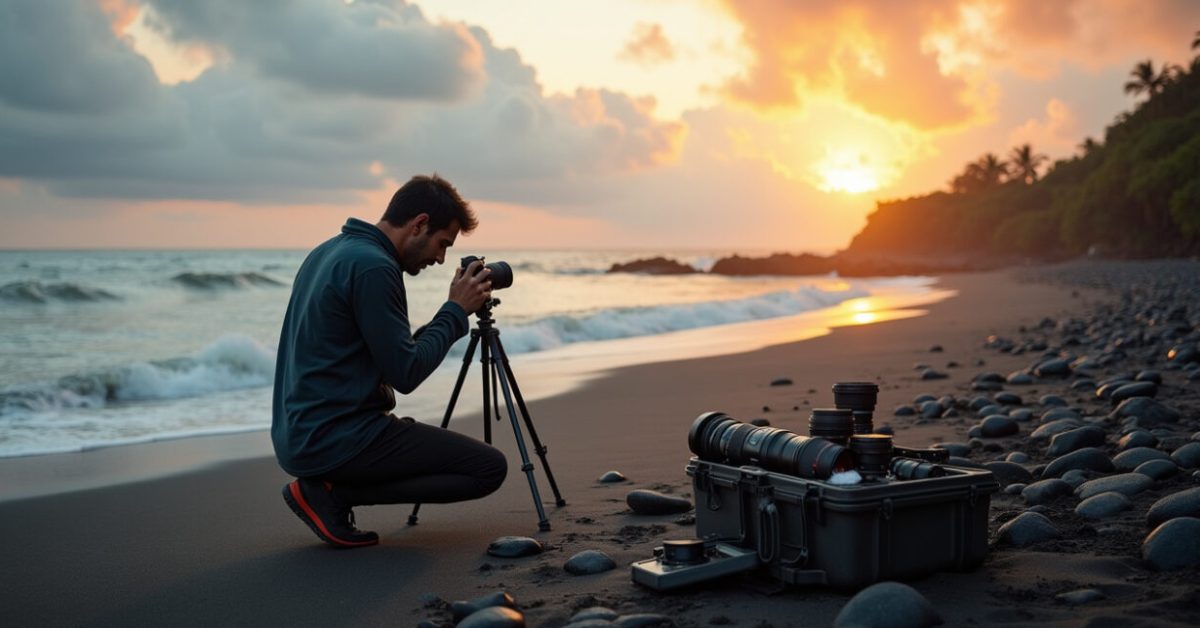

The light on a black-sand beach in Java can change in 30 seconds. One minute it’s milky gold, the next it’s flat gray — and the lens on your camera suddenly decides if the shot is a keeper or a regret. If you’re packing for Indonesian landscapes, the choice of glass matters more than one extra shirt. This guide cuts through marketing noise and shows which lenses to actually bring to beaches, volcanoes, forests and reefs — with real trade-offs and quick scenarios so you can travel lighter and shoot better.
Why a Single “do-it-all” Zoom Often Fails in Indonesia
The convenience of a superzoom is seductive — and often disappointing. A 24-200mm or 18-300mm looks like freedom on paper. In practice you trade sharpness, low-light speed and corner performance for reach. On a hazy volcano sunrise you’ll wish for a faster wide or a prime. In reef shoots the autofocus hunt and slow apertures ruin action. The truth: versatility is useful, but lens choices landscapes demand selecting for the environment, not the itinerary.
What to Pack for Beaches: Wide-angle Choices and Close-up Tricks
Bring a wide zoom and a short prime, not just one or the other. Beaches reward expansive sky and foreground detail. A 16–35mm (or 10–20mm on crop) covers dramatic seascapes and long exposures. Add a 35mm or 50mm prime for low-light golden hour portraits and sharp details in tide pools. For reefs you’ll need macro or a close-focusing telephoto. Remember: lens choices landscapes for beaches prioritize weather sealing and easy filters.
- Must-have: 16–35mm or 10–20mm (wide zoom)
- Useful: 35mm or 50mm prime (fast, compact)
- Optional: macro 90mm for tide pools

Volcanoes and High-contrast Scenes: Why Fast Primes Win
Volcano light is contrast-heavy and fast-changing; fast primes keep you ready. A 24mm f/1.4 or 35mm f/1.8 gives cleaner low-light shots than slower zooms. Sharpness at f/2.8–f/5.6 matters when you crop heavy. Telephoto reach (70–200mm) isolates craters or compresses ridgelines. When haze softens the view, a longer prime with good contrast saves the frame. In short, for Indonesian peaks, lens choices landscapes tilt toward speed and clarity over broad reach.
Forests and Waterfalls: Tilt the Kit Toward Stabilization and Mid-range Versatility
In forests, tripods are heavy and light matters more than maximum focal length. A 24–70mm f/2.8 or f/4 is the Swiss Army knife: tight enough for trunks, wide enough for clearings. Image stabilization becomes a feature, not a bonus, for hand-held long-exposures near waterfalls. Bring a small prime (35mm) for subject isolation and better low-light performance. For dense jungle light, the best lens choices landscapes are those that let you move fast and keep ISO low.
Reef Photography: The Oddball Rules for Underwater Lenses
Underwater, focal length behaves differently — you get closer, so choose accordingly. A wide-angle dome port + 16–35mm gives immersive reef shots. Macro with a 60–105mm is mandatory for critters the size of a thumbnail. Most on-land zooms don’t translate well underwater because water magnifies and reduces depth. If you plan snorkel or dive shoots, prioritize a compact system you can seal and protect. For reef work, think small, fast, and waterproof when considering lens choices landscapes.
Comparison That Surprises: Prime Vs Zoom in Real Scenarios
Expectation: zoom = convenience. Reality: primes often beat zooms in image quality and weight. On a week-long trip to Bali I swapped a 24–70mm for a 35mm and 85mm prime combo. Result: shots were sharper, low-light success doubled, and I carried less weight. The trade-off was more lens changes and a narrower immediate field. This before/after shows the real cost: a bit more fuss for way better images. When planning lens choices landscapes, remember this exact trade-off.
Common Mistakes Photographers Make (and What to Avoid)
People pack for “everything” and end up shooting nothing well. Typical errors: bringing only one heavy superzoom, ignoring stabilization, skipping weather sealing, and underestimating the need for a macro for reefs. Avoid these by choosing lenses for the dominant scenes you expect. If beaches and volcanoes are the focus, prioritize wide and fast primes. If reefs dominate, invest in macro and underwater housing. These are the errors that cost shots — and sleep.
Two useful, reliable sources for planning: check tidal and marine safety guidelines from trusted government sites when shooting coasts, and use academic or conservation resources for reef protection rules. For example, local marine park rules often appear on regional government pages, and coral research from universities details non-invasive approaches. See practical guidelines from the Indonesian Ministry of Maritime Affairs and Fisheries and research publications on coral reef photography to align safety with creativity.
Sources: Indonesia Ministry of Maritime Affairs and Fisheries and National Geographic.
Now pick two lenses and one safety rule. Travel lighter. Shoot longer. The photo will show you made the right choice.
What Lenses Should I Prioritize If I Can Bring Only Two for a Two-week Indonesia Trip?
If you can only bring two, choose a wide zoom (16–35mm or 10–20mm) and a versatile mid-tele prime (35mm or 50mm) or a 24–70mm depending on weight. The wide covers beaches, landscapes and interiors. The prime gives low-light speed for volcano dawns and sharper reef portraits above water. Together they cover most scenes with better image quality than a single superzoom. Pack a small weatherproof bag and a microfiber cloth to protect gear from salt and ash.
Is a Superzoom Like 18–300mm Usable for Indonesian Landscapes?
Yes, but expect compromises. Superzooms offer reach and fewer lens swaps, which helps on quick trips. However, they often have slower apertures and softer corners, especially at extremes. That matters at sunrise on a volcano or in low-light forest scenes. If you favor convenience and shoot mostly daytime seascapes, a superzoom can work. If you care about sharpness, low-light performance, and reef or night shots, favor primes or higher-quality zooms instead.
Do I Need Underwater Housing for Reef Photography or is a Waterproof Compact Enough?
It depends on your goals. For casual snorkeling, a high-quality waterproof compact can produce great results. But for serious reef photography—close-ups, wide-angle reefscapes, or macro critter work—dedicated underwater housing with proper ports is essential. Housings let you use full-frame or mirrorless lenses, control settings precisely, and pair with strobes. Always verify local marine regulations and ensure your setup is non-invasive to corals and wildlife.
How Important is Weather Sealing for Lenses in Indonesia?
Very important. Indonesia’s environments include salty beaches, volcanic ash, sudden rain, and humid forests. Weather-sealed lenses reduce the risk of corrosion and internal fogging. They don’t make gear waterproof, but they protect against moisture and dust ingress during sudden storms or windy ash. If you expect heavy exposure to those elements, prioritize at least one weather-sealed lens and a sealed camera body, plus silica gel packs and regular cleaning to keep optics clear and reliable.

What Accessories Matter Most for Landscape Lens Choices?
Prioritize a compact, sturdy tripod, polarizing and ND filters, and a microfiber cloth. A light travel tripod stabilizes long exposures at waterfalls and volcano views. Polarizers cut reflections on water and enhance skies; NDs let you smooth waves and clouds. A small lens cleaning kit and rain cover protect gear from ash and tropical downpours. Finally, modular protective cases for lenses and quick-access pouches for swaps make the difference between capturing the moment or missing it.