

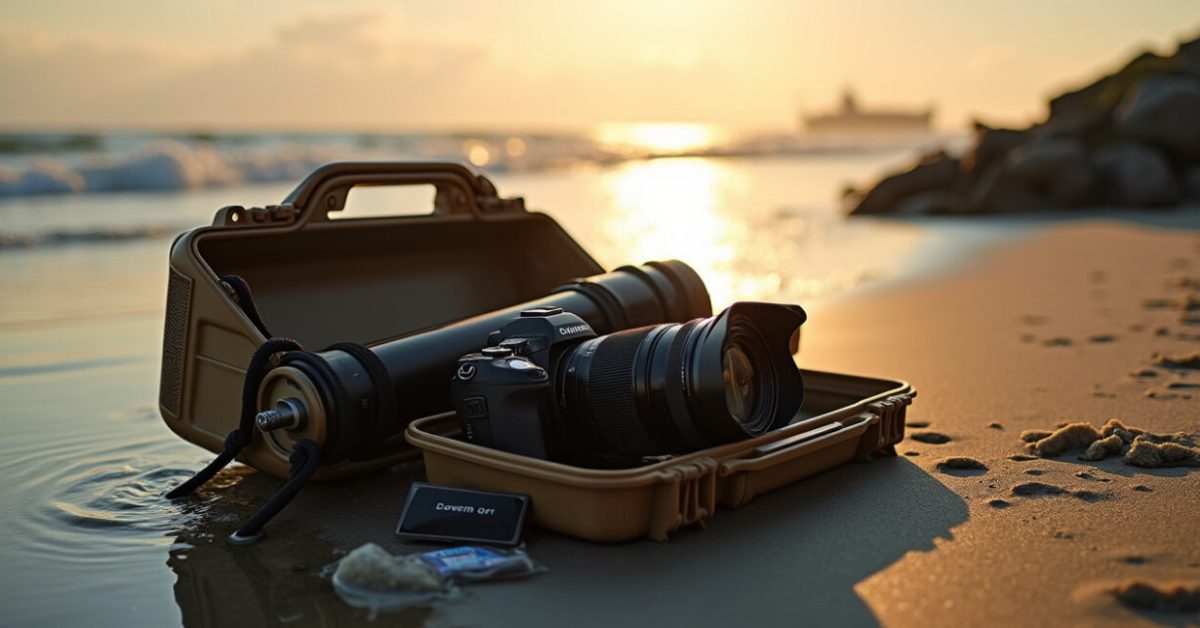

The tide is low, the light is golden, and your kit feels like a suitcase of regrets. On island shoots every gram and choice counts — that’s why island photo gear matters more than gearhead pride. In the next scroll you’ll get a sharp, nine-item checklist that actually changes images without turning your back into a luggage claim ticket.
Pack These Nine Essentials That Actually Change Your Shots
This is the checklist you’ll keep reusing:
- Mirrorless body (lightweight, weather-sealed)
- 24–70mm f/2.8 or 24–105mm f/4 (all-purpose, compact)
- 16–35mm wide zoom or 12–24mm ultrawide (landscapes)
- Prime 50mm or 35mm for low-light portraits
- Lightweight travel tripod (carbon fiber, quick-lock)
- Gimbal or compact stabilizer for video
- ND and polarizing filters (variable ND optional)
- Waterproof camera cover + silica gel packs
- Spare batteries, a fast charger, and a rugged SD card
Every item above earns its place: lenses for framing, stabilizers for motion, filters for mood, and protection so salt and sand don’t ruin the day. That’s island photo gear trimmed to results.
Why a Lightweight Mirrorless Body is Non-negotiable
On an island you walk more than on any studio shoot. A heavy DSLR kills patience and posture. A compact mirrorless body gives you more hours of shooting and less dead time staring at a sore shoulder. It also pairs with small lenses that still deliver pro-grade files. Bring one body and two lenses instead of three heavy bodies. You’ll be surprised how often a fast 24–70 and a wide zoom solve 90% of shots.

The Lens Combo That Handles Every Island Scenario
Expectation: You need a bag full of lenses. Reality: You need two or three that cover a lot. For island photo gear, a 24–70 (or 24–105) and a 16–35 (or 12–24) is the sweet spot. Add one fast prime for twilight portraits. This combo keeps weight down and flexibility up. Think: sunrise over reef, mid-day portraits by palms, long exposures of crashing surf — all handled without swapping to the tenth lens.
Stabilizers and Tripods That Save Footage and Patience
Shaky horizon lines and jittery walk-and-shoot clips kill a feed scroll faster than you think. A lightweight carbon tripod that packs small plus a compact gimbal for video will raise your production value immediately. The comparison is stark: before — handheld footage that needs fixes in post; after — smooth pans and crisp long exposures in-camera. Invest once in tools that reduce editing time and raise viewer trust.
Filters and Small Tricks That Make Island Light Manageable
Islands throw contrast at you: bright sand, dark foliage, reflective water. A polarizer cuts glare and deepens skies. ND filters allow silky water and creamy skies at noon. Variable NDs are convenient, but solid ND sets give cleaner color. For island photo gear, filters are small, cheap insurance that turns good light into cinematic light. Pack microfibre cloths and a blower — glass stays clean and your shots stay sharp.
Protection: What Saves Your Kit from Salt, Sand, and Sudden Rain
Salt corrodes, sand jams, and a short shower can end a trip. Waterproof covers, zip-lock backups for electronics, and silica gel packets are not glamorous, but they’re essential. A compact dry bag for your camera and a rugged case for transport mean you’ll shoot tomorrow. Mini-story: A photographer I know left a camera in a cheap bag during a storm; the sensor got damaged and the trip budget vanished. Protection is cheap compared to replacement.
Common Mistakes to Avoid When Choosing Island Photo Gear
People overpack, pick heavy tripods, skip filters, or trust “weather resistant” as “waterproof.” Errors to dodge:
- Buying big glass for the ‘nice-to-have’ focal length
- Bringing a heavy tripod you won’t unpack
- Skipping protective cases and thinking quick-dry towels fix salt
- Underestimating battery needs in remote spots
For planning logistics and weather windows on islands, check reliable sources like the National Hurricane Center for severe conditions and USGS resources for coastal change data. Those anchors keep your shoot realistic and safe.
Now go pick the three pieces you use 90% of the time, leave the rest at home, and watch your island work improve immediately.
Final Thought to Pack with Your Gear
Great island photos come from fewer choices made well. Carry gear that helps you see, not gear that asks for babysitting. The light waits for no one — but the right island photo gear gives you the calm, confidence, and speed to catch it.
What Camera Body Should I Choose for Islands?
Pick a mirrorless body that balances weight, battery life, and weather sealing. Full-frame offers better low-light and shallower depth of field, but APS-C bodies can be lighter and still sharp. Prioritize reliable autofocus for moving subjects and good in-body stabilization (IBIS) if you plan handheld long exposures. Test how it feels on a long walk; comfort matters. Finally, check the lens ecosystem — a good small lens lineup beats a fancy body with limited glass.
Are Variable ND Filters Good for Beach and Sunset Work?
Variable NDs are convenient for quick exposure changes and travel light setups. They work well for gradual adjustments during sunset. However, they can introduce color shift or cross-polarization at extreme settings. For island photo gear aimed at the highest image quality, a small set of solid NDs plus a polarizer gives cleaner color and more predictable results. Bring a variable ND as a back-up if weight and space are tight.
How Do I Protect Gear from Salt and Sand Between Shoots?
First, keep gear in zip-sealed bags or a dry bag when not shooting. Use silica gel packets inside camera bags and open them in a clean area away from wind. After a salty day, wipe gear with a slightly damp microfiber cloth and let everything dry fully before packing. Avoid changing lenses near the shore. If moisture or grit gets inside, have a trusted service center check the sensor and mechanics — small fixes now save costly replacements later.

Do I Need Both a Tripod and a Gimbal for an Island Trip?
Yes, if you want both sharp long exposures and smooth motion footage. A travel tripod handles long exposures, bracketing, and precise compositions. A compact gimbal lets you walk and capture cinematic movement without post-stabilization. If you must choose, think about your shoot priorities: photography-first favors a tripod; video-first favors a gimbal. Many pros bring a lightweight tripod and a small gimbal—each covers different creative needs without heavy bulk.
Which Batteries and Storage Strategy Keeps You Shooting All Day?
Bring at least three batteries for your primary body: one in the camera, two spare. Cold, heat, and constant use deplete batteries faster on islands. Use a fast USB-C charger and a power bank that can recharge batteries or a camera. For storage, carry two SD cards and rotate them: one in use, one in backup case. Consider a small portable SSD or backup drive if you shoot a lot of video. Redundancy is simple: three backups beat one risky copy.