

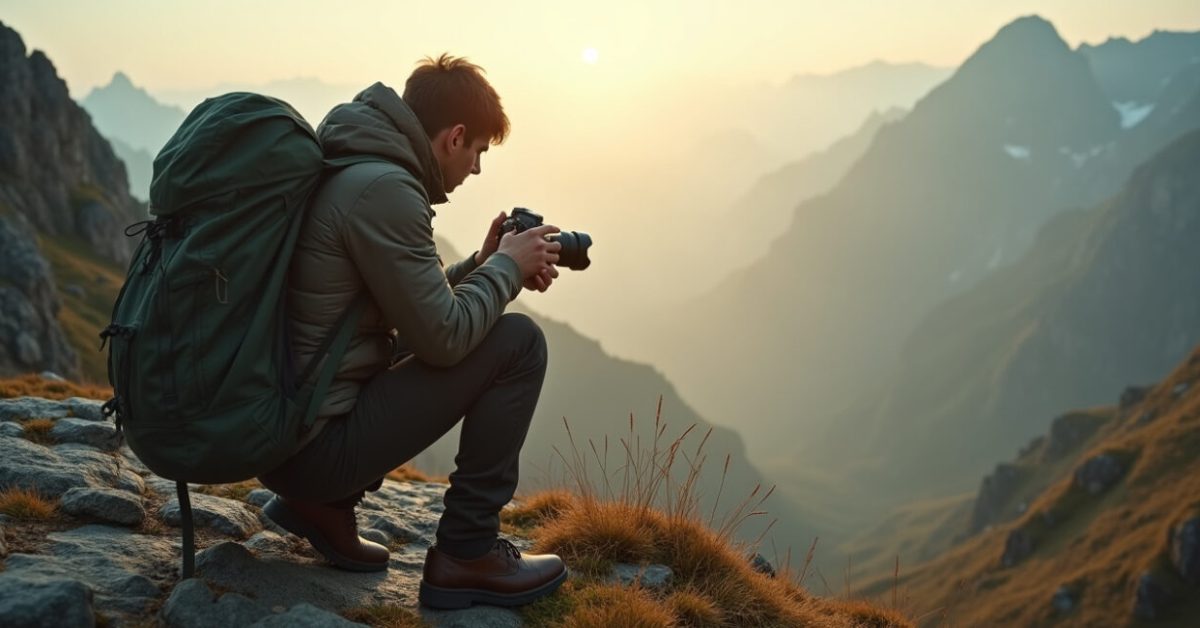

Fog rolled in five minutes after I left the ridge, my pack lighter than usual because I’d chosen a compact setup. The camera felt balanced, the lens fast enough to catch a bird in flight. That choice—prioritizing mobility over a tele beast—is the sharp trade-off every nature shooter faces when picking travel gear. You want crisp frames, not a sore back.
The Single Change That Cuts Your Pack Weight Without Killing IQ
Swap one heavy zoom for two lightweight primes and you save pounds and gain speed. It sounds like gear-room philosophy, but on the trail it’s real math. A 70–200mm f/2.8 can weigh 2–3 pounds; a pair of primes covering the same range might weigh half that. The trade-off: you’ll switch lenses more, but you’ll move faster and be less tempted to skip shots. For travel gear, that speed often equals sunlight and keeps wildlife behaving normally.
Why 24–70 Vs 24–105 Is a Harder Choice Than You Think
Here’s the blunt fact: 24–70mm lenses usually deliver sharper images and faster apertures than 24–105mm. That matters for low light and subject isolation. But 24–105mm gives reach and fewer lens changes. If your travel gear goal is versatility with minimal fuss, the 24–105 wins. If you chase image quality and plan to be deliberate, pick the 24–70. I favor the 24–70 for sunrise work and the 24–105 for full-day hikes where swapping isn’t feasible.

The 3 Focal-length Setups I Use on Week-long Nature Treks
Pick one of these and you’ll know exactly what you’ll carry.
- Minimal: 28mm prime + 70–200mm lightweight zoom — great for fast movement and reach.
- Balanced: 24–70mm f/4 + 70–200mm f/4 — the do-it-all combo for landscapes and distant subjects.
- Image-first: 24–70mm f/2.8 + 85mm prime + 100–400mm — heavier, but excellent for low light and detail.
Each choice changes how you move and how often you miss a moment. Travel gear equals decisions: what you give up and what you gain.
The Real Performance Numbers That Matter on the Trail
Sharpness in a lab is one thing; usable sharpness at 100% crop while breathing hard is another. On long hikes, sensor stabilization, autofocus speed, and edge-to-edge contrast matter more than a point of lab resolution. For travel gear, also watch weight per aperture stop. A 70–200mm f/4 that’s light and stabilized can beat a heavy f/2.8 if it keeps you shooting longer. Real-world tests beat specs—pack and try lenses in the field.
Common Mistakes Photographers Make Choosing Travel Gear (and How to Avoid Them)
People assume lighter is always better. That’s wrong. Mistakes to avoid:
- Buying a light lens without testing its autofocus in low light.
- Choosing a single zoom to “cover everything” and then missing distant subjects.
- Ignoring ergonomics—small lenses plus large bodies can feel unbalanced.
A Surprising Comparison: Full-frame Primes Vs Crop-sensor Zooms
Expectation: full-frame primes = best image quality. Reality: a modern crop-sensor body with a high-quality zoom can match or beat older full-frame primes in the field. Why? Smaller bodies, lighter lenses, and improved high-ISO performance change the math. I once swapped a 35mm full-frame prime for a 24–70mm on a crop body and captured more keepers simply because I could react faster and carry less. Travel gear decisions must weigh camera system progress, not just glass pedigree.
Compact Setups That Let You Chase Light, Not Carry Weight
The point is mobility: set up a kit that lets you climb, wait, and shoot without regret. A compact kit might be a mirrorless body, a 24–70mm f/4, and a 100–400mm lightweight zoom. Add a small tripod and a fast card. That combo covers wide, standard, and reach without demanding a Sherpa. For inspiration, read field reports from park services and conservation groups; they often note what pros bring on long treks. (See National Park Service gear advice and studies on human load limits from universities.)
Mini-story: I once passed on a summit shot because switching lenses took too long. The clouds broke for three minutes and slammed shut. The camera I had could have nailed it if I’d chosen a different travel gear approach. That miss taught me to prioritize readiness over theoretical peak IQ.
| Setup | Typical Weight | Best For |
|---|---|---|
| Minimal (primes) | ~3–4 lbs | Fast hikes, birds in flight |
| Balanced (two zooms) | ~5–7 lbs | All-day shoots, landscapes |
| Image-first (full kit) | 8+ lbs | Low light, high detail |
Before you buy, try to rent. Walk five miles with the kit. If the lens makes you stop shooting, it’s the wrong lens. Travel gear should keep you in the moment.
For deeper reading on human load and endurance, see research from university kinesiology departments and outdoor health studies such as the CDC outdoor activity guidelines. Those reports help quantify what a pack adds to fatigue and reaction time.
Closing Provocation
Carrying less doesn’t mean sacrificing the shot—you just choose which shots matter. Choose gear that keeps you mobile, focused, and ready. Next time you pack, ask: will this lens help me catch light—or slow me down?
What Lens Combination Should I Start with for Multi-day Nature Hikes?
Start with a versatile, lightweight combo: a 24–70mm f/4 and a 100–400mm lightweight zoom. This covers wide landscapes and distant subjects while keeping weight manageable. Use a mirrorless body for reduced bulk. Carry a small, sturdy tripod and extra batteries. If you prefer primes, swap the 24–70mm for a 35mm and 85mm pair, but only if you’re comfortable swapping in the field. Rent gear for a weekend to test comfort and balance before committing.
How Much Weight is Too Much for Nature Photography Treks?
Too much varies by fitness and terrain, but a practical guideline is keeping your camera kit under half your pack weight capacity. For most hikers, that means 5–8 pounds for camera gear on multi-day trips. Above that, you’ll see slower pace, shorter shooting windows, and more missed moments. Consider that accessories—tripod, filters, batteries—add up. Prioritize lenses that give the best shots per ounce for your style and the environment you’ll be in.

Will a Lightweight Lens Hurt My Image Quality Noticeably?
Not necessarily. Modern lightweight lenses often use advanced coatings and designs that deliver excellent sharpness and contrast. The real test is in the field: autofocus reliability, flare control at sunrise, and edge performance at common apertures. For travel gear, the trade-off often favors a lens that lets you shoot more. You’ll get better results from more usable frames than from a few technically superior images you missed because you were carrying too much.
When is It Worth Carrying a Heavy Telephoto on a Hike?
Carry a heavy telephoto when your primary goal is distant wildlife or birding and you can accept slower movement. If a summit or ridge will deliver unique behavior at distance, the reach may be worth the weight. Otherwise, a lightweight 100–400mm or a 70–200mm with extenders can offer a balance. Think about downtime too: if you expect long waits, a heavier lens that yields higher-quality crops can make those waits productive.
How Do I Balance Lens Swaps with Fast-changing Light?
Plan for readiness: keep one zoom mounted that covers your most common focal length. Use quick-release straps and organized pockets to speed swaps. For travel gear, practice swapping with gloves and in low light. If you expect rapid light changes, favor a faster aperture or carry one fast prime. Also, set up custom autofocus modes and use continuous shooting when needed—technical readiness often beats theoretical IQ in fleeting conditions.