

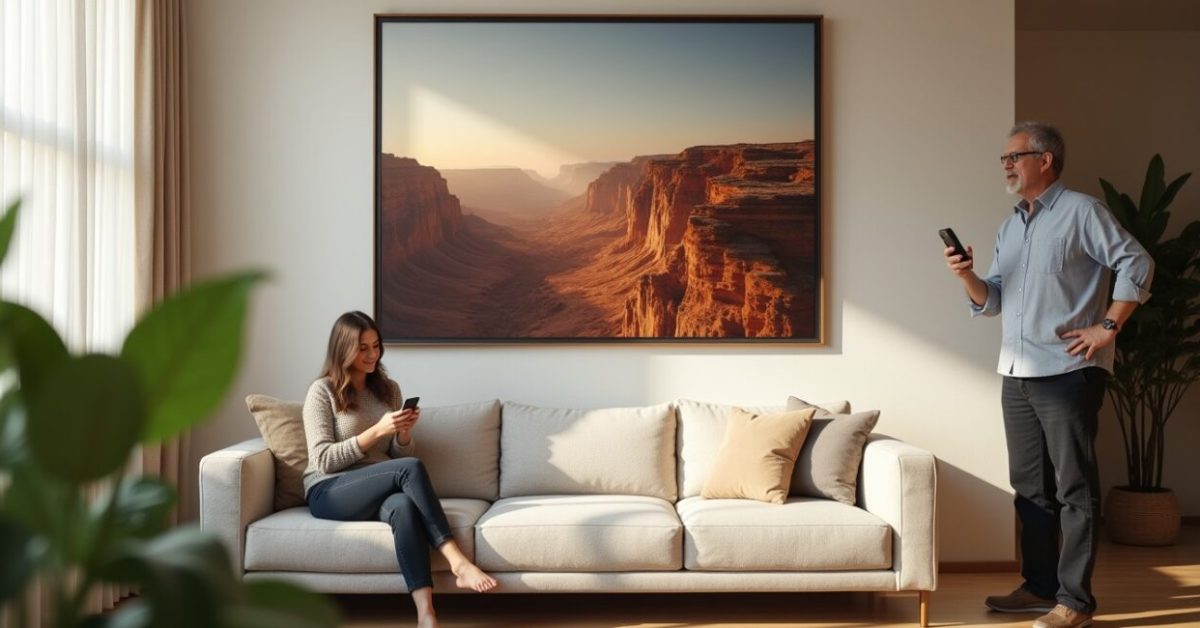

Someone just posted a canyon print over their couch and the comment section exploded — half the people called it a serene upgrade; the other half said it looked dated and pretentious. That fight? It’s not about taste alone. It’s the latest flashpoint in Home Decor: landscape photography prints are polarizing shoppers, splitting rooms, aesthetics, and even price tolerance. Within three swipes you’ll know which styles ignite arguments, where buyers actually hang these prints, and how to position your work so both camps click “buy.”
Why Landscape Prints Are the Fastest-growing Item in Some Home Decor Niches
Retailers report steady spikes in searches for “large landscape photography” and framed nature prints. Buyers are chasing escape: an 8×10 on a mantel becomes a window to calm after a long day. Industry sellers say this isn’t just nostalgia — it’s utility: people buy landscapes to change a room’s perceived depth and mood quickly. Look at how hospitality designers use them to make compact lobbies feel expansive. According to data from the US Census on e-commerce patterns, visual categories often lead impulse buys during seasonal refreshes, especially in living and dining spaces. US Census e-commerce trends.
The Two Tribes: Minimalist Neutralists Vs. Maximalist Scenesters
Most arguments are predictable once you map the two tribes. Neutralists want muted palettes, tactile pieces, and small, framed photographs that whisper. Scenesters favor oversized, glossy landscapes with dramatic lighting and bold color that make a statement. Expectation vs. reality: many sellers thought offering only “gallery-style” panoramic prints would win both sides — reality showed sales split sharply. The trick is acknowledging both needs in product lines: scaled-back variants for the neutralists and statement editions for scenesters.
What Rooms Buyers Actually Choose — And Why It Matters
Living rooms and home offices capture over 60% of landscape print placements in recent marketplace surveys. People pick living rooms for social impact and home offices for inspiration and tranquility. Bedrooms skew toward softer, black-and-white landscapes. Kitchens and bathrooms are niche: high-gloss, moisture-resistant finishes work there. If you’re a seller, package copy should speak to the room’s outcome — “expand your living room” versus “calm for late-night work” — because the same image sells differently depending on where it lives.
The Styling Decisions That Convert Browsers Into Buyers
Scale, finish, and framing are the unexpected conversion levers. A 24″x36″ print can look heroic or overwhelming depending on frame thickness and mat color. Glossy finishes read vivid and modern; matte prints read timeless and tactile. Offer three curated styling options per photo: “Minimalist” (thin frame, matte), “Gallery” (wide mat, black frame), and “Bold” (no frame, high-gloss). Include staging photos showing the print at real heights above sofas, beds, and desks to help buyers visualize the fit.
Common Mistakes Sellers Make — And What to Avoid
Don’t assume every landscape needs to be dramatic to sell. Common errors:
- Listing only one mockup — buyers need contextual variety.
- Ignoring proportional guidance — no size suggestions for common furniture types.
- Forgetting finish options — gloss vs. matte can make or break a room’s mood.
- Over-editing color — hyper-saturated skies alienate neutralists.
Fix these and you’ll stop losing sales to indecision.
A Surprising Comparison: Staged Photography Vs. Candid Landscapes
Staged, retouched landscapes sell more quickly but candid shots build long-term attachment. Staged images—clean compositions, perfect light—grab initial clicks. Candid landscapes (an imperfect shoreline, a storm-dusted field) create stories buyers live with and recommend. Use staged work for paid ads and bold placements; reserve candid imagery for limited editions and subscriber drops. That split strategy captures both immediate impulse buyers and collectors who return.
How to Position Prints So Both Camps Click “add to Cart”
Marketing language should offer a promise, not just a description. For neutralists: highlight texture, calming tones, and scale guidance. For scenesters: emphasize drama, story, and hero placement. Offer modular framing and preview tools, price anchor with a “framed + installation” option, and show a pair of images styled two ways — neutral and bold — to make the choice feel safe. A short, sensory product blurb that names the room and emotion (e.g., “Office: quiet focus, soft morning light”) often lifts conversion.
Mini-story: A seller listed the same prairie photo three ways. The matte, small print sold steadily to apartment dwellers; the large glossy print caught a designer who placed it in a hotel lounge, doubling its visibility; the signed limited edition found a collector who paid three times the base price. The photograph didn’t change — the presentation did.
For design context and decorating best practices, homeowners and sellers can reference museum and conservation guidelines from the Smithsonian on display lighting, and industry research on visual merchandising trends from reputable sources. Smithsonian resources provides conservation insight that surprisingly affects how prints age in sunlit rooms.
Decide which camp you’re speaking to before you shoot, stage, or write. Then design a short funnel that lets the other camp opt in. The divide isn’t a problem — it’s an opportunity to sell the same image twice.
Final thought: The next time a canyon print sparks an argument on your feed, remember: people are arguing about identity, not just decor. Position your work for identity, and both sides will buy.
How Do I Choose the Right Size for a Living Room Wall?
Measure twice and imagine furniture relationships: a common rule is that a piece above a sofa should be about two-thirds to three-quarters the width of the sofa. Consider viewing distance — larger rooms tolerate larger prints. Offer at least three recommended sizes in your listing, and show mockups at each scale. If clients are unsure, suggest a modular system or multiple smaller frames arranged together. A sizing guide with real furniture photos reduces returns and increases confidence at checkout.
What Finishes Work Best in Bright, Sunlit Rooms?
In sunlit rooms, matte and low-reflective finishes are safer because they reduce glare and reveal more detail across viewing angles. UV-filtering glass or acrylic helps protect color and prevent fading over time, which matters for landscapes with delicate tones. For kitchens or bathrooms, choose moisture-resistant backing and sealed edges. Communicate expected longevity and maintenance in product descriptions so buyers understand trade-offs between vibrancy and preservation.

Can One Image Appeal to Both Minimalist and Maximalist Buyers?
Yes — presentation is the lever. Offer multiple framed options and curated mockups: a slim, matte-framed version for minimalists and a large, unframed or high-gloss option for maximalists. Use copy that speaks to different emotions (“quiet reflection” vs. “bold atmosphere”) and provide staged room photos showing both treatments. Bundling framing and installation services as upgrades lets buyers tailor the image to their aesthetic without needing multiple photographs.
How Should I Price Limited Editions Versus Open Editions?
Price limited editions based on scarcity, print size, and artist provenance; collectors expect a premium for numbered, signed works with certificate of authenticity. Open editions should be accessible and competitively priced, with upsells like better framing or premium paper. Consider using anchor prices to make limited editions seem attainable — list the highest-tier framed package first, then show the more affordable options. Transparent edition limits and clear benefits justify the price differential.
What Are Quick Staging Tricks That Boost Online Conversions?
Use at least three contextual mockups showing different rooms and scales, include a neutral and a bold styling example, and provide a simple sizing overlay so buyers visualize fit. Add a short lifestyle caption that names the room and mood, and offer a virtual consultation or AR preview when possible. Fast-loading, high-resolution images with zoom and a concise care/finish section reduce hesitation. These elements combine to make browsing feel like in-store guidance, increasing conversion.