

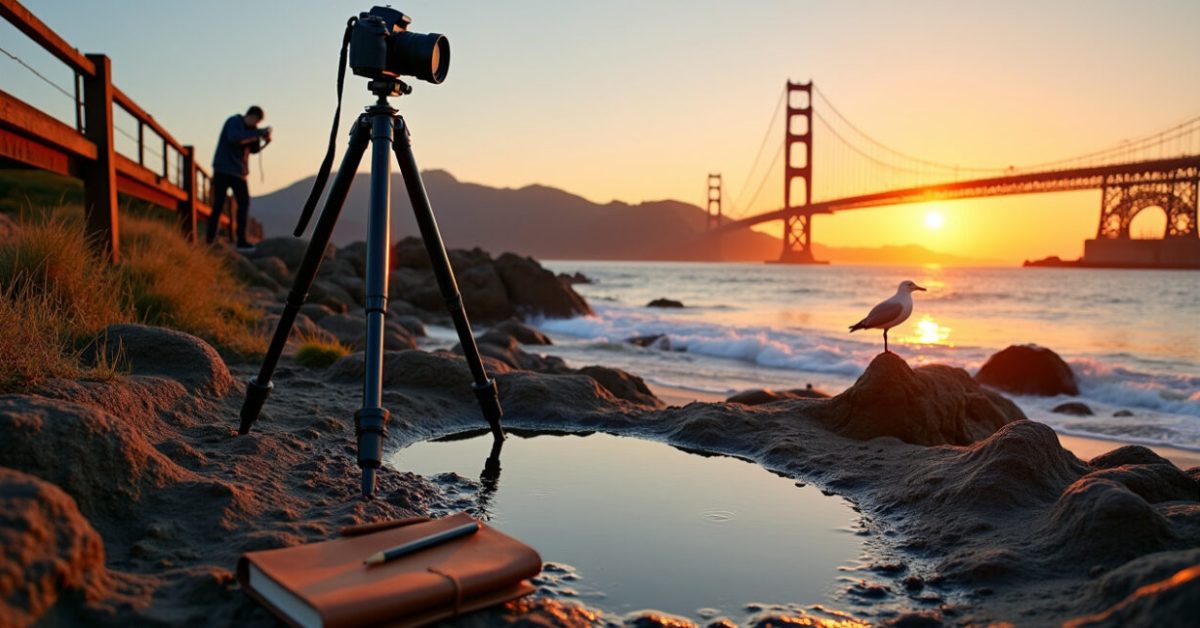

Golden Gate and frame the bridge from Fort Baker or Crissy Field at sunrise to get warm light on the towers describes an unbeatable composition for capturing San Francisco’s landmark at its most luminous. It explains where to stand, why timing matters, and how to use light and foreground to transform a simple photograph into an emotional scene that resonates with viewers.
This guide focuses on practical, experience-driven advice for photographers, travelers, and anyone hungry for the quintessential Golden Gate moment. You’ll learn precise viewpoints, composition tips, exposure tricks, and workflow routines that prioritize warm sunrise light on the towers while maximizing visual impact and shareability.
Read on to discover equipment choices, framing techniques, weather signals, and a concise step-by-step routine to capture the Golden Gate from Fort Baker or Crissy Field at sunrise, plus a quick gear table and answers to common questions from readers and photographers alike.
Best Viewpoints to Capture Warm Sunrise Light
Fort Baker Vantage Points
Fort Baker offers elevated curves and intimate foreground elements that emphasize the Golden Gate towers and suspension cables. Early sun hits the towers with a warm glow while bay reflections add depth to your frame.
Arrive before nautical twilight to scout rocks and railings for framing. Use grasses and coastal pathways to lead the eye toward the bridge and create a layered composition.
Crissy Field Priority Spots
Crissy Field gives wide, low-angle views ideal for including shoreline textures and dramatic sky above the Golden Gate. Sand, pilings, and tide pools offer natural foreground interest at sunrise.
Walk the promenade to find clean sightlines; when fog retreats, warm light bathes the towers and paints the bay in golden hues that highlight structural details.
Timing and Light: When Sunrise Matters Most
Understanding Golden Hour
Golden hour before and after sunrise softens shadows and adds warm color to the Golden Gate towers and steelwork. This time delivers flattering angled light for dimension and mood.
Check local sunrise times and aim for the 30 minutes around first light; atmospheric clarity often changes quickly, so be ready to react to shifting conditions.
Fog, Clarity, and Microclimates
San Francisco’s microclimates mean fog can either veil or sculpt the bridge. Thin morning fog diffuses light for pastel scenes; a crisp morning produces contrast and saturated colors on the towers.
Use marine layer forecasts and live camera feeds to anticipate conditions and choose Fort Baker for elevated views or Crissy Field for low-angle, water-reflective compositions.

Composition Essentials for Emotional Impact
Lead Lines and Foreground
Use the shore, walkways, or ripples in the water as lead lines toward the Golden Gate towers to guide the viewer. Foreground elements anchor the scene and heighten scale.
Frame with natural elements—grasses, rocks, or pilings—to add depth and intimacy. Small foreground details often create the emotional connection that turns good images into memorable ones.
Balancing the Towers and Sky
Position the horizon to emphasize either the bridge or the dramatic sunrise sky. A lower horizon emphasizes cloud textures, while a centered bridge highlights architectural symmetry.
Consider off-center placement for a dynamic composition, using the towers as a focal anchor and allowing negative space to deliver quiet, cinematic emotion.
Camera Settings and Gear Recommendations
Essential Camera Setup
Use a sturdy tripod, wide-angle and telephoto lenses, and neutral density or graduated filters for control of exposure. Shoot RAW to retain highlight and shadow detail.
Set a low ISO for clarity, aperture between f/8–f/11 for sharpness, and bracket exposures to capture dynamic range during sunrise transitions.
Recommended Lenses and Accessories
A 24–70mm covers mid-range views; a 70–200mm isolates towers and compression. A polarizer reduces glare on water and deepens sky contrast for richer sunrise colors.
Bring a remote shutter or use a two-second timer to prevent shake. Waterproof gear and warm clothing are crucial for comfortable, focused shooting.
Step-by-step Routine to Shoot the Golden Gate at Sunrise
Practical Pre-dawn Workflow
Follow a concise routine that gets you in position, composed, and ready to capture the decisive moments of warm light on the towers. Timing and preparation are everything.
Use this ordered method to increase your chance of a standout image and reduce the stress of rapid light changes during sunrise.
- Check sunrise, tide, and fog forecasts the evening before.
- Pack tripod, lenses, filters, and warm layers; charge batteries.
- Arrive 45–60 minutes early and scout foregrounds and sightlines.
- Set low ISO, mid-aperture, and bracket exposures as light changes.
- Adjust composition as sun rises; switch to telephoto for tower details.
- Review shots, refine exposure, and capture a final golden-frame before light fades.
Quick Reference Table: Settings and Composition Choices
Settings Summary
This table offers fast, practical presets to start with during sunrise sessions focused on the Golden Gate towers and warm morning light.
| Condition | ISO | Aperture | Shutter | Notes |
|---|---|---|---|---|
| Clear, crisp morning | 100 | f/8 | 1/125–1/500s | Use 70–200mm for compression on towers |
| Thin fog | 200 | f/5.6–f/8 | 1/60–1/250s | Bracket exposures; emphasize pastel tones |
| Low angle with reflections | 100–200 | f/11 | 1/8–1/125s | Use ND filter for long exposure water smoothing |
Post-processing and Storytelling
Editing for Warmth and Detail
Increase warmth subtly in white balance, recover shadows to reveal structure in the towers, and use local contrast to make cables and rivets pop without over-processing.
Preserve highlight detail on the sunlit edges and maintain natural skin tones if including people. Keep edits consistent across a set for cohesive storytelling.
Delivering Shareable Images
Crop for platform-specific ratios: square for Instagram, wide for editorial use. Add minimal caption context to convey place, time, and feeling—this strengthens engagement on Discover and social feeds.
Include location tags and concise storytelling lines to connect emotionally with viewers and increase the chance of your photo being featured or discovered.
Logistics, Safety, and Local Resources
Access and Permits
Fort Baker and Crissy Field are publicly accessible, but check park hours and any special event permits for tripods or professional shoots. Respect private property and posted signs.
For commercial shoots, contact Golden Gate National Recreation Area or local authorities to confirm permit requirements and drone restrictions.
Safety and Comfort Tips
Dress in layers—Bay Area mornings are chilly even in summer. Respect tides and slippery rocks when framing low-angle shots by the water. Keep an eye on changing weather and incoming fog.
Bring water, snacks, and a headlamp for pre-dawn navigation. Share your location with a companion if you shoot alone for extra safety.
Conclusion
Chasing warm sunrise light on the Golden Gate from Fort Baker or Crissy Field is a blend of preparation, timing, and sensitive composition. When the light strikes the towers just right, the bridge becomes more than architecture—it becomes a mood, a story, a moment preserved in gold.
Return to the same spots with new weather and tides; each visit teaches you how light, fog, and framing change the narrative. Your next sunrise could be the one that captures both the bridge and a memory you share with others.
Frequently Asked Questions
When is the Best Time to Photograph the Golden Gate for Warm Light?
The best time is around sunrise, specifically the thirty minutes before and after first light, when the sun sits low and casts warm, angled illumination on the towers. Plan to arrive early to scout foreground elements, allow for changing fog conditions, and bracket exposures to capture the dynamic light range during these fleeting moments.
Should I Choose Fort Baker or Crissy Field for Sunrise Shots?
Choose Fort Baker for elevated, dramatic frontal views that emphasize the towers and sweeping bay; pick Crissy Field for low-angle, reflective shoreline images that include tide pools and foreground textures. Both offer unique foreground options and different emotional tones—select based on the composition and story you want.
What Gear is Essential for Capturing the Golden Gate at Sunrise?
Essential gear includes a sturdy tripod, a wide-to-telephoto lens range (24–70mm and 70–200mm), a camera that shoots RAW, and filters like a polarizer or ND for long exposures. Bring spare batteries, a remote shutter, and weather-appropriate clothing to stay comfortable during pre-dawn waits and changing conditions on the bay.
How Do I Handle Fog and Changing Weather During a Shoot?
Monitor marine layer forecasts and live cams before heading out; when fog arrives, embrace its mood by using slower shutter speeds and wider apertures to convey softness. Bracket exposures and shoot RAW to retain detail, and pivot composition quickly—fog can create unique, ethereal frames that are unreachable on clear days.
Are Permits Required for Professional Photography at These Locations?
Permits may be required for commercial shoots, tripods in restricted zones, or drone use—contact Golden Gate National Recreation Area or city park authorities to confirm. For casual photography and non-commercial use, public access is generally allowed, but always respect signage, closures, and safety regulations when setting up.
External references: National Park Service – Golden Gate NRA, National Weather Service.