
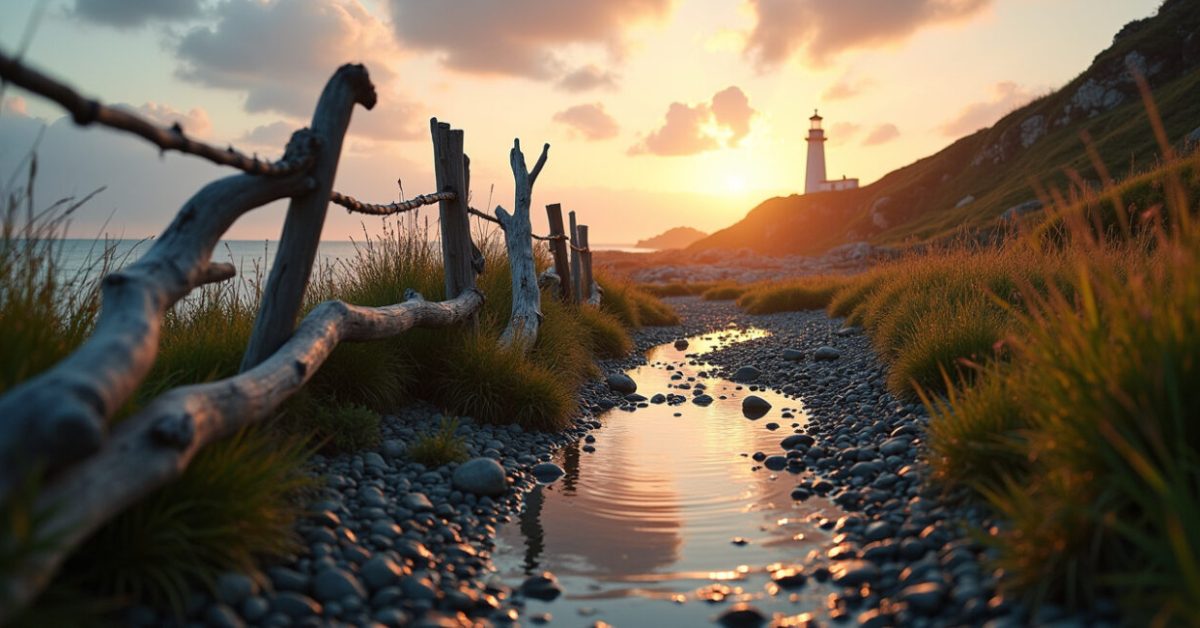

The wind pulled the clouds into a ribbon and I almost missed the shot because my foreground was empty. That single missed frame taught me more about composition tips than any tutorial: landscapes need a stage, not just a view. If you want images that stop scrolling, learn a handful of rules you can apply in seconds on location.
Make Your Foreground Work as Hard as the Sky
A strong foreground changes a photo from pretty to memorable. Too many landscape shots treat the foreground as filler. Instead, use rocks, grasses, puddles, or a weathered fence to give the eye a starting point. Composition tips here mean getting low, moving around, and letting those elements lead you into the frame. Try this exercise: spend five minutes finding one foreground element, then shoot it from three angles. Compare results — the right foreground will add depth and mood.
Use Leading Lines to Guide a Short Attention Span
People scan fast. Leading lines give their eyes a path and a reason to stop. Roads, streams, ridges, and even rows of plants act like arrows in a frame. Leading lines are not about symmetry — they’re about direction and tension. Walk the scene and angle those lines so they meet a subject or a vanishing point. A quick drill: take ten photos using a single line and change your position for each. You’ll feel how framing changes the story.


Layer Your Scene for Instant Depth
Layering is the trick landscape photographers use when they want depth without fancy gear. Foreground, midground, background — when they stack, the image breathes. Composition tips: look for overlapping planes and use aperture to control how separated they feel. In fog, layers become subtle bands of tone; at sunset, they become silhouettes. Compare expectation vs. reality: a flat middle-distance shot vs. one with three clear layers — the layered one feels immersive and costly in emotional return, but cheap to make.
Respect Negative Space — Know When Less is More
Negative space quiets a photo and highlights a subject. It gives the eye a place to rest. Not every frame needs clutter; sometimes empty sky is the hero. Use negative space with a single strong element — a lone tree, a boat, or a jutting rock. Exercise: shoot one scene with and without negative space. The version with space often feels more deliberate and powerful. Avoid filling every corner just because you can.
The Rule of Thirds is a Guideline, Not a Law
Composition tips often begin with the rule of thirds. Good — start there. Better — know when to break it. Placing horizons or subjects on thirds usually helps, but centering can create strength and balance. The difference between habit and choice shows in your photos. Mini-story: I once centered a tiny chapel against a dramatic sky; the symmetry made the scene calm and sacred. That choice was deliberate, not a default. Practice both approaches and decide on purpose.
Common Mistakes That Ruin Frames (and How to Fix Them)
Most errors are avoidable with a short checklist. Common pitfalls: weak foregrounds, distracting edges, busy horizons, and ignoring light direction. If your photo feels flat, you probably missed one of these. Fixes are simple: step forward, change angle, remove clutter, or wait for different light. Quick actionable list:
- Avoid placing horizon dead center unless intentional.
- Check corners for stray branches or bright spots.
- Use a small aperture for depth, large for separation.
- Move the camera; a few feet changes everything.
Quick Exercises to Train Your Eye on Location
Training beats theory when you’re in the field. These composition tips drills take minutes and teach choices fast. Exercise one: five-minute foreground hunt — find and shoot three foregrounds. Exercise two: leading line sprint — take ten frames moving along a line. Exercise three: negative space test — shoot a subject with two different amounts of empty space. Do these regularly and you’ll notice better framing instantly. Keep a small notebook or phone folder to compare before/after shots.
For research on perception and visual attention that supports these methods, see findings from the National Center for Biotechnology Information on visual cognition. For technical guidance on exposure and depth of field, the U.S. Geological Survey has clear, practical resources used by field photographers and scientists.
Next time you stand in front of a sweep of land, ask: where does the eye begin, where does it travel, and where does it rest? Use a strong foreground, invite lines, stack layers, and don’t fear empty space. Those four moves, practiced in small drills, will change how you frame landscapes forever.
How Quickly Can I See Improvement with These Composition Tips?
You can see results after a single focused session. Do the five-minute foreground hunt and the leading-line sprint back to back. When you review the shots, you’ll notice stronger depth and clearer paths through the frame. Improvement is a mix of habit and feedback: practice, then compare images immediately. After a few outings you’ll naturally seek better foregrounds and angles. The key is deliberate repetition — short, intense drills beat long aimless shoots for faster progress.
Which Focal Length Works Best for Landscape Composition Tips?
There’s no single “best” lens; each focal length teaches something different. Wide angles (14–35mm) emphasize foreground and depth, making composition choices more dramatic. Mid-range (35–70mm) feels natural and is great for layering and simpler lines. Telephoto (100mm+) compresses distance and isolates details. Try the same scene with three focal lengths to learn how perspective and scale change. This practical comparison trains your eye to pick the focal length that matches your composition intent.
How Do I Choose a Foreground When Nothing Obvious is Present?
When the foreground looks empty, create one. Move lower to include texture like pebbles, wet sand, or grass. Use reflections in puddles or small pools to mirror the sky. If nothing natural works, add a small object—your jacket or a tripod—temporarily to test composition. Often a tiny element anchors the scene. The goal is to give the eye a starting point; it doesn’t have to be perfect, just intentional. Practice finding or making foregrounds in bland landscapes to build the habit.
Should I Always Follow the Rule of Thirds in Landscape Photography?
The rule of thirds is a helpful starting point but not a mandatory rule. It often improves balance by positioning horizons or subjects off-center. However, centering can create strength, symmetry, or a meditative feel when used on purpose. Use the rule of thirds to analyze your scene quickly, then decide whether to follow or break it. The mature application of composition tips is about conscious choice: ask why you place the horizon where you do, and make that choice deliberate.
How Can I Practice Composition Tips Without Traveling Far?
You don’t need exotic locations to train your eye. Local parks, rooftops, gardens, and even streets offer elements for foregrounds, lines, layers, and negative space. Set short exercises: five minutes for foregrounds, ten for leading lines, or twenty for layer hunting. Photograph the same spot in different light and weather; variation teaches you to adapt. Keep a folder of before/after shots to track progress. Small, repeated sessions close to home build an intuitive sense faster than occasional long trips.