

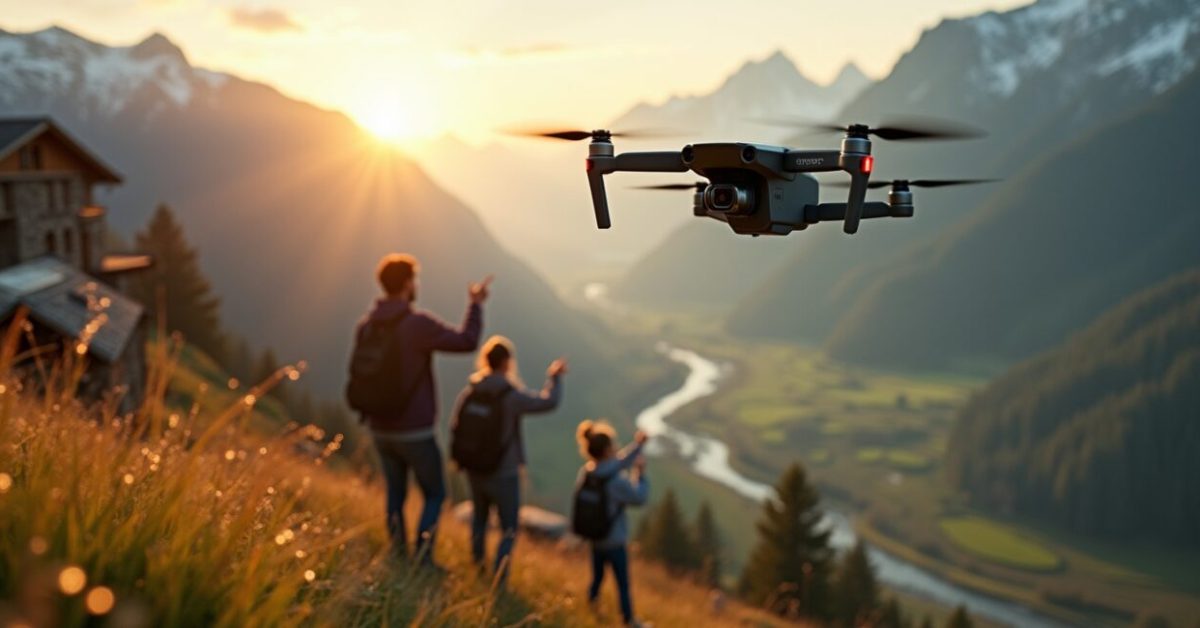

The valley opens like a postcard and then—mid-frame—the drone pulls up and sideways, revealing a pattern your eyes never expected. That first few seconds is why “Drone Switzerland” clips stop your thumb on a feed: they promise a fresh geometry to landscapes you thought you knew. But viral views don’t automatically equal new artistic perspective, and they certainly don’t exempt you from rules or basic craft.
Why Swiss Drone Shots Go Viral—and Why Most Feel the Same
There’s a formula: iconic Alps + cinematic motion + golden-hour light. It’s potent but often predictable, because many creators use the same altitude, lens, and reveal. The result is dozens of clips that look different only in soundtrack and color grade.
- Same altitudes (50–120m) give the same horizon relationships.
- Common gimbal moves (tilt-up reveal) produce identical emotional beats.
- Popular LUTs make different scenes read as a single “Swiss look.”
If you want a clip that disrupts the scroll, break one of those three rules.
The Legal Hot Spots Every Pilot Needs to Know
Switzerland loves its mountains—but it also protects them. Flying near airports, national parks, and crowded trails attracts real penalties. Ignoring local rules can cost you fines, confiscation, or worse: a publicized incident that kills your credibility.
Check controlled zones and NOTAMs before launch. The Swiss Federal Office of Civil Aviation publishes up-to-date maps and restrictions; national parks often restrict drones to protect wildlife and hikers. If you plan to sell images or film commercially, permits and insurance are non-negotiable.
Framing Hacks That Turn a Trend Into Publishable Landscape Art
Most viral clips aim for awe. Artful drone work aims for information and emotion. Try foreground anchors—trees, rocks, a winding road—to give scale and narrative. Place a subject off-center in the lower third and let negative space tell the altitude story.
- Use layered depth: foreground, midground, background.
- Alternate wide establishing frames with tight tele shots for intimacy.
- Vary your speed—slow reveals read as contemplative, quick reveals as dramatic.
The Mechanism That Nobody Explains Right: Light, Angle, and Altitude Interplay
You can improve a shot by thinking of three dials: light (when), angle (how), altitude (where). Changing one dial without rebalancing the others flattens the image. For example, low winter sun demands lower altitude to preserve texture; mid-day harsh sun needs backlighting or longer focal lengths to avoid contrast collapse.
Experiment: shoot the same scene at three altitudes and compare how shadows map the terrain—this single practice will refine your instinct faster than hours of grading.
Mistakes That Kill a Swiss Drone Photo (and How to Avoid Them)
Some errors are technical, some are ethical. Here are the ones that ruin publishability:
- Overreliance on cinematic LUTs—destroys authenticity.
- Ignoring wind and rotor wash—blurry foregrounds and stressed wildlife.
- Flying into restricted zones—legal trouble and lost footage.
- Pushing compression for social uploads—blocks of color replace texture.
Avoid these and you move from trendy clips to images editors will pay for.
A Quick Before/after Comparison That Reveals What Actually Changed
Expectation: a sweeping aerial reveal that feels “new.” Reality: most reveals are minor reframings of an obvious vista. Try this micro-test: shoot the same scene as a classic top-down, then as a low-angle rising sweep, then as a tight telecompression from a ridge. The top-down reads map-like; the low sweep reads emotional; the tele brings cinematic compression and isolation. The before/after will show whether your idea adds perspective or just dresses the same view in a new filter.
From Viral Clip to Gallery Print: What Editors and Buyers Actually Look For
Turning viral footage into publishable landscape art is about restraint. Galleries and magazines want intentionality—choices that justify the image beyond virality. They look for composition that holds at large scale, tonal range that prints, and a story that captions can extend.
Practical checklist: shoot RAW or highest bitrate, bracket exposures if possible, and capture contextual frames (people, structures) to anchor scale. Also, keep a log of permits and releases—editors ask for them.
Swiss drone footage can be both viral and valuable, but only if the pilot treats creative choices and legal constraints with equal seriousness. The landscape rewards nuance.
Can I Fly a Drone Anywhere in Switzerland?
Not everywhere. Switzerland has a dense patchwork of controlled airspace, no-fly zones around airports, and special restrictions in national parks and populated areas. Recreational pilots must follow altitude limits, maintain visual line of sight, and avoid crowds. The Swiss Federal Office of Civil Aviation publishes regulation updates and maps; for commercial work you’ll typically need additional permits and insurance. Always check local NOTAMs and municipal rules before launching.

How Close Can I Get to People and Wildlife with a Drone?
Switzerland emphasizes privacy and wildlife protection. You should avoid flying directly over people and maintain a safe distance from both people and animals to prevent disturbance. Specific distances vary by location and situation, but a good rule is to stay far enough that the subject shows no signs of stress. Many national parks ban drones outright to protect nesting birds. If your shoot involves people, obtain permission and written releases to use the footage commercially.
What Camera Settings Make Swiss Mountains Look Less Generic?
Capture dynamic range and texture: shoot in RAW or at the highest video bitrate available, underexpose slightly to preserve highlights, and bracket exposures when possible. Use a moderate shutter speed for stabilized motion (1/2 to 1/3 of frame rate for cinematic motion blur) and swap lenses or focal lengths for variability—wide for context, tele for compression. Avoid heavy LUTs; instead, aim for natural contrast and subtle color grading that preserves alpine rock and glacier texture for printing or editorial use.
Are There Insurance or Permit Requirements for Commercial Drone Work?
Yes. Commercial drone operations in Switzerland typically require liability insurance and may require operator certification and permits depending on the flight zone and the nature of the shoot. Municipalities and land managers often demand permits for shoots on private property or in protected areas. Keep documentation of permits and insurance on hand—publishers and clients will request them. Consult the official tourism authority or local cantonal offices for location-specific requirements.
How Do I Make a Drone Clip Feel Original Without Breaking Rules?
Originality comes from perspective and restraint, not risky maneuvers. Combine less-used vantage points (lower altitudes near strong foreground anchors), mixed focal lengths, and deliberate pacing. Capture contextual frames—people, buildings, roads—for scale and story. Respect legal constraints and plan permits in advance so you can shoot intentionally rather than impulsively. Finally, spend time editing: pacing, selective grading, and sound design can transform a safe, legal flight into a piece that stands out on feeds and in print.