
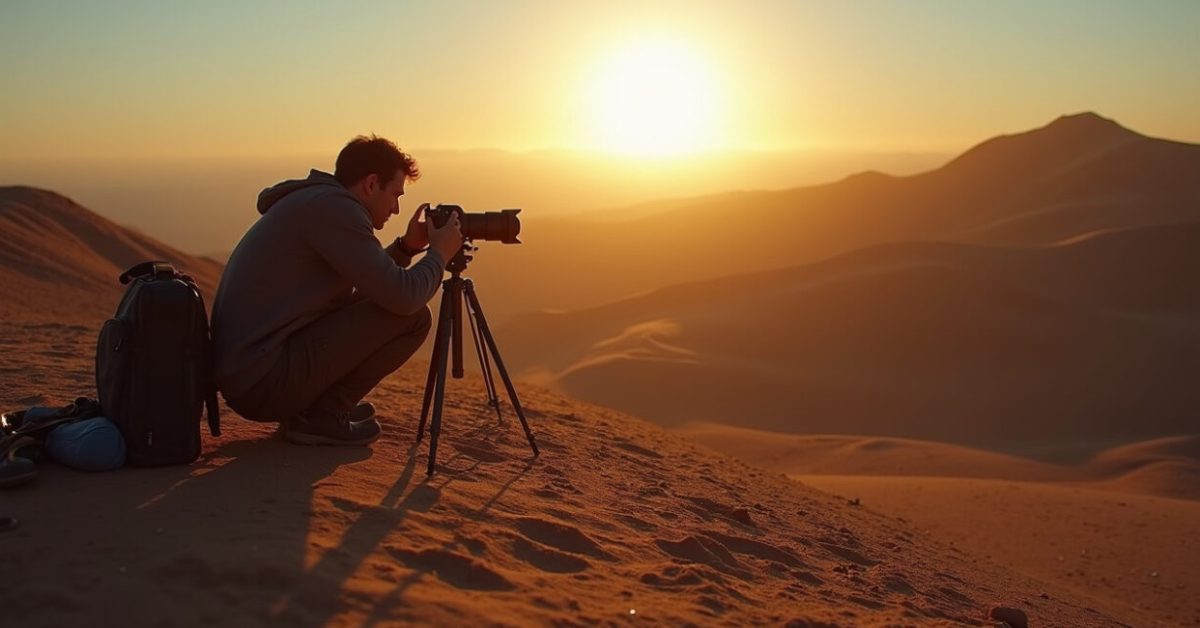

Sunlight at 5:24 a.m. split a desert ridge into gold and shadow. The guide slept; I had a 70-minute window. That brief hour turned a mediocre trip photo into something people stop and stare at. This is the kind of payoff travel landscapes promise when you pack light, scout smart, and move with the sun.
Why Less Gear Wins More Shots
Carrying less makes you shoot more. A full kit slows you down. Travel landscapes reward speed and clarity of thought, not weight. I carry a mirrorless body, one wide lens, a compact tripod, and a neutral-density filter. That’s it. When you have less, you think in compositions, not in gear swaps. The result: sharper images and more scenes captured during the golden hour.
The Minimalist Kit That Covers 90% Of Situations
Here’s a practical list that fits in a small bag and covers most travel landscapes needs.
- Camera body (mirrorless preferred) + one wide zoom (16–35mm or 12–40mm)
- Lightweight tripod (carbon or compact aluminum)
- Polarizer and one ND filter
- Extra battery, 64–128GB card, microfiber cloth
- Small rain jacket for camera + headlamp
This kit beats lugging multiple heavy lenses. That comparison is clear: expectation — perfect gear for every scenario; reality — a short kit that lets you actually make images.

Scout Like a Local: Maps and Apps That Save Time
Scouting before you arrive saves hours in the field. Use satellite view to find lines, rivers, and ridgelines. Check sun and moon path in Photopills or The Photographer’s Ephemeris. Read trail notes on local forums and government park pages for access rules and safety alerts. According to national park advisories, seasonal closures change fast; checking official sources prevents wasted hikes.
Time Management: Own the Light, Own the Shot
Light changes fast. Plan when you’ll be on location, not just which spot. Arrive 45 minutes before golden hour for composition and a safety check. Use apps to know the exact minutes of golden and blue hour. If you have a single tip: shoot the approach — the walk to the viewpoint often hides better frames than the main lookout.
Safety and Efficiency in Unfamiliar Places
Travel landscapes often mean unknown terrain. A few rules reduce risk and speed up shooting. Tell someone your route. Carry a portable charger and a small first-aid kit. Wear shoes that can handle slick rocks. Be aware that good light can tempt you into dangerous positions — don’t trade a photo for your safety. For remote areas, consult local ranger or government pages such as USGS maps for reliable topo info.
Common Mistakes and What to Avoid
Most errors are simple and fixable.
- Overpacking: slows your pace and drains energy.
- Chasing perfect light without scouting: leads to missed opportunities.
- Ignoring safety: costly and unnecessary.
- Relying only on auto modes: lose control of exposure and depth.
A short list of what to avoid helps you shoot more and stress less when chasing travel landscapes.
The Quiet Payoff: Examples That Teach Faster Than Tips
I was at a foggy coast, low on time and patience. I set a simple composition, dialed in a three-second exposure, and waited. A fisherman’s silhouette moved through the frame. It lasted six seconds. The image isn’t flashy, but it has tension, light, and story. That moment came from patience, a small kit, and prior scouting. That’s the point: the best travel landscapes come from preparation plus openness to surprise.
How Much Gear Do I Really Need for Travel Landscapes?
For most trips, a minimal kit is ideal: a compact mirrorless body, a single wide or wide-to-normal zoom, a small tripod, and a polarizer or ND filter. That covers 80–90% of scenes while keeping weight low. Extra batteries and a buffer card are essential. The goal is to stay mobile and responsive to light. Heavy, multi-lens setups slow you and often result in missed golden-hour opportunities.
Which Apps Are Worth Using to Scout and Time Light?
Apps like Photopills and The Photographer’s Ephemeris are indispensable for planning sun and moon positions and golden hour windows. Use satellite maps (Google Earth or official topo maps) to preview lines and access points. Combine those with local weather apps and park service pages for closures and safety alerts. Together they let you pick spots that match the light and avoid surprises on arrival.
How Do I Stay Safe While Shooting Remote Landscapes?
Safety is practical: tell someone where you’re going, check official park pages for trail conditions, and carry basic gear — a headlamp, portable charger, first-aid kit, and water. Wear appropriate footwear and avoid risky ledges for a single frame. If you’re in a wild area, learn basic navigation and check USGS or park maps beforehand. Safety lets you focus on composition instead of worrying about what’s behind you.
What Camera Settings Work Best for Travel Landscapes?
Start with a low ISO, aperture between f/8 and f/11 for depth, and adjust shutter speed to control motion. Use a tripod for low-light or long-exposure scenes. If foreground detail matters, bracket exposures for blending, or use focus stacking for maximum sharpness. Keep settings simple when light changes fast. The aim is to capture the scene’s mood, not chase perfect technicality at the cost of timing.
How Do I Find Unique Compositions in Popular Spots?
Look beyond the main viewpoint: walk the approach, shoot at different heights, and wait for atmospheric changes like mist or shafts of light. Use reflections, foreground textures, or human elements for scale. Sometimes the best frame is a side trail or a subtle angle most people ignore. Prior scouting and patience let you turn a clichéd location into a fresh travel landscapes image.