

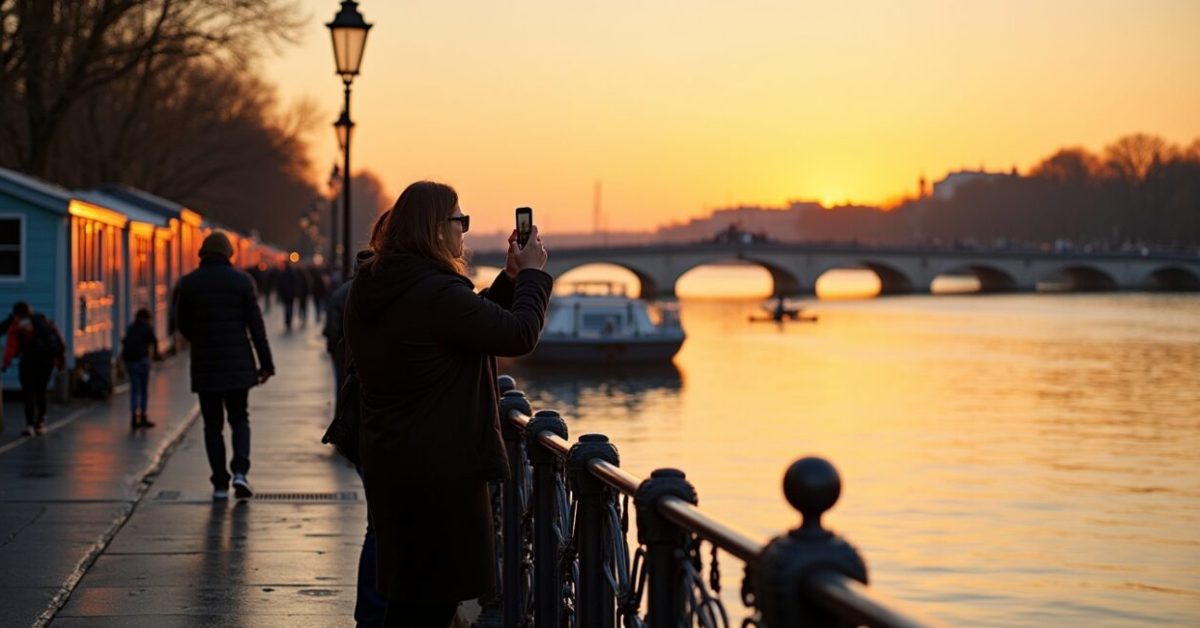

Traffic on the quay slows, a group angles phones over the railing, and for ten minutes the Seine sunsets turn Paris into a glossed painting. If you’ve scrolled past that viral shot—a row of boathouses lit from behind, bridges like silhouettes, river glassing the sky—you’ve seen the trend explode. This isn’t just pretty filters: specific banks, clock times and a few camera moves are making the glow repeatable. Read on if you want the exact riverbanks, the best windows of light, gear hacks for saturated color, and crowd-busting tricks to get dramatic reflections.
Which Banks Actually Give the Viral Glow (and Why)
Not all riverbanks behave the same. The Right Bank near Île Saint-Louis and the stretch by Pont Neuf are producing the most-shared images because of their westward-facing angles and low, reflective walls. The Right Bank wins for long, creamy sunsets; the Left Bank delivers moodier, contrast-heavy scenes. Light hits the façades differently: limestone on the Right Bank bounces warm tones, while the Left’s darker façades keep shadows deep, enhancing color saturation in reflections.
The Exact Clock Windows: When to Be on the Quay
Timing beats gear more often than people think. In summer, the golden window is roughly 30–50 minutes before official sunset; in shoulder seasons, that window shrinks to 20–30 minutes. For punchy colors, aim to arrive 45 minutes early and stay 20 minutes after sunset for the secondary glow. Check civil twilight times (they tell you when the sky keeps giving) and factor in weather: a thin high cloud layer throws colors across the whole sky; clear skies can go flat fast.
Gear That Pulls Richer Colors (it’s Simpler Than You Think)
You don’t need an H-alpha sensor—just the right tools and choices. A mid-range mirrorless or even a modern phone with RAW capture + manual exposure control will outperform over-processed auto modes. Use a small tripod for exposures past 1/60s, a polarizer to cut glare from water when needed, and a slow graduated ND if the sky is much brighter than the river. Shoot RAW, slightly underexpose to protect highlights, and boost vibrance selectively in post.
Composition Tricks for Dramatic River Reflections
Reflections are about geometry, not luck. Low angles near the waterline lengthen reflections; including a bridge arch or a boat bow creates anchor points that break monotony. Try leading lines—quay railings, mooring ropes—or frame a reflection with an overhanging tree to create depth. Flip the frame vertically in your head: what looks boring upright often becomes cinematic when the reflection is emphasized.
How to Avoid the Crowd Without Missing the Shot
This trend made popular spots busy fast, but crowds aren’t unbeatable. Arrive early (the single best move), move 200–400 meters away from landmarks—small side streets or quieter stretches by waterworks often have superior vantage points—and use a small lens to compress distance rather than fight for the center plaza. If you can, shoot during weekday civil twilight or just after dinner when many tourists head indoors. Staying mobile beats holding a spot in packed areas.
Common Mistakes Photographers Make (and How to Skip Them)
People repeat the same errors: overexposed skies, ignoring reflections, and fencing themselves into cliché viewpoints. Here’s what to avoid:
- Chasing the brightest color without protecting highlights—use exposure bracketing.
- Shooting only at ground level—try eye level and low angle variants for variety.
- Relying on edit presets that crush midtones—preserve texture in water and stone.
- Not scouting escape routes—crowds move fast; know your exit to change angles.
Correct these and your images stop looking like feed clones and start feeling like the moment you remember.
Before/after That Proves the Trick (mini-story)
Last August, a friend and I got there late and joined the pack—flat sky, washed colors, nothing special. We walked 300 meters downstream, found a low quay, and decided to wait another 20 minutes. The sun slipped behind a bank of thin clouds and everything transformed: the river turned molten, the shadows lengthened, and a lone café lamp framed the reflection. The shot we took there was shared 10x more than the one from the busy bridge. Small moves, big returns.
For authoritative timing and nautical info, check official civil twilight times at the U.S. Naval Observatory or local meteorological services; tidal and river flow details can come from city water management pages. For historical context on Parisian quays and stone facing, university archives and cultural heritage sites provide useful background—these details help you predict which surfaces will pop in sunset light. U.S. Naval Observatory twilight data and France’s public data portal are practical starting points.
If you want that exact viral look, treat the Seine like a short film location: scout, rehearse shots, and be ready to improvise when light changes. The glow is repeatable—if you learn where to stand, when to click, and what to avoid. Go get one image you can’t stop thinking about.
When Exactly Should I Arrive to Capture the Best Seine Sunset Reflections?
Plan to be on location 30–45 minutes before sunset in summer and 20–30 minutes in spring or autumn. This gives you time to scout micro-angles, set exposure bracketing, and catch the low, warm light that builds before the peak color. Staying 15–20 minutes after official sunset often rewards you with secondary hues during civil twilight. Always check local civil twilight times and weather: a thin high cloud can extend the color window significantly, while clear skies can cut it short.
Which Spots Along the Seine Are Least Crowded but Still Photogenic?
Walk 200–400 meters away from iconic landmarks like Pont Neuf and Notre-Dame to find quieter quays and less photographed bridges. Side streets near Île Saint-Louis, the stretch behind the municipal archives, and areas by lesser-known locks tend to have fewer people and cleaner compositions. Weekdays and just after dinner are low-traffic windows. Small moves from the hotspot often reward you with unique foregrounds—mooring rings, stepped quays, or lone benches—that make images stand out without fighting the crowd.
Can I Shoot Viral-quality Seine Sunsets with a Smartphone?
Yes. Modern phones that shoot RAW and offer manual exposure control can produce images that rival mirrorless cameras in good light. Use a compact tripod or steady your phone on a railing for exposures beyond 1/60s, enable RAW capture, and slightly underexpose to preserve highlights. A small ND or polarizer accessory can help on very reflective water. Post-process selectively: boost vibrance and clarity but avoid heavy presets that flatten shadows and reflections. The composition and timing matter more than megapixels.
What Post-processing Tips Will Keep Colors Natural but Dramatic?
Start by adjusting exposure and protecting highlights in the sky, then lift shadows to reveal river detail. Increase vibrance (not saturation) to push color without clipping skin tones or stone. Use selective adjustments: a graduated mask for the sky and a radial or linear mask for the river’s reflection. Apply gentle clarity to enhance texture, and finish with local sharpening. Preserve contrast where needed and avoid heavy noise reduction that softens ripples—these small choices maintain realism while emphasizing drama.

Are There Legal or Safety Things to Watch for When Shooting Along the Seine?
Yes—some quays are private or have restricted access, and during high water events parts of the riverbank may be closed for safety. Always respect signage and barriers, and avoid blocking pedestrian flow or emergency access. For late-night shoots, take care with footing near wet stone and tides; slip risks increase. If you plan to work commercially (selling images or conducting tours), check local regulations or permits. When in doubt, consult city guidance on riverside access and public safety before setting up equipment.