

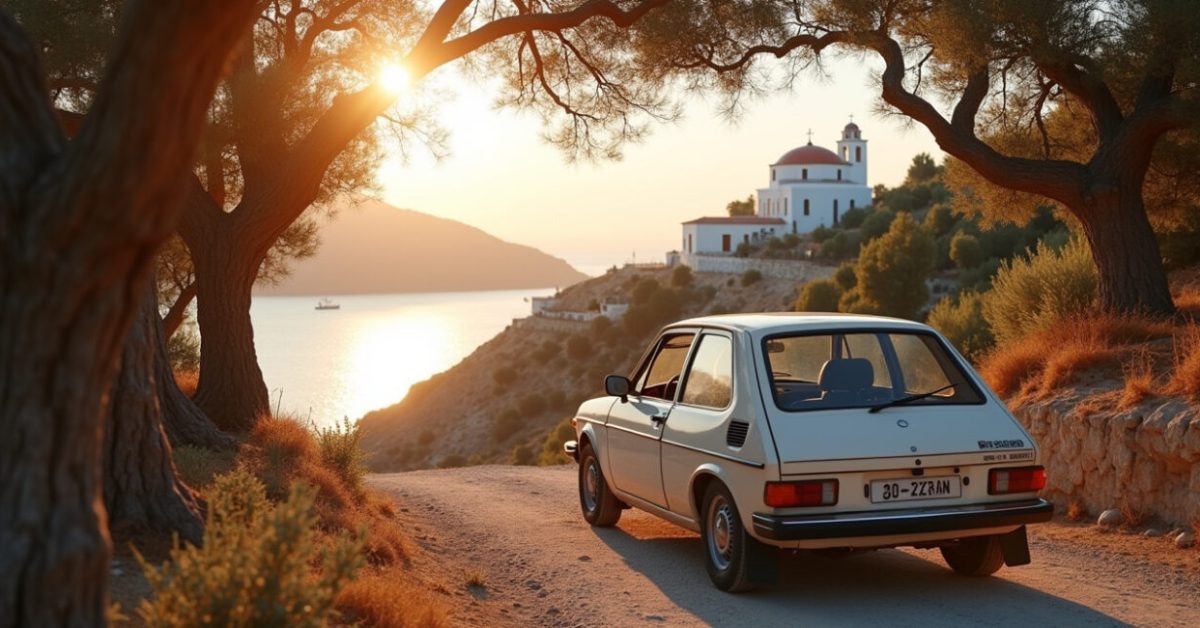

Sunlight sliding across an olive grove. A whitewashed church glowing at golden hour. You stop the car, grab your camera, and for five minutes everything looks like the photo you’ve been chasing for years. That is the power of road trip photography — and in Greece, those five minutes happen more often than you think. This guide gives you the routes, the exact stopover viewpoints, the best times to shoot each leg, and real packing advice for mobile landscape shoots.
The Aegean Coastal Loop: Why Sunrise Shots Here Beat the Postcards
Drive time: compact day legs with long light. If you want silhouettes of fishing boats and glassy water, shoot at first light. On the Aegean Coastal Loop — think Athens to Nafplio, then north along the eastern Peloponnese — the sun rises over calm bays that reflect color like a mirror. road trip photography works here because the coast is accessible; you can pull over, hop onto rocks, and capture clean compositions fast.
- Best window: 30–60 minutes before sunrise to 30 minutes after.
- Must-stop: Tolo bay for low-tide reflections.
- Gear tip: mobile ND or CPL filters for smooth water on phones or compact rigs.
Peloponnese Highlands: The Light That Sculpts Stone and Shadow
Expectation vs. reality: you expect ruins; you get textured mountains and dramatic clouds. On the winding roads between Olympia and Monemvasia, the angle of light in late afternoon sculpts limestone cliffs and olive terraces. Use road trip photography to sequence shots: wide dawn panoramas, midday detail frames, and low sun rim-light portraits of lead-lined stones.
Common mistake: waiting for midday color. Instead, plan to shoot late afternoon to capture depth and shadow.

Meteorán Monastery Run: Timing the Human Scale with Vast Cliffs
Meteoron is one of those places where scale is everything. The monasteries sit on sandstone pillars that catch light differently across the day. For road trip photography, aim for golden hour below the cliffs and a blue-hour panorama from a viewpoint uphill. The contrast between tiny human figures and huge rock forms makes frames that travel well.
- Recommended shot list: wide from the north viewpoint, verticals including a person, texture close-ups of rock faces.
- When to shoot: late afternoon to blue hour; sunrise can be foggy and moody.
Crete’s South Coast: Unexpected Deserts and Cinematic Sunsets
Crete flips expectations. The south coast near Matala has canyons, red cliffs, and desert-like beaches. For road trip photography, treat each road stop like a micro-session. You’ll change scenes in 20 minutes — canyon, then cliff, then seaside. That variety makes fast, high-reward shooting possible even on a short route.
Pack light: a fast wide, a tele for compressed sunrises, and layered clothing for sudden wind off the Libyan Sea.
The Cyclades Island Chain: Mobility, Minimalism, and Midday Magic
Everyone thinks Santorini at sunset. But road trip photography on the Cyclades rewards mornings and slow afternoons when alleys and staircases empty. Mobility wins: a camera strap or compact mirrorless with a 24–70 or a phone with a gimbal lets you move between viewpoints quickly. Minimal gear and quick decisions beat heavy setups on pebble streets.
- What to avoid: bringing huge tripods into narrow alleys.
- Best practice: shoot sunlit textures between 10–14:00 when shadows define architecture.
How to Pack for Mobile Landscape Shoots — What You’ll Actually Use
Overpacking kills mobility. For road trip photography in Greece, choose items that work across conditions. Think layers for you, and versatility for gear. A small shoulder bag with a 16–35mm, a 50mm, and a lightweight tele covers almost everything. Add a compact tripod, filter set, spare batteries, and a phone power bank that doubles as a tripod mount.
- Essentials: fast lens, spare card, microfibre cloth, rain cover.
- Optional but useful: polarizer, neutral density, small LED panel for fill.
Practical Route Plan: A 7-day Photographer’s Loop with Shoot Windows
Here’s a concise, practical plan you can follow. Each day is a drive plus two main shoot windows. This is road trip photography that respects light and rest.
| Day | Route | Best Windows |
|---|---|---|
| 1 | Athens → Nafplio | Sunrise at Vouliagmeni, golden hour at Bourtzi |
| 2 | Nafplio → Olympia | Late afternoon olive terraces |
| 3 | Olympia → Monemvasia | Sunset over the rock |
| 4 | Monemvasia → Crete (ferry) | Golden hour cliffs on Crete |
| 5 | Crete south coast | Sunrise canyons, sunset beaches |
| 6 | Fly to Santorini → explore | Early morning alleys, late afternoon caldera |
| 7 | Meteora day trip (from Thessaloniki) | Late afternoon viewpoints |
For planning logistics and ferry schedules, check official transport pages like the Greek Ferries guide and regional travel advice from the Hellenic Ministry of Tourism.
Comparison that matters: Many guides treat Greece like one postcard. The difference in this route is rhythm — frequent short stops, planned light windows, and gear pared to motion. The result is more publishable frames per hour.
Mini-story: On a narrow coastal road near Kardamyli, I pulled over to fix a lens hood. A shepherd stopped to help. We laughed, he pointed to a nearby headland, and ten minutes later I shot one of my favorite sunrise frames. That unexpected human moment turned a technical pause into the best photo of the morning.
Errors to avoid on any Greek road trip photography run:
- Waiting at the obvious viewpoint while the better light is five minutes down the road.
- Packing lots of heavy gear and then shooting from the car window.
- Ignoring tide and ferry schedules — they change your plan fast.
Plan smart, travel light, and give yourself permission to stop. The best shots come when you accept detours as part of the route.
Ready for a last thought? Greece rewards curiosity more than equipment. Bring a few reliable tools, a map, and the patience to park twice for the same light. The payoff is frames that feel like you discovered them, not copied them.

How Much Driving is Reasonable in One Day for Focused Landscape Shooting?
Plan for 2–4 hours of driving max if you want to shoot well. Long drives eat light and energy. Keep legs short and schedule two main shoot windows: sunrise and late afternoon. Between them, use midday for scouting and short handheld sessions. Factor in stops for weather, food, and unexpected viewpoints. This approach gives you fresh light and fewer rushed shots. It also avoids the typical mistake of forcing good photos at the end of a long, tired day.
Which Lenses Give the Best Return for Road Trip Photography in Greece?
Bring versatile, fast glass. A wide zoom (16–35mm or 24–70mm) and a short tele (70–200mm or 50–100mm) cover most needs. The wide captures landscapes and architecture; the tele compresses islands and isolates textures. If traveling ultra-light, a single 24–105mm or an all-in-one zoom on a mirrorless body works well. Prioritize low weight and fast apertures so you can shoot handheld during low light without breaking your pace.
Can I Rely on a Smartphone Alone for These Routes?
Yes, smartphones can produce excellent results if used intentionally. Use a tripod or small gimbal for long exposures and blue hour shots. Add a clip-on ND or CPL filter when needed. Smartphones excel at quick compositions in alleys and tight viewpoints where a big lens would be cumbersome. The trade-off is limited dynamic range and optical zoom, so plan for more framing creativity and fewer long telephoto compression shots.
What Weather Considerations Should I Build Into My Road Trip Photography Plan?
Greek weather is generally reliable, but coastal winds and sudden cloud cover change scenes fast. Check local forecasts the night before and plan flexible shoot windows. For dramatic skies, mid and late afternoon can produce contrasty light; for silky seas, shoot around dawn with long exposures. Always carry a lightweight rain cover for gear and quick-dry clothing. Being ready to shoot in changing conditions is often the difference between a good trip and a great one.
How Do I Manage Battery, Storage, and Backups on a Multi-day Loop?
Use two batteries for each camera and a portable power bank for phones. Swap and recharge whenever you stop for lunch or a ferry. Carry multiple memory cards and offload daily to a small SSD or a rugged laptop. A workflow like: shoot → copy to backup → verify → format cards keeps data safe. This simple routine prevents the nightmare of filling your only card on day three. Treat backups as part of your shooting routine, not an afterthought.