

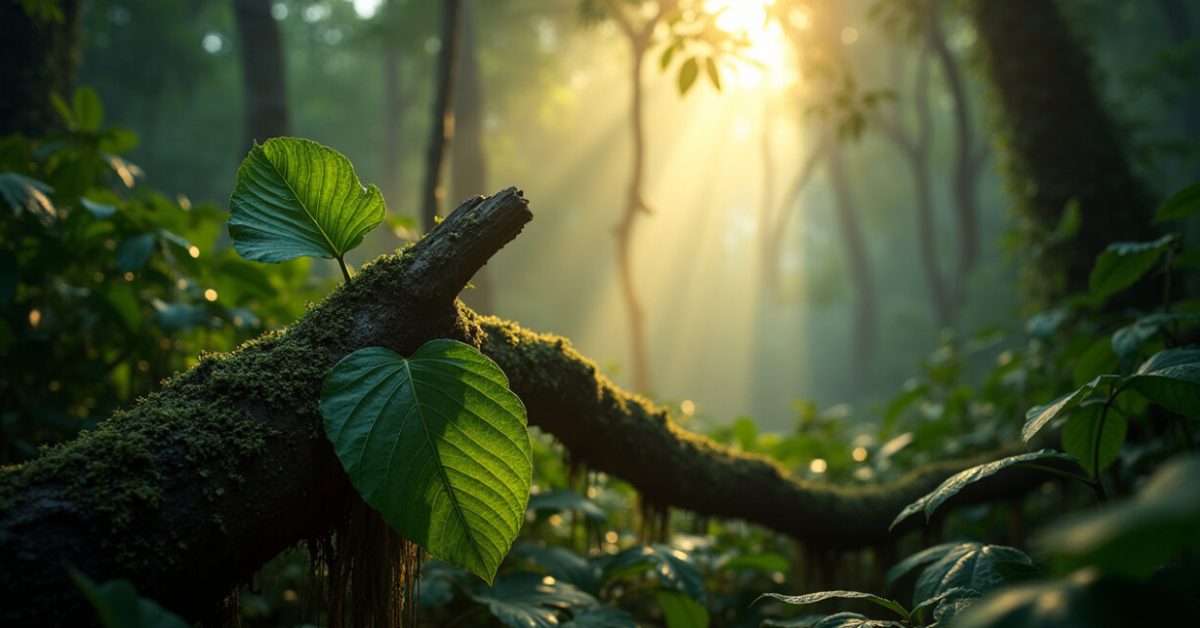

Wet leaves, a fallen trunk cutting diagonally across your frame, and light that survives only in small, hungry pockets — that’s when rainforest composition turns from chaotic to cinematic. In dense Indonesian jungles, the trick isn’t to simplify the scene but to organize the chaos: layering foregrounds, hunting light spots, using leading lines and choosing focal lengths that sculpt depth. rainforest composition appears in the first glance when you know how to make clutter read as structure.
Find Depth by Building Layers, Not by Removing Elements
Layers are your fastest shortcut to three-dimensional rainforest composition. Instead of clearing the frame, stack meaning: a sharp leaf in the foreground, a mid-ground vine, and a misty canopy far back. That triple plane gives your viewer a place to enter the photo. Use a small aperture for deep focus when you want everything crisp. Open up the aperture and pick a strong foreground subject when you want to isolate a story within the jungle. The goal is depth, not emptiness.
Turn Vines and Trunks Into Leading Lines That Guide the Eye
Leading lines tame the visual noise of an Indonesian rainforest. A leaning trunk, a sinuous buttress root, a trail of ferns — these elements can point the eye to your subject. Walk around until those lines meet in a sweet spot, then shoot. In practice, you’ll use diagonal lines for motion, verticals for strength, and curves for mystery. rainforest composition improves when you think of every vine as a pointer, not clutter.

Hunt for Light Spots: Small Highlights, Big Impact
A single sun patch can flip a scene from flat to dramatic. The jungle gives fragmented light. Train your eyes to find those pockets. Expose for the highlight and let the shadows fall away; or use a fill flash to lift foreground details while keeping the mood. Light spot hunting is less about luck and more about patience — wait for the moment the sun threads through leaves and your composition will sing.
Choose Focal Length Like a Sculptor, Not Like a Checklist
<strong<Focal-length choices change how dense the forest feels: wide to include, tele to compress. A 16–35mm puts you inside the scene; it emphasizes the foreground and makes the canopy recede. A 70–200mm compresses layers, making trunks and mosses stack like tiles. Use mid-tele for isolated details that still read as part of the landscape. Switching lenses is a storytelling choice: match focal length to whether you want immersion or intimacy in your rainforest composition.
The Comparison That Flips How You See Clutter
Expectation: you clear the scene and make it neat. Reality: clutter can become structure. Imagine the same clearing shot before and after applying these rules — the before looks like a mess; the after reads like three planes of purpose. This before/after comparison shows that what we call clutter is often untapped geometry. Treat every overlapping leaf as a layer or line and the jungle stops being messy and starts being composed.
Common Mistakes That Kill Rainforest Composition (and How to Avoid Them)
Knowing what not to do accelerates your progress more than one more tutorial. Common errors: shooting dead center with no foreground, chasing perfectly sharp everything, ignoring small light patches, using the wrong focal length, and forcing symmetry in an asymmetric jungle. Avoid them by moving your feet, prioritizing a single entry point for the viewer, and letting dark areas breathe. A quick checklist in the field will save you hours of wasted editing time.
- Don’t center everything — create an entry point.
- Don’t fear shadows; use them to shape depth.
- Don’t overuse wide-angle for tight subjects.
- Don’t ignore mid-ground elements — they connect foreground to background.
A Short Scene That Teaches a Rule
On a humid morning in West Kalimantan I crouched beside a stream. A single fern in the foreground caught a ray of sun. Behind it, a fallen log created a diagonal; beyond, mist softened trunks into layers. I shot one frame wide and one with a short tele. The wide frame felt immersive; the tele felt intimate. Both worked because the fern gave the viewer a foothold. That fern — small, overlooked — was the anchor that turned chaos into composition.
For context on tropical canopy structure and light patterns, see research from UNESCO and remote-sensing studies at NASA, which explain why Indonesian forests produce such patchy light and dense layering.
Go out with a plan: build layers, shape lines, hunt light, and choose focal lengths with intent. rainforest composition isn’t a formula — it’s a set of habits that turn the jungle’s complexity into images that stop thumbs and start conversations.
One last thought: the next time you think the jungle is too messy to photograph, remember that the forest is already organized — you just need to learn its grammar.
How Do I Start Building Layers in a Cramped Jungle Path?
Start small: pick one clear foreground subject within arm’s reach — a leaf, root, or rock — and place it prominent in the frame. Then look for a mid-ground element (a person, a trunk, or a vine) and a background plane (canopy, mist, or distant trees). Use aperture to control how much of each plane reads. Move left or right until the foreground leads naturally to the mid-ground. This stepwise method makes rainforest composition manageable even in tight spaces.
Which Focal Length is Best for Indonesian Rainforests?
There’s no single “best” focal length; choose based on intent. Wide lenses (16–35mm) immerse you in the scene and emphasize foreground geometry. Mid-range (35–70mm) balances context with subject separation. Tele (70–200mm) compresses layers and isolates details. For rainforest composition, a zoom range that covers wide to short tele is ideal because you’ll switch between immersive scenes and intimate details quickly as light and subjects change.
How Can I Find and Use Light Spots Effectively?
Light spots are frequent but fleeting. Walk slowly and scan for brighter patches on leaves or trunks. When you find one, frame so the highlight leads to your subject. Expose for the highlight if you want mood; or use fill flash to lift shadow areas while retaining contrast. Time of day matters: early morning and late afternoon give softer, directional rays. Patience is key—waiting two minutes for the sun to break through often yields the best rainforest composition moments.
What Are Quick Fixes In-camera to Reduce Clutter?
Fast, in-camera fixes beat long edits. Change perspective—get low or higher—to change how elements overlap. Use a wider aperture to separate subject from background. Shift focal length to compress or expand layers. Recompose so a strong line guides the eye. If possible, nudge movable elements (a leaf or vine) gently out of the way. These quick moves simplify the frame while keeping the scene genuine and natural, improving your rainforest composition on the spot.

How Do I Keep Images Feeling Three-dimensional After Editing?
In post, avoid over-smoothing shadows or flattening contrast. Increase mid-tone contrast slightly and use local dodging and burning to reinforce natural light paths. Sharpen selectively on the subject and keep background softer. Add subtle clarity to mid-ground textures to preserve layering. Color grade to maintain depth—cooler tones in the background and warmer tones in the foreground help the eye read planes. These edits preserve the three-dimensional quality you built with your rainforest composition in-camera.