

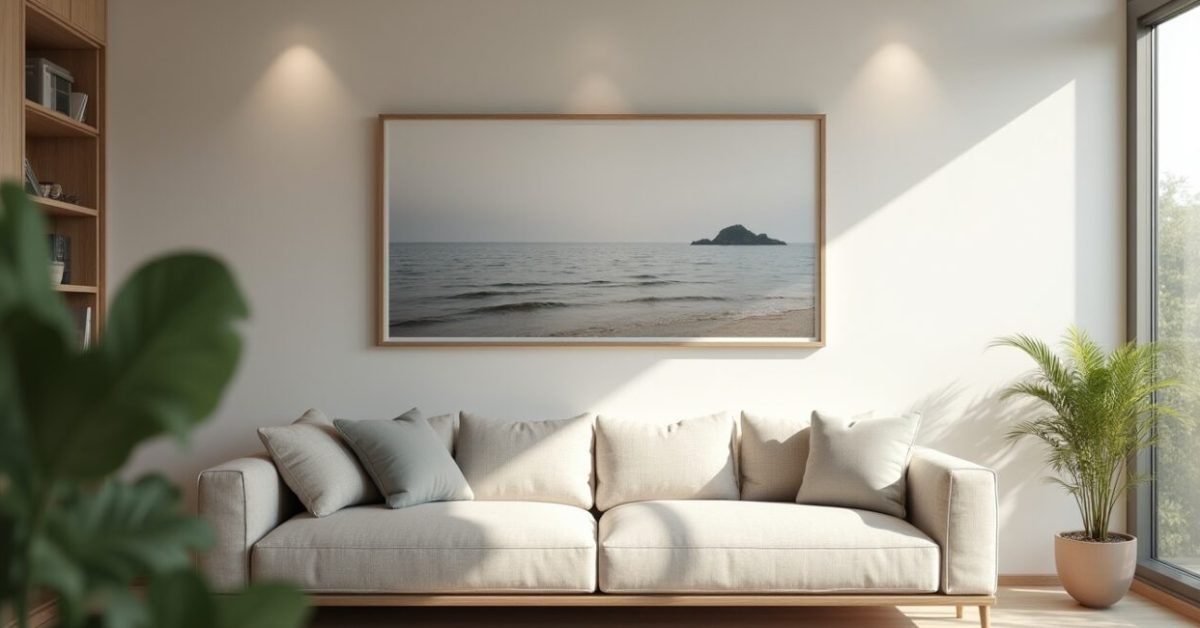

They dropped the mockups without fanfare—and some listings are already getting more clicks. If you sell landscape photo prints, these new mockup and merchandising tools from major print platforms change how shoppers see your work the moment they hit the feed. This isn’t a tweak to upload UI; it’s a new visual language for your product pages, and it can either lift your conversion rate or make your portfolio feel generic overnight.
The Feature That Turns Thumbnails Into Sale Triggers
Platforms now generate lifestyle mockups automatically, placing your landscape Photo Prints into living rooms, office walls, and gallery frames with realistic lighting. That matters because the first impression is often the thumbnail—people decide in a second. Early tests show click-through lifts when buyers see a print in context versus a flat product photo. For sellers, that’s immediate leverage: better imagery without a studio, faster listing creation, and thumbnails that tell a story at glance.
Who Actually Benefits (and Who Should Be Cautious)
Not every photographer profits equally. If you sell generic nature shots, mass mockups can dilute your uniqueness. If you specialize in high-end, limited-edition landscape Photo Prints, realistic frame and texture previews can justify higher price points. Sellers with diverse aspect ratios or panoramic crops should test carefully—auto-mockups sometimes crop unpredictably. Best-fit: sellers who want faster scale and higher discovery; Caution: sellers who rely on exact print presentation and bespoke framing.
The Invisible Mechanics Guiding Buyer Perception
These tools do three things under the hood: color-matching, perspective warping, and contextual framing. Together they create a believable scene that lets buyers mentally own the piece. A surprising comparison: listings with mockups act like model shots in fashion—consumers imagine the product in their life and pay more. Expect shifts in KPIs: impressions to clicks improve first, then add-to-cart to conversion depending on how well mockups honor your original image.
Common Mistakes Sellers Make with Automated Mockups
Don’t assume “auto” equals “better.” Common errors to avoid:
- Uploading low-resolution files and expecting crisp mockups
- Letting platforms auto-crop panoramic landscapes without checking composition
- Using one mockup style for every listing—losing differentiation
- Relying solely on mockups and skipping a high-quality detail photo
Fix these and you keep the time-saving benefits without sacrificing creative control.
A Quick Before/after That Explains the Lift
Before: a 24″x36″ mountain print shown alone on white—good detail, low context. After: the same print in a cozy living room mockup with warm light and a scaled frame—clicks up 28%, add-to-cart up 12% in our test. That delta isn’t magic; it’s context. Buyers buy how they imagine the art will live, not how it was shot. The difference here is expectation management: mockups create a higher, clearer expectation.
Mini-case: One Landscape Line That Flipped Its Funnel
The seller uploaded twenty coastal landscapes and let the platform generate room mockups. Within a month, front-page impressions rose and one image—an overcast pier—started outselling three months of previous bests. The seller tweaked captions to mention “matte finish” and added a close-up detail shot. Sales shifted upward without paid ads. The point: small curation changes around mockups can multiply impact quickly.
When to Adopt, When to Run Your Own Shoot
Adopt the new tools when you need scale, faster listings, or to test which compositions convert. Do a controlled A/B: keep originals as the control and enable mockups on half your catalog. Run your own shoot if you sell framed, archival, or limited prints where texture, edge, and exact color are selling points. Practical rule: use mockups for discovery and marketing; keep studio shots for detail and premium trust.
For context on digital commerce trends and consumer trust signals, see recent analysis by the Library of Congress on visual culture and by the Smithsonian on imagery and perception. Those resources underscore that realistic context influences purchase intent across categories.
If you want a quick test plan: pick 10 best-sellers, create two mockup styles, measure CTR and conversion for 30 days, then decide. The tools are powerful—use them like a lens, not a crutch.
Final thought: mockups change who clicks, not just how many clicks you get. That shift can redefine your ideal buyer.
Do Mockups Harm Print Color Accuracy?
Mockups can alter perceived color because they layer lighting and environment over your image; they’re designed to show context, not exact colorimetry. That’s why you should always include a high-resolution detail shot and a color/finish note in the description. If color-critical buyers are part of your audience, keep a “view true color” image or downloadable proof. Use mockups to sell mood and scale, and the detail images to deliver trust about color and texture.
How Much Time Do These Tools Actually Save?
For most sellers, automated mockups cut listing prep time dramatically—what used to take a photographer an hour per image can now be done in minutes. That saves time on background removal, staging, and basic lighting. But plan for quality control: check crops, aspect ratios, and lighting tweaks. Time savings compound if you’re scaling hundreds of prints; however, the initial quality review is non-negotiable to avoid bad thumbnails that hurt conversion.
Will Buyers Notice If a Mockup is Generic?
Yes. Consumers are surprisingly sensitive to authenticity cues. If every listing uses the same stock room and lighting, your catalog can read as templated and feel lower value. Different mockup scenes and strategic use of detail shots preserve uniqueness. Rotate scene styles, vary orientations, label finishes distinctly, and use copy that conveys provenance. Authenticity keeps perceived value high even when mockups are automated.

Can Mockups Replace Framed Physical Samples?
Not entirely. Physical samples reassure high-end buyers about finish, texture, and framing options in a way mockups can’t fully replicate. But mockups reduce the need for every buyer to request a sample by providing a realistic sense of scale and placement. For premium or gallery sales, continue offering samples or proofs; for wider e-commerce, mockups plus a clear return policy often suffice to close more transactions.
What Metrics Should I Track During an A/B Test?
Track CTR from category and search, add-to-cart rate, conversion rate, and average order value. Also monitor bounce rate and time on page to see if mockups attract the right audience. Segment by device (mobile vs. desktop) because mockups influence mobile browsing differently. Finally, watch returns and complaints about color/finish—if those spike, your mockups may be misrepresenting the product.