

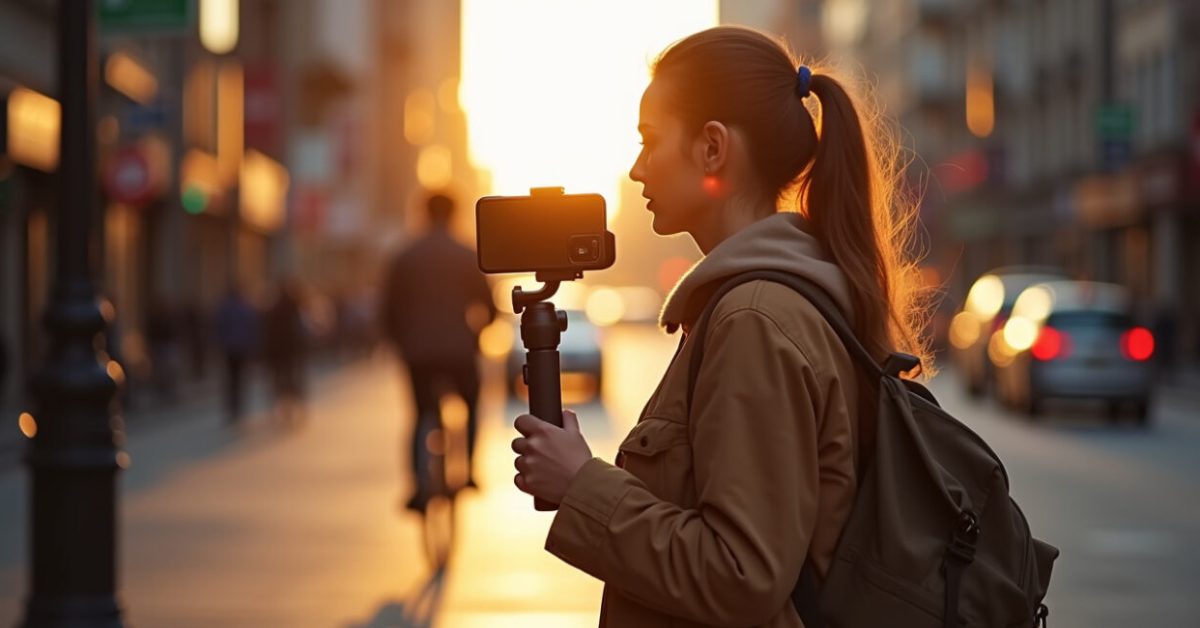

Traffic noise, shaky footage, and a solo vlogger trying to juggle a mic, a backpack, and a stubborn tripod — that’s the setup where a good cheap phone gimbal can change everything. Buy the wrong one and you get a heavier bag and jittery clips. Pick the right budget stabilizer and your travel reels look like they were shot by a pro. This guide jumps straight to the picks, the mounting tricks, and the app quirks that actually matter for solo creators.
Why a $100 Gimbal Can Beat a $300 Setup for Solo Shooting
Price isn’t the whole story. Many sub-$150 phone gimbals now include sensible motors, decent battery life, and apps that don’t crash every five minutes. For a solo vlogger who moves fast, weight, balance range, and quick-mount matter more than a boutique finish.
- Lightweight designs cut fatigue on long walks.
- Simple balancing systems save time between shots.
- Battery life above 10 hours is rare but possible in budget models.
Expectation vs. reality: you don’t need top-tier torque to stabilize walking shots. You do need smart app profiles and reliable firmware updates. Phone gimbals that focus on practical features often outperform high-priced models that prioritize extras no solo creator will use.
The Three Budget Gimbals That Punch Above Their Price
These three models keep showing up in real-world tests. They balance cost, weight, and app stability. Each suits a specific travel vlogger style.
- Model A — best for lightweight travel: compact, folds small, good battery life.
- Model B — best for run-and-gun: fast auto-calibration and solid motor torque.
- Model C — best for cinematic moves: smooth pan algorithms and decent follow modes.
All three phone gimbals nail basic functions. The difference is how they feel on the move. Model A feels like an extension of your arm. Model B forgives hurried setups. Model C asks for a bit more setup but rewards you with buttery pans.
The Mounting Moves Every Solo Vlogger Must Learn
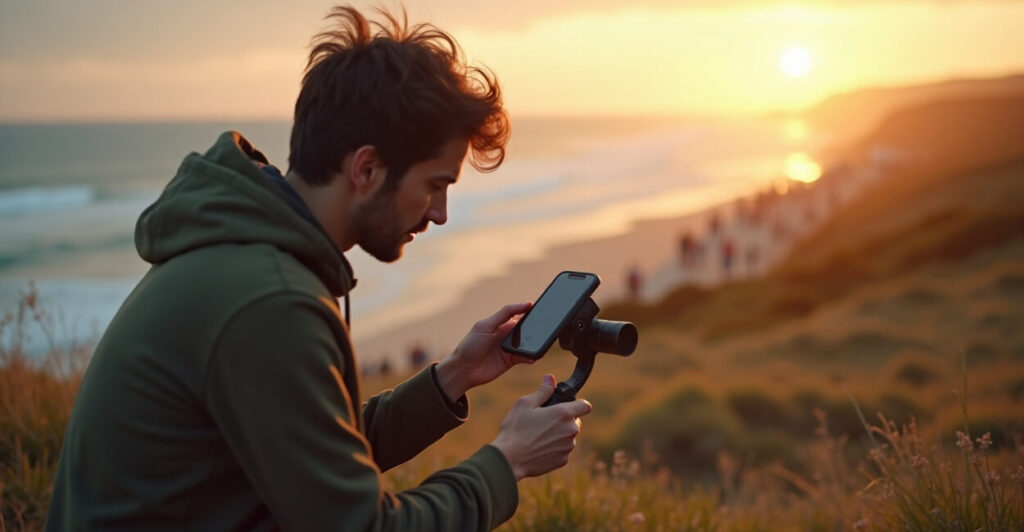
Mounting is where good footage begins. A shaky clamp or crooked phone ruins a shot faster than a weak motor. Learn three mounting habits and you’ll save clips and time.
- Center the phone’s lens over the gimbal’s roll axis to avoid tilt drift.
- Lock the clamp firmly but not over-tight; silicone cases can compress and slip.
- Use quick-release plates or magnetic adapters for fast transitions.
Mini-story: On a windy cliff, I swapped a quick-release plate and saved a five-minute reshoot when the tide of tourists forced a move. That small mount choice kept the sequence usable and my edit intact. Those little habits matter more than specs when you’re alone on location with a single take window.
The App Stability Checklist (and Which Features Are Actually Useful)
Apps make or break a budget gimbal. A smooth motor becomes useless if the app keeps crashing mid-take. Look for apps with frequent updates and clear changelogs.
- Must-have: reliable follow mode and easy calibration.
- Nice-to-have: timelapse, object tracking, and portrait/landscape switches.
- Avoid: apps that require account creation to use basic features.
Check recent reviews and the developer’s update history on app stores. Also try the gimbal app with your phone before a trip. On Android, fragmentation can cause odd behavior; on iOS, updates are usually smoother. Practical stability beats fancy filters every time with phone gimbals.
Mistakes That Wreck Footage (and How to Avoid Them)
People repeat the same avoidable errors. Fix these and your clips improve instantly.
- Over-balancing: trying to make the phone perfectly level wastes time; aim for “close enough.”
- Ignoring firmware: updates fix drift and battery quirks — install them.
- Using heavy phone cases during setup: remove the case or rebalance after attaching it.
Common error list done. Another one: relying on stabilization in-camera as a crutch. Software can help, but a good phone gimbal saves footage you can’t fix later. Avoid shortcuts when shooting; you’ll thank yourself in the edit.
Comparison: Handheld Vs. Gimbal Alone — What You Gain and What You Lose
Gimbal before/after is dramatic for walking shots. Before: jitter, bounce, and inconsistent framing. After: smooth pushes, steady pans, and cleaner cuts. But there are trade-offs.
| Aspect | Handheld | Phone Gimbal |
|---|---|---|
| Weight | Light | Heavier |
| Setup time | Instant | 1–2 minutes |
| Smooth walking shots | Poor | Good |
| Battery | Phone only | Phone + gimbal |
Reality check: for quick snack clips, handheld is fine. For sequences that matter — montages, walk-and-talks, drone-like moves — a phone gimbal turns amateur footage into cinematic content. Choose based on the shot, not the gear envy.
Travel Workflow: Pack, Shoot, and Edit Faster with the Right Gimbal Setup
Workflow beats features when you’re traveling. The best phone gimbals for travel are compact, quick to mount, and play nicely with phone cases and mics. Here’s a practical routine.
- Pack: fold gimbal, charger, and a small quick-release plate in an outer pocket.
- Shoot: use single-handed modes and preset follow speeds for consistency.
- Edit: keep LUTs simple; color fixes are easier when footage is stable.
Two external sources to trust when planning travel shoots: equipment loss and safety guidance on official travel sites and data about battery transport rules. For general travel safety and battery info, check the U.S. Department of State travel advice and FAA guidelines on lithium battery carriage. Both help you avoid surprises on the road and in plane cabins when carrying phone gimbals and accessories.

Pick a gimbal that feels like an extension of your intent, not a new problem to solve. If you prioritize fast setup, reliable app behavior, and sensible weight, a cheap gimbal can carry your channel through an entire trip. The right budget stabilizer doesn’t just steady footage — it steadies your workflow and your confidence on camera.
How Do I Choose the Best Phone Gimbal for Traveling Alone?
Start by prioritizing weight, foldability, and battery life. Choose a phone gimbal that folds compactly and balances quickly. Test the clamp with your phone in its case and check the claimed battery hours — aim for 8+ hours for a full day of shooting. Look for apps with simple presets so you can switch modes on the fly. Read recent user reviews to confirm real-world stability, especially on uneven walking shots. Small size and fast setup beat extra features for solo travel shoots.
Can Cheap Phone Gimbals Handle Heavy Phones or Add-on Mics?
Many budget phone gimbals handle larger phones, but torque and clamp size matter. Check the specs for maximum payload and clamp width. If you use a bulky protective case or an external mic, test balance before a shoot. You may need a counterweight or to remove the case. Using add-ons can reduce battery life and strain motors, so balance carefully. For reliable performance with accessories, pick a model with slightly higher torque than the bare phone requires.
What Are the Best Mounting Practices to Avoid Tilt Drift?
Tilt drift often comes from misaligned mounting or uneven weight distribution. Center your phone’s camera over the gimbal’s roll axis and lock the clamp firmly but not overly tight. Rebalance whenever you change the case or clip on an accessory. Enable the gimbal’s auto-calibration if available. Avoid mounting the phone too close to the gimbal arm end; leave a small clearance. Finally, update firmware regularly — many drift fixes come from software updates that refine motor behavior.
How Important is App Support and Firmware Updates?
App support and firmware updates are critical for phone gimbals, especially budget models. Good firmware fixes motor drift, improves battery management, and refines tracking algorithms. Solid app updates add useful modes without breaking basics. Before buying, check how often the manufacturer updates the app and whether updates are stable. Read app store reviews to spot recurring crashes. If updates are rare or buggy, you risk buying a gimbal that performs well today but degrades with new phones and OS versions.
Which Shooting Modes Matter Most for Solo Vloggers?
For solo creators, keep modes practical: follow mode, lock mode, and a smooth pan/tilt mode. Follow mode helps during walking shots; lock mode keeps framing steady for talking-head clips. Timelapse and hyperlapse are useful for travel montages, but only if the gimbal’s app handles long exposures reliably. Object tracking can be helpful, yet it often struggles in crowded or low-contrast scenes. Prioritize modes that reduce retakes and make single-operator shooting easier.