

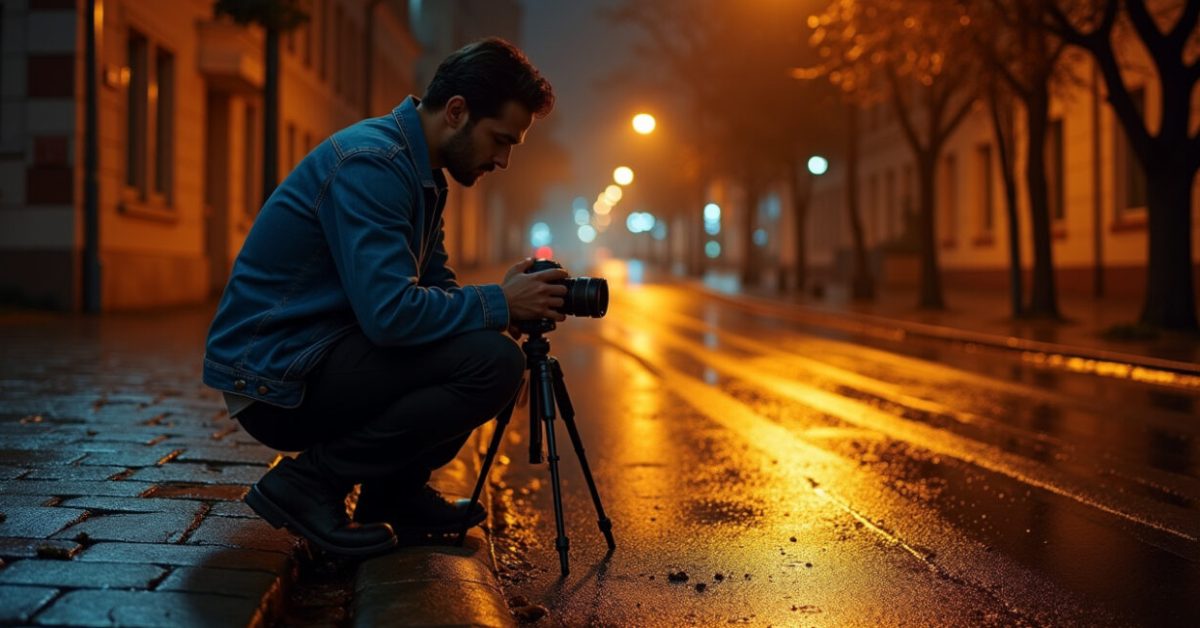

The streetlight stalled at the curve, my hands numb, and the camera screen showed only a smear of orange. Then one shift — a steadier setup, the right ISO, a soft LED for fill — and the smear became a picture you’d hang on a wall. If you shoot after sunset, these night photography tips will shrink that gap between messy blur and crisp, color-rich images fast.
The One Setting Change That Fixes 70% Of Bad Night Shots
Stop blaming the dark — fix your shutter and support first. Most blur comes from camera movement, not lack of light. For DSLRs, use a shutter speed that matches your focal length: 1/(focal length) sec as a baseline, then use a tripod for anything slower. On phones, lock focus and use a dedicated night mode or long-exposure app. These night photography tips win you sharpness immediately — reduce camera shake before tweaking ISO or color.
How to Get Crisp Images Without Cranking ISO Into the Red Zone
Higher ISO is not a win; it’s a trade-off. Noise lives where ISO is high. Instead, enlarge exposure using three levers: aperture, shutter, and support. Open the aperture where possible. Use a tripod or stable surface to allow longer shutter speeds. For phones, use exposure stacking or a RAW night mode to blend frames. These night photography tips help you keep ISO moderate and preserve color and detail.

The Lens Choice That Changes Night Photos More Than Your Camera Body
A fast lens (f/1.4–f/2.8) often beats a newer camera body for low-light work. Why? Wider apertures gather more light per frame, which lets you shorten shutter speed and lower ISO. For street scenes or portraits under lamps, a 35mm or 50mm fast prime gives cleaner images than a slow zoom. These night photography tips mean: rent a fast prime before upgrading your camera.
The Phone Tricks Pros Use (yes, You Can Shoot Gallery-worthy Nights)
Phones aren’t handicapped; they just need different moves. Use a phone tripod or brace against a wall. Tap to lock focus and exposure, then reduce exposure compensation slightly to protect highlights. Try multi-frame night modes and export RAW if available. Shoot multiple frames and pick the sharpest. These night photography tips turn most smartphones into competent night shooters — you’ll be surprised how much color and detail you can squeeze out.
The Color and White Balance Secret Nobody Tells You
Auto white balance at night lies often. Street lamps vary: sodium lights push orange, LEDs push green-blue. Pick a white balance and stick with it — then fine-tune in RAW. For consistent color across a shoot, set a custom Kelvin on DSLRs or choose a preset. On phones, shoot RAW or use selective color edits. These night photography tips will rescue skin tones and city hues that otherwise look fake or muddy.
The Comparison That Makes the Learning Curve Obvious: Tripod Vs. Handheld
Expectation: handheld night shots are convenient and sharp. Reality: handheld yields motion blur and high ISO. Compare two identical frames: handheld at 1/30s, ISO 3200 (grainy, soft) versus tripod at 2s, ISO 200 (clean, crisp). That before/after hits quickly. Use a tripod or solid support to lower ISO and extend shutter. These night photography tips show how a small change in workflow creates a big jump in image quality.
What Most Photographers Do Wrong — And the Few Rules That Fix It
Errors common to almost every beginner:
- Relying only on auto modes at night (leads to wrong exposure).
- Using too much ISO instead of stabilizing the camera.
- Trusting the screen brightness — it hides noise and color casts.
- Ignoring lens choice and focus technique for low light.
Fixes are practical: use manual or shutter-priority, stabilize, check histogram, and shoot RAW. A quick mini-story: I once shot a city skyline handheld and watched details vanish; three minutes with a beanbag on a railing and the same scene looked like a magazine cover. These night photography tips are small rules that stop the most common failures.
Want technical backup? The US National Park Service has solid guidance on night exposure for landscapes, which translates well to urban work, and academic tests on image noise explain why lower ISO + longer exposure beats high ISO shots for detail and color — see NPS night photography advice and sensor noise research at NIH imaging studies for deeper reading.
Try these 11 pro moves across your next shoot: steady support, correct shutter baseline, open aperture, moderate ISO, RAW capture, custom white balance, focus locking, multi-frame stacking, selective fill light, fast prime lenses, and patient post-processing. One change per shoot beats memorizing settings.
Leave the selfie habits at home. Night photography rewards patience, tools, and a small shift in thinking. Your next frame can stop a scroll — if you make the light behave.
How Do I Balance Shutter Speed and ISO for Handheld Night Shots?
Start with the reciprocal rule: use a shutter speed no slower than 1/(focal length) for handheld sharpness, then raise ISO only as needed. If using a crop sensor, multiply the focal length by the crop factor. On phones, assume wider lenses allow slower speeds; still, brace the phone. If you must push ISO, try burst mode and pick the sharpest frame. The goal is the lowest ISO that keeps motion under control and preserves color.
Can I Get Good Night Photos with a Smartphone Only?
Yes. Modern phones use computational multi-frame stacking to reduce noise and increase dynamic range. For best results, stabilize the phone, lock focus and exposure, shoot in night or pro mode, and export RAW if possible. Use external light for portraits, and keep ISO moderate by letting the software combine frames. With practice, these night photography tips let phones produce images rivaling entry-level DSLRs in many situations.
Which Lenses Are Best for Night Cityscapes and Portraits?
For cityscapes, a wide to standard lens (24–50mm full-frame equivalent) with decent sharpness works well. For portraits, fast primes like 35mm or 50mm at f/1.4–f/2.8 create cleaner images in low light and pleasant bokeh. Zooms are versatile, but a slow zoom (f/4–f/5.6) forces higher ISO or slower shutter. Choose glass that lets you open the aperture without sacrificing focus performance for these night photography tips to shine.

How Do I Remove Color Casts from Streetlights Without Killing the Mood?
Protect highlights by underexposing slightly, then correct color in RAW by setting a Kelvin value or using the tint slider. Use selective color tools to tweak skin tones without flattening the scene. If the orange from sodium lamps is part of the mood, reduce the green/magenta shift instead of neutralizing everything. These night photography tips keep ambiance while restoring natural tones where it matters most.
Is Tripod Use Always Necessary for Night Photography?
Not always, but often. Tripods let you use low ISO and long shutter speeds for maximum sharpness and color. If you need mobility, bracing methods (railings, beanbags), image stabilization, and short bursts can work. For handheld night shots, accept higher ISO or faster lenses. The choice depends on your subject: landscapes almost always benefit from a tripod; fast-moving street scenes may require handheld speed and compromise.