

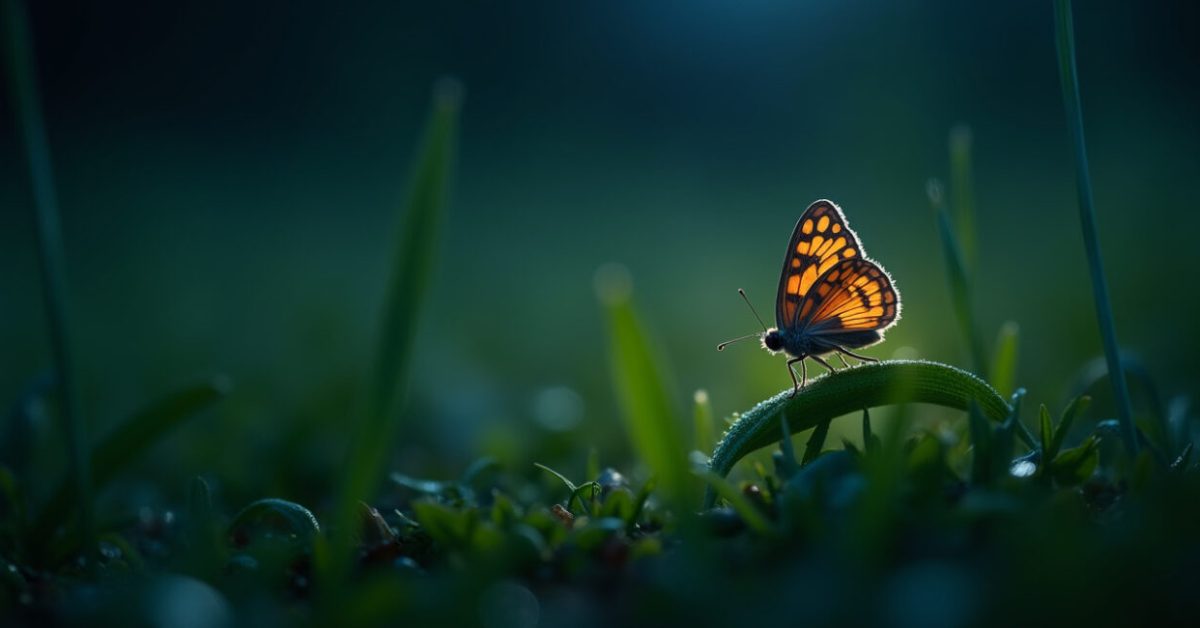

The air smelled like damp earth and something electric. A tiny moth clung to a blade of grass, its wing scales catching the flashlight beam like lanterns. That instant—close, quiet, and impossibly detailed—is what night macro is about: finding glow in the small and dark and making it sing. If you want textures that peek and colors that feel lit from within, read on.
The Focusing Trick Most Photographers Miss After Dusk
Autofocus lies when light dies. In low light, many camera AF systems hunt or lock on the wrong plane. For night macro you must switch to manual focus or use focus stacking with a stable rail. Move the focus slowly, watch the live view at 100%, and feel for the micro-sharp moment. Night macro rewards small adjustments—1 mm can change a face of an insect into soft blur. Try back-button focus to keep control and avoid accidental refocus.
How to Coax Natural Glow Without Frying Your Subject
Direct flash flattens tiny models. The better trick: layered, low-power light. Combine a dim ring light, a warm LED panel off-axis, and a tiny diffused fill from below. Multiple soft sources create depth and preserve sheen. Use splayed gels to shift color subtly. Night macro needs balance: enough light for texture, not so much you lose that moth-lantern look. Think of lights like paintbrushes, not sledgehammers.

The Exposure Settings That Reveal Texture and Glow
Start with ISO as low as practical, aperture between f/5.6–f/11, and shutter speed long enough to expose detail but short enough to freeze tiny motion. For static subjects try 1–10 seconds with a cable release and stacked frames. For live critters use high-speed bursts with controlled flash. Expose for highlights; pull shadows in post if needed. A quick comparison: ISO 3200 single shot vs. ISO 200 stacked exposures—stacking wins for texture and noise control every time.
Lighting Hacks: Small Rigs That Make a Big Difference
Rigging for night macro doesn’t need a studio. Clip-on LEDs, fingertip penlights, and modified phone flashes work. Build cheap snoots and diffusers from straws and tissue. Consider a ring of micro-LEDs for even front light and a separate colored backlight for rim glow. A two-source setup—soft key plus colored rim—changes a snapshot into a scene. For more science on light and insect behavior see Smithsonian research and for exposure guidelines consult university photography resources like Harvard’s visual media.
The Composition Moves That Make Tiny Subjects Feel Epic
Close-ups can look cramped fast. Give the subject space to “breathe” by including context—dew, grass blades, or a sliver of the night sky. Use diagonal lines and shallow depth to suggest motion. Negative space at this scale reads as atmosphere. Try a before/after: a centered insect vs. the same insect offset with leading blades of grass; the offset version reads cinematic. Night macro thrives on scale hints, not full-frame crowding.
What to Avoid: The Five Fatal Mistakes
People repeat the same errors at night. Avoid these: overexposing with flash; trusting autofocus; skipping a tripod; ignoring subject behavior; and using harsh white light that kills color. These mistakes flatten texture and erase the glow you chased. A short list to remember helps—keep it taped to your kit. When you dodge these traps, night macro starts behaving. Expect better detail, truer colors, and images that make people pause the scroll.
A Short Night on the Trail That Changed My Approach
I once chased a glow beetle for thirty minutes. My flash washed it out. I stepped back, pulled a tiny LED through a folded tissue, and tilted the light. The beetle’s ridges popped. I shot six frames, stacked them, and the result looked like a carved gemstone. That small pivot—from brute illumination to gentle shaping—became my rule. Night macro is not brute force. It’s patience, play, and a willingness to try soft light until the texture reads true.
Night macro is an invitation: to slow down, to hunt small light, and to shape it with intent. Take one tip, try it tonight, and you’ll see things that daylight hides.
How Do I Avoid Scaring or Harming Nocturnal Insects When Shooting Night Macro?
Use low-intensity lights and keep them at a distance. Rapid, bright flashes can disrupt insect navigation and stress tiny creatures. Work in short bursts—five to ten minutes per subject—and allow animals to recover between sessions. Avoid shining lights directly into eyes or spiracles. Use red or amber gels to reduce disturbance when possible; many insects see less in those wavelengths. Always return disturbed subjects to their original position and habitat. Ethical night macro prioritizes capture without harm, trading intensity for patience and respect.
Can I Shoot Night Macro Handheld, or is a Tripod Mandatory?
Handheld night macro is possible but limited to very small exposures and cooperative, still subjects. A tripod or macro rail is strongly recommended for sharp focus and stacking. If you must go handheld, use a bright continuous light, high shutter speed, and wide aperture, and brace your body against a stable surface. Still, tripod setups let you take multiple frames for focus stacking and long exposures that reveal texture without pumping up ISO. For true detail and minimal noise, stabilization is essential.
What Lenses and Accessories Work Best for Night Macro?
Dedicated macro lenses (60–105mm) provide the working distance and sharpness you need. Extension tubes and bellows offer more magnification but reduce light; plan accordingly. A small focus rail, remote release, and diffused micro-lights are the core accessories. Consider a twin flash or LED ring for even coverage, plus gels for color control. Cheap magnifiers can help compose. Ultimately, light control matters more than an exotic lens—good lighting turns an average lens into a stellar night macro tool.
How Do I Reduce Noise Without Losing Fine Detail in Long-exposure Night Macro?
Prefer multiple low-ISO frames over one high-ISO shot. Capture a series of exposures and stack them to average noise while preserving detail. Use dark-frame subtraction for thermal noise on long exposures. Apply mild sharpening after denoising to recover micro-contrast. Keep sensor temperature down—short sessions help. If you must shoot single frames, use the camera’s low-noise settings and shoot RAW to retain detail for careful post-processing. Stacking plus low ISO is the fastest route to clean, textured night macro images.
How Do I Approach Composition When Shooting Tiny Glowing Subjects at Night?
Focus on hints of scale: dew, grass, or a textured foreground. Place the glowing subject off-center and use a shallow depth to isolate it. Add a rim or backlight to separate subject from background and create depth. Avoid cluttered backgrounds; at night, negative space reads as atmosphere. Move your light to sculpt shadows—side lighting emphasizes ridges and scales. Try both tight and slightly wider frames: one for detail, one for context. Composition in night macro is about suggesting the world, not showing all of it.