

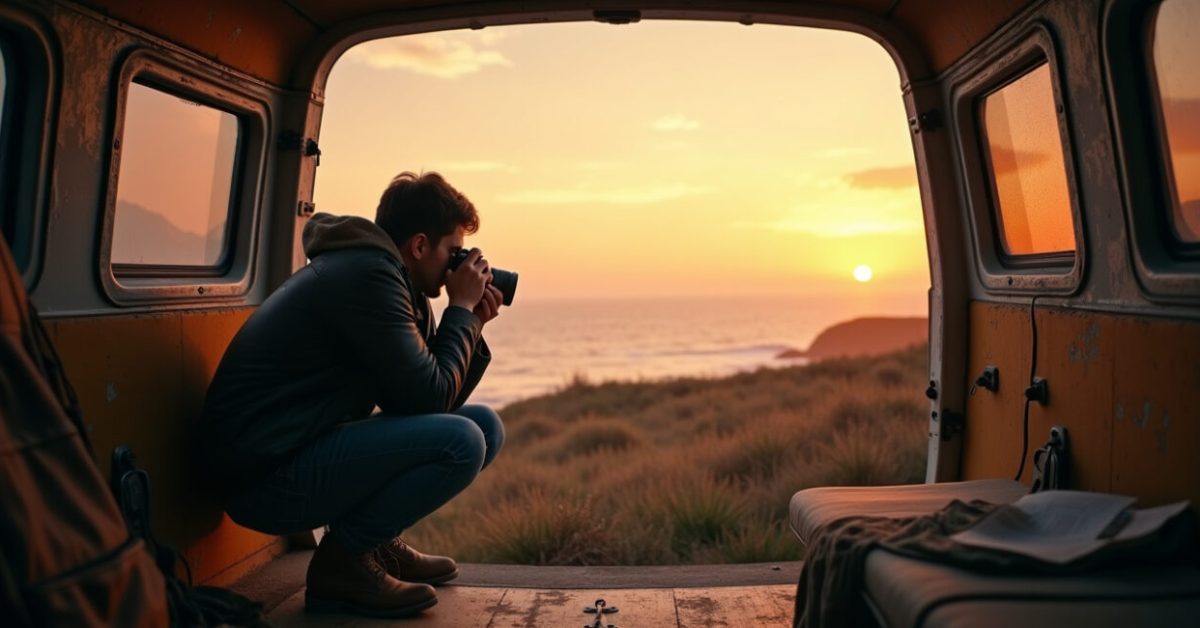

The light went from flat and forgettable to cinematic in twelve minutes. I was in the back of a van, lens fogging, heart racing — and the scene I had almost skipped became the photo that changed my portfolio. That turnaround is the difference between scrolling past a landscape and stopping to study it. Nature travel photography lives in those short windows, and learning to find them is what separates snapshots from images that linger.
Below are nine practical secrets pros use to find light, scout scenes, and shoot under pressure. Short, tactical, and honest — each section is a promise to help you make better photos on real trips, not just perfect days.
The Timing Trick Pros Use to Catch Cinematic Light
Golden hours are predictable; the secret is the hour after golden hour. Most photographers show up for sunrise and sunset. Pros linger. That soft, directional light that happens 20–40 minutes after sunset often sculpts landscapes without harsh contrast. For nature travel photography, timing beats gear. Set alerts for 30 minutes after the standard golden window, and watch clouds thin or backlight appear. Pack a headlamp and a thermos — you’ll wait more and shoot better.
How Local Microclimates Become Your Secret Studio
Microclimates change a scene in ways a weather app won’t tell you. A valley that fogs at dawn, a coastal shelf that traps mist, or a tree line that shields light — these are repeatable conditions. Scout small weather patterns, not just places. Talk to rangers, read trail logs, and check local cams. The National Park Service often lists seasonal phenomena that photographers miss — use those notes to plan shoots that look unique rather than generic.

Scout Like a Prospector: Location Tactics That Save Hours
Pros don’t rely on Instagram pins. They build a mental map. Walk the contour lines on a topo map. Note access points, alternative exits, and the angle of approach. For nature travel photography, scouting once from the car is lazy. Hike 10–15 minutes off the trail; elevation changes reveal foreground options. One small detour can add scale, lead lines, and a foreground element that turns a pretty shot into an award-worthy image.
Camera Settings That Perform When Everything Moves Fast
When light flips in minutes, you need settings you trust. My go-to: aperture priority for landscapes with a target aperture, auto-ISO capped at a sensible limit, and single-point AF for critical elements. For moving subjects — birds, waves, or people — switch to shutter priority and raise the shutter speed. Be pre-set for the scene you expect, then adjust for the surprise. A quick comparison: jittery handheld at 1/60s versus sharp handheld at 1/320s shows why presets matter.
Composition Hacks That Work Under Pressure
When time is short, use three fast rules: strong foreground, a clear midground subject, and a simple sky. Pros often shoot two compositions per stop: one wide for context, one tight for detail. Think in layers, not in single frames. Mini-story: On a foggy cliff, I shot a sweeping wide, then climbed behind a boulder and framed a mossy crevice. The crevice shot later won a local show. Two frames from one stop—one dramatic, one intimate.
What to Avoid: The Five Common Mistakes That Ruin Trips
Some errors cost time, others cost images. Avoid these:
- Relying only on midday light — it flattens texture.
- Chasing Instagram spots at peak hours — you’ll fight crowds.
- Ignoring horizon lines — crooked horizons kill calm scenes.
- Packing too many lenses — gear swap costs you light.
- Not checking local rules — you can get fined or escorted out.
These mistakes look small until you lose the shot of a lifetime. Fix one and your images improve immediately.
Postcard Vs. Gallery: Editing Choices That Elevate Travel Photos
Edit with intention. Postcards are bright and neutral; gallery work shows an idea. Use dodge and burn to guide the eye, not to create faux detail. Subtle color grading that responds to the scene’s mood beats heavy presets. For nature travel photography, keep shadows with texture and highlights with detail. Also, compare original and edited versions side-by-side — if the edit doesn’t add emotion, it’s probably noise.
For planning, the NOAA weather radar and the National Park Service pages are gold for local conditions and safety notes. For light-angle calculations and solar times try educational tools from universities that track sun paths and twilight definitions.
How to Shoot When Everything Feels Wrong
Bad weather, late arrival, gear hiccups — these tests reveal your process. Slow down your thinking. Fix one thing at a time: check the horizon, confirm focus, and take a stabilization breath. Pressure turns into creative advantage when you limit choices. Use a 50mm equivalent for portraits, a wide for landscapes, and one mid-tele for compression. The constraint often makes the photo. Expect failure; plan for it; keep shooting.
Comparison: expectation vs. reality — you plan for a sunrise mirror lake, you get wind. Expectation yields a cliché image; reality yields motion and mood. I’ll take the latter every time.
Two sources that back practical planning: National Park Service notes on seasonal behavior, and university sun-path resources that explain twilight windows. These are the kind of authority checks professionals use before leaving camp.
Now go test one secret on your next trip. Leave the “perfect day” myth at home. The best images come from prepared improvisation.

How Do I Choose the Right Lens for Nature Travel Photography?
Choose lenses that match the scenes you expect to shoot and the way you move. A versatile kit starts with a wide-angle (16–35mm or 24mm), a standard zoom (24–70mm), and a telephoto (70–200mm) if you want compression or distant subjects. If you travel light, a 24–105mm covers most situations. Prioritize weight and aperture: a fast prime or a stabilized zoom helps in low light. Think about pack space and how often you’ll swap lenses—less swapping means fewer missed moments.
What Camera Settings Should I Use for Dawn and Dusk Shots?
Start in aperture priority with apertures between f/5.6 and f/11 to balance sharpness and depth. Set auto-ISO with a cap (e.g., ISO 6400) so the camera handles exposure but you control noise. If you need freeze motion, use shutter priority and a higher shutter speed. Use single-point AF for precise focus on a subject, and bracket exposures if the dynamic range is wide. Bring a tripod for long exposures and use a remote or timer to avoid camera shake.
How Can I Scout Locations Without Relying on Social Media?
Use topographic maps, satellite views, and local resources like park bulletins and ranger stations. Walk trails at different times to learn light and wind patterns. Talk to locals—guides, rangers, and shop owners often know where phenomena like fog or wildflower blooms occur. Keep a simple scouting journal with GPS points, time notes, and thumbnail sketches. This method builds repeatable advantage and avoids saturated Instagram viewpoints, giving you original takes on familiar spots.
Which Composition Techniques Help When Scenes Are Chaotic?
In chaotic environments, simplify. Find a single strong element and make everything else support it. Use leading lines, color contrasts, and negative space to give the eye a place to rest. Frame with foreground elements to add depth. If there’s motion, experiment with slower shutter speeds to create intentional blur while keeping an anchor sharp. Limit yourself to one compositional rule per frame—too many rules create confusion. Practice fast decisions by shooting under time pressure during training shoots.
How Do I Keep Gear Safe and Functional While Traveling in Nature?
Protect gear with layers: padded camera bags, silica packs, and rain covers. Clean equipment after salty or muddy shoots to prevent corrosion. Use weather-sealed bodies and lenses when possible, and pack basic repair tools like a multi-tool, duct tape, and spare batteries. Keep backups of important files on SD cards and cloud sync when you have signal. Finally, respect local rules and fragile habitats—never risk gear or environment for a single shot. Safety of people and place comes first.