

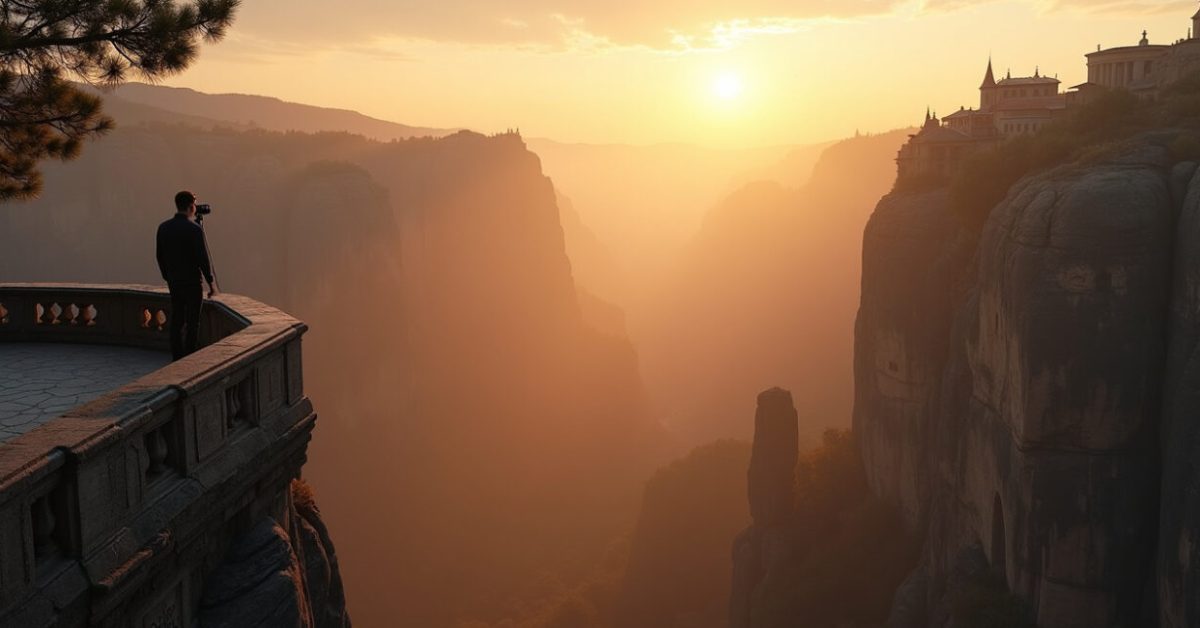

The first light slices through a valley of stone pillars and the monasteries seem to float — and then your timing is wrong, the crowd blocks the view, or your lens flattens the scale. Meteora shots can be cinematic, but only if you use time, gear, and composition like a director. Read on for the exact windows at dawn and dusk, the lenses that sell scale, drone rules that won’t get you fined, and simple framing hacks that make these cliffs feel endless.
Why the Brief Minute Around Golden Hour Makes or Breaks Meteora Shots
Golden hour is not a suggestion — it’s the scene. In Meteora, that warm sweep of light hits the sandstone pillars at a sharp angle, carving texture and separating foreground from background. Aim for 30–45 minutes after sunrise for soft, angled light on the eastern cliffs; for the west-facing monasteries, target the last 30 minutes before sunset. Meteora shots taken outside those windows often look flat. Shoot a few frames early and a few late; the light shifts fast and the best image often appears in the in-between.
The Blue Hour Trick That Gives Meteora Shots a Cinematic, Otherworldly Glow
Blue hour (the 20–40 minutes after sunset or before sunrise) turns Meteora into a low-key movie set. During this time, the sky keeps a deep blue while the monasteries, often lit by warm lamps, present a dramatic color contrast. Use a tripod, long exposures (10–30s), and shoot at low ISO to keep detail in the rock faces. This is where you get that “floating monastery” look — a contrast between cool skies and warm stone that turns a photo into a scene from a film.

Which Lenses Make Meteora Shots Feel Vast — And Which Ones Collapse the Scene
Your lens choice is the quickest shortcut to success or failure. For wide context and dramatic foreground-to-monastery relationships, start with a 16–35mm on full-frame (10–22mm on APS-C). To isolate a single monastery and compress distance for scale drama, use a 70–200mm or longer. Avoid heavy reliance on ultra-wide without a strong foreground: it can stretch and flatten the vertical cliffs. A useful kit for Meteora shots: wide zoom, mid-tele zoom, and a fast prime (35mm or 50mm) for low-light candids.
Composition Rules That Emphasize Height, Depth, and Atmosphere
Think vertical distance and negative space. Place a monastery off-center and leave sky above to emphasize height. Use foreground elements — a twisted tree, a path, a ledge — to lead the eye up the pillar. Try these compositional moves:
- Low-angle foreground: crouch so the rock in front fills the lower third.
- Layering: stack foreground, midground, monastery, and sky to show depth.
- Silhouettes at blue hour to dramatize shape over detail.
These small choices turn average Meteora shots into images that feel colossal and cinematic.
Drone Rules, Practical Flight Tips, and How to Get a Unique Aerial Meteora Shot
Drone use in Meteora is restricted and occasionally banned near monasteries to protect cultural sites and safety. Always check local rules before flying; Greece’s Civil Aviation Authority posts updates and regional restrictions. If permitted, keep drones at legal altitudes, away from crowds, and respect no-fly zones. For cinematic aerial Meteora shots, rise slowly at golden hour, frame diagonal approaches to reveal layers, and avoid spinning gimbals — slow, linear movement reads as cinematic. If drones are banned, use a long telephoto from a distant ridge to simulate that compressed aerial look.
Mistakes That Ruin Meteora Shots — And How to Avoid Them
Photographers often repeat the same three errors: shooting mid-day light, using the wrong focal length, and ignoring foreground. Avoid these:
- Mid-day washes out texture — skip it for primary captures.
- Ultra-wide without foreground flattens the cliffs — add a leading element.
- Not checking weather — clouds and mist change the mood entirely.
One surprising fix: when the crowd is blocking your view, step higher or lower instead of waiting. Often five meters up a path will remove people and add a dramatic foreground — that small move turns tourist clutter into an intentional element.
Meteora Shots: A Short Photographer’s Mini-story That Teaches Timing and Patience
We arrived at 5:10 a.m., annoyed by a van of tour groups and thick fog. I set up a 35mm, expecting a quick fail. An hour later the fog thinned, a single monastery light flicked on, and the sun sliced a golden stripe across the cliff. I took three frames — a wide, a mid, and a long compression shot — and the long one, shot from a higher ridge, carried the mood. The lesson: the best Meteora shots often come after the wait, not before.
For planning, consult official sources for safety and access. Check Greece’s Civil Aviation Authority for drone regulations and UNESCO or regional heritage sites for access rules. For weather and sunrise/sunset times, trusted services like the National Observatory of Athens or established global meteorological portals help you time every shot precisely. Greece Civil Aviation Authority and National Observatory of Athens are good starting points.
Now go pick a ridge, pack a wide, a tele, and the patience to wait out the light. Meteora shots reward the few who show up early, move thoughtfully, and frame with intention.
Final provocation: If you leave Meteora with only postcard shots, you missed the set. Chase the light and the odd angles — that’s where the cinematic lives.
How Early Should I Arrive to Get the Best Golden Hour Meteora Shots?
Arrive at least 45–60 minutes before sunrise for golden hour. You need time to find a composition, set up a tripod, and scout foreground options. Many of the best Meteora shots require hiking to a higher ridge or a low-angle spot, which takes time. Also expect crowds to gather closer to official viewpoints, so early arrival helps you avoid people in frame. Bring headlamp gear and a rough map of vantage points so you can move quickly during the short, decisive light window.
Can I Legally Fly a Drone over Meteora to Capture Aerial Shots?
Drone rules at Meteora can change and vary by season and local restrictions. Some areas near monasteries are no-fly zones to protect heritage sites and visitor safety. Check Greece’s Civil Aviation Authority and local municipal rules before you plan a flight. If drones are allowed, follow altitude limits, stay clear of people, and avoid sensitive areas. When in doubt, opt for a long telephoto from a legal vantage point — it often produces a similar compressed, cinematic look without regulatory risk.

Which Single Lens Should I Pack If I Can Only Bring One for Meteora Shots?
If you must choose one lens, a 24–70mm (full-frame) or its APS-C equivalent is the most versatile for Meteora shots. It covers wide context and mid-tele isolation, so you can capture both sweeping landscapes and closer monastery details. It performs well in changing light and is easier to handhold during blue hour with image stabilization. If your budget allows one prime instead, a 35mm gives a more cinematic field of view for storytelling compositions and low-light control.
How Do I Compose to Make the Monasteries Look Larger-than-life in Photos?
Emphasize vertical space and layer the scene. Shoot from a low foreground point so the monastery occupies the upper two-thirds of the frame, leaving negative space above. Use foreground elements like paths, rocks, or a lone tree to lead the eye upward. Compress distance with a telephoto to stack layers and amplify scale. During blue hour, expose for highlights so the lit monastery stands against a darker sky — that contrast enhances perceived size and drama in your Meteora shots.
What Weather Conditions Create the Most Cinematic Meteora Shots, and How Should I Adapt?
Mist and low clouds create drama by revealing and hiding cliffs; golden hour light accentuates texture; blue hour offers cinematic color contrast. Adapt by scouting multiple viewpoints: fog can make lower viewpoints magical, while clear skies favor high ridges for sweeping panoramas. Adjust exposure for dynamic range when sunlight hits stone, and bring ND filters for extended long exposures near water or moving cloud. Flexibility is key — the best Meteora shots come when you work with, not against, the weather.