

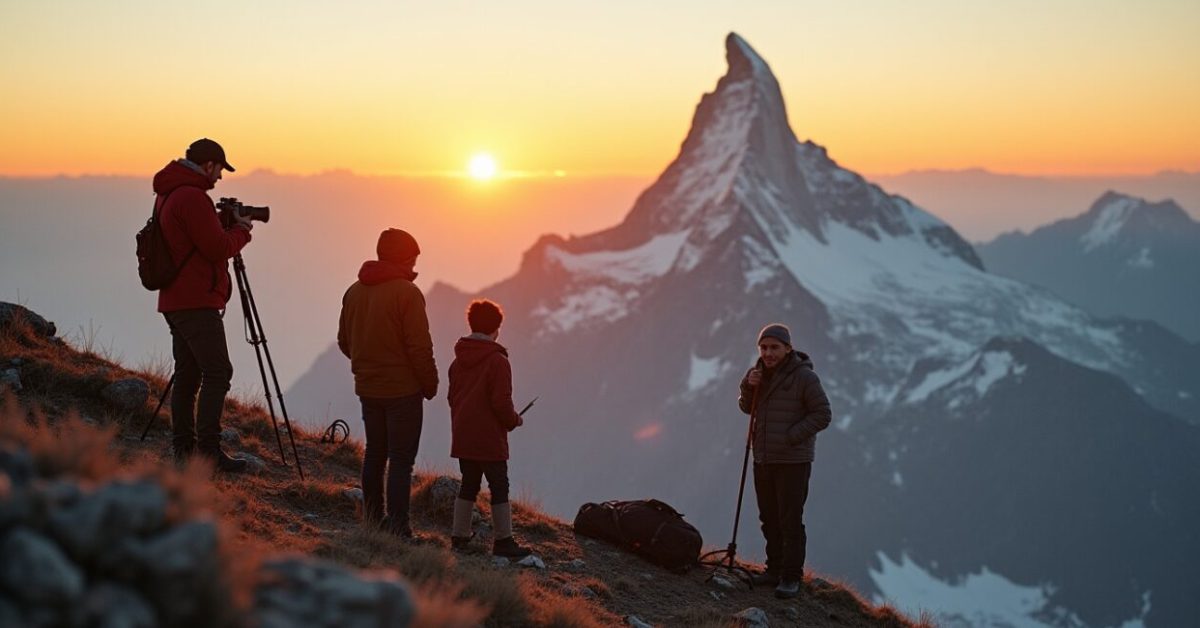

The clip is three seconds long: a golden strip of light licks the Matterhorn’s horn, people gasp, photographers swarm, and the hashtag explodes. That tiny window — the social-media “Matterhorn timing” trick — is what everyone’s trying to catch right now. It promises an image that looks impossible, like the mountain wore makeup just for your camera.
Why This Tiny Light Window Made the Matterhorn Go Viral
There’s a predictable moment each day when the Matterhorn’s ridge catches direct sunlight in a way that looks cinematic. Photographers spotted it, posted side-by-side before/after clips, and the pattern spread: same hour, same angle, same glow. Social traction came because the payoff is instant and photogenic — perfect for short videos. But viral ≠ easy. The trick depends on clear skies, precise location, and a camera ready for a three-to-ten-second peak.
Exactly When People Are Lining Up — The Timing Windows
Most successful shots happen in two narrow windows: shortly after sunrise and during late afternoon alpenglow. Sunrise window: roughly 10–30 minutes after the sun clears nearby peaks, when a beam paints the northeast face. Evening window: 15–45 minutes before sunset, when the entire summit glows warm while lower slopes are already in shadow. Times shift by season; in summer the windows are earlier and shorter. Use a sun-path app and local sunrise/sunset times to plan precisely.
The Gear That Actually Changes the Result
A phone can catch the moment, but the right gear makes the image worth the effort. Essentials: a sturdy tripod (no compromises), a telephoto or mid-range zoom (70–200mm or equivalent), and a camera with decent dynamic range. Neutral density or graduated filters help in harsh contrast. For video, a stabilizer and high-frame-rate capture let you extract the perfect frame. Don’t forget spare batteries — cold and long waits drain them fast.
The One Comparison That Clears the Hype: Expectation Vs. Reality
Expectation: one quick shot and you get an iconic postcard. Reality: it’s a series of educated guesses and micro-adjustments. Comparison: the viral clip is the “after” — the result of scouting, controlling exposure, and sometimes stitching multiple frames. Most on-the-spot attempts produce blown highlights, awkward foregrounds, or crowd interference. Treat the viral moment as the climax, not the whole story: planning creates the image, the three seconds are just the trophy.
Common Mistakes People Make (and How to Avoid Them)
Photographers often sabotage the shot with preventable errors.
- Arriving unscouted — you need the exact vantage point, not just a general area.
- Wrong exposure — highlights clip instantly during the peak; bracket or use RAW.
- Ignoring foreground — a blown-out sky with ugly foreground ruins the composition.
- Bad timing — chasing the peak without accounting for clouds or shifting light.
- Overcrowding — arriving late means other people or tripods in frame.
A Short Scene That Shows Why Patience Beats Luck
He waited two hours on a thin ridge bench, breath steaming, coffee gone cold. For an hour the mountain looked ordinary; then clouds framed the summit and the sun found a knife-edge. He raised the camera, missed the first kiss of light, cursed, adjusted ISO, and caught the second blink — a perfect rim of gold. The clip he posted later hid the two-hour wait; the image kept the story. Most viral shots are the visible climax of long, cold patience.
Is Chasing This Trend Worth It — The Payoff Vs. Cost
Short answer: sometimes. Long answer: depends on what you want out of the shot. If you want a single viral frame, the odds are low unless you plan, scout, and accept discomfort. If you’re building a portfolio or learning landscape light, the exercise is invaluable: you’ll learn composition, exposure bracketing, and patience. Consider opportunity cost: travel, lodging, and wasteful repetition can add up. For many, the reward is a standout image; for others, it’s a social-media mirage.
For reliable information about local conditions and sunrise/sunset times, consult official resources such as MeteoSwiss for weather forecasts and the Switzerland tourism portal for access and trail guidance.
Want a practical tip before you go: pick your exact spot the day before, set up like you’ll shoot nothing, and test exposures on the pre-dawn light. If you leave everything to the moment, you’ll probably capture frustration instead of a story-worthy photo.
Now ask yourself: are you chasing a trending clip, or learning to read the mountain’s light? That answer decides whether the next sunrise is a trophy or a lesson.
When is the Best Time of Year to Try the Matterhorn Timing Trick?
The most reliable months are late spring through early autumn when daylight is longer and weather tends to be more stable, but that doesn’t guarantee the narrow light window will appear. In summer, the sun’s angle can make the window earlier and shorter; in shoulder seasons the contrast can be stronger and more dramatic. Always check up-to-date forecasts from local meteorological sources and account for seasonal timing shifts — what worked in July may be off by 30–60 minutes in September.
Can I Get the Same Shot with a Smartphone?
Yes — modern phones can capture the moment, especially with optical zoom and RAW or Pro modes, but there’s a trade-off. Phones often struggle with dynamic range when the summit is brightly lit and the base is dark. Using a tripod, enabling HDR/RAW, and tapping to lock exposure helps; consider shooting a short video at high frame rate to extract a crisp frame after the fact. For maximum quality and flexibility in post, a mirrorless or DSLR still has the edge.
How Do I Avoid Crowds and Still Get the Iconic Angle?
Scouting is critical: arrive well before the predicted window and stake your position. Use lesser-known viewpoints a short distance away — a slightly different angle often avoids crowds while keeping the light. If access is limited, consider weekday early mornings or hiring a local guide who knows alternate spots. Respect closures and private property; being first doesn’t mean ignoring rules. Planning your egress route also prevents bottlenecks at sunrise or sunset.
What Camera Settings Should I Start with for the Peak Moment?
Begin with a conservative approach: shoot in RAW, set a low ISO (100–200), and bracket exposures by ±1–2 stops to protect highlights. For stills, a shutter speed fast enough to prevent motion blur from wind (often 1/125s or faster with telephoto) is useful; use mirror lock-up or electronic shutter to reduce vibration. If you shoot video, capture at a higher frame rate (60–120fps) so you can extract a sharp frame. Adjust on the fly based on test frames.

Is It Ethical to Chase Viral Mountain Shots That Promote Heavy Foot Traffic?
It depends on behavior. Sharing locations can increase visitation and strain fragile alpine environments; responsible photographers balance access with stewardship. Avoid posting precise GPS coordinates for sensitive areas, stay on established trails, pack out all waste, and follow local regulations. If a route is overcrowded, consider promoting alternative viewpoints. Photography can inspire conservation — if we pair beautiful images with messages about preservation and respect for the landscape.