

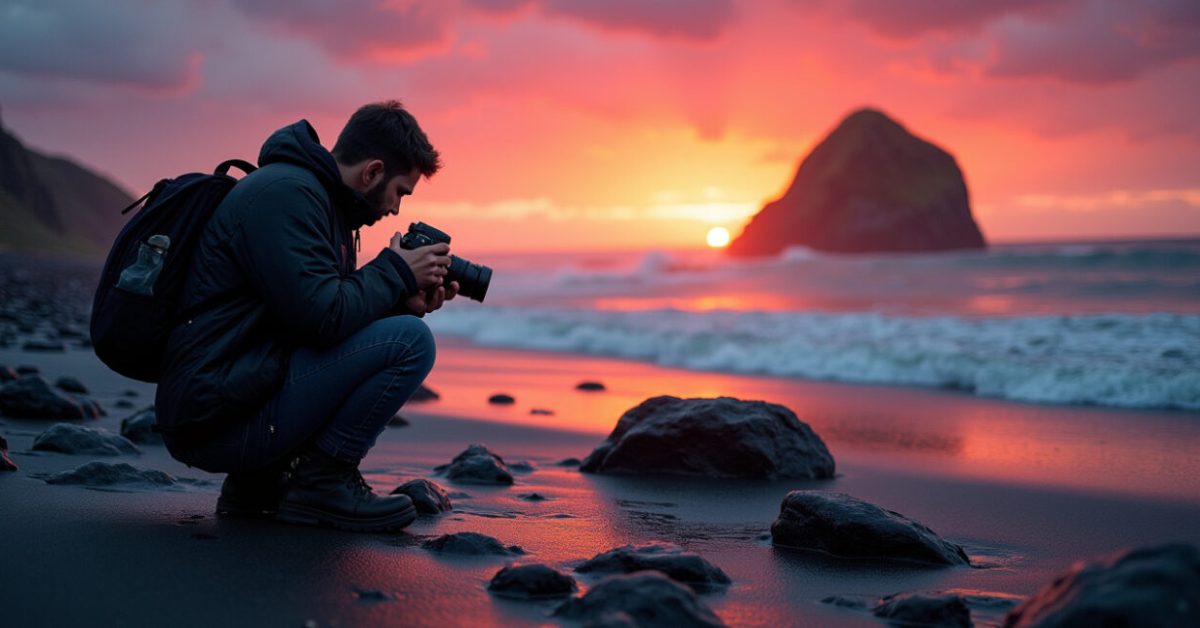

Dawn. You’re scrambling over slick rocks while the sky explodes in color, and your camera battery dies. That moment says everything about how pros think: they plan for chaos. This article dives straight into the habits that turn good landscape photography into consistent, striking work. No fluff—nine real routines, gear choices, and planning moves you can use on your next shoot.
1. Scout Like a Detective — The Habit That Doubles Your Hits
Top pros scout locations before packing a single lens. Landscape photography is 70% planning, 30% luck. Go beyond Google Maps: study sun angles, tide charts, seasonal access. Use apps for light direction and moon phases. Visit at the wrong tide or under a washed-out sky and you waste a day. Visit at the right minute and you make one frame that runs your portfolio for months.
- Tools: sun/moon trackers, tide apps, weather radar, topo maps.
- Routine: check three days ahead, then again three hours ahead.
2. Build a Compact Kit — Fewer Choices, Better Shots
Minimal gear beats maximal baggage on tricky hikes. Pros keep a lean kit: two bodies (or one reliable body + backup), a wide and a tele lens, a sturdy tripod, ND/grad filters, extra batteries. Bringing an extra lens “just in case” often means one is never used and both slow you down. Treat your kit like a Swiss Army knife: each item should earn space in your pack.

3. Master Light, Not Gear — The One Skill That Outpaces Equipment
Knowing light trumps owning lenses. Great landscape photography is about seeing how light sculpts terrain. Learn to read contrast, color temperature, and where shadows will fall. Try shooting the same scene at different times and compare. The camera records light—you choose which light to hunt.
4. Develop Repeatable Pre-shoot Rituals
Routines eliminate panic and free your eye. Pros use checklists: charged batteries, formatted cards, sensor clean, tripod quick-check, exposure bracketing settings. Before sunrise or sunset, run through the list like you’re boarding a plane. Rituals remove guesswork. They let you focus on composition and timing when the show starts.
- Pack the night before. Label memory cards. Test exposure bracketing.
- Always carry a headlamp and a small multi-tool.
5. Compose with Intent — The Composition Rules I Break and Keep
Composition is conscious choices, not luck. Use strong foregrounds, diagonal lines, and negative space to guide the eye. But know when to break a rule: center a subject when symmetry sings. A simple before/after comparison will change how you compose. Expect to discard 80% of frames; editing is part of composition. Practicing this habit sharpens your instincts fast.
6. Post-process Like You Shot It — Workflow That Preserves Emotion
Your editing should honor the moment, not invent one. Create a lean workflow: cull fast, edit with purpose, and keep a preset base for consistency. Use layers sparingly. Keep highlights and shadows believable. Pros often maintain a catalog and back it up in two places—cloud plus a physical drive. For science-backed exposure tools and color profiles, check resources like the National Park Service photography guides.
7. Train Situational Improvisation — When the Plan Falls Apart
Improvisation is a practiced reflex. Conditions change. Clouds roll in. Access is closed. Pros have fallback moves: shoot intimate details, use long exposures, or pivot to nightscapes. The habit is simple: always have three alternative frames you can make without changing location.
- Fallbacks: close-up textures, abstract patterns, silhouette studies.
- Carry simple tools: a 10-stop ND, small reflector, and a remote trigger.
8. Learn the Business of Sharing — How to Make Work Noticed
Great landscape photography deserves the right audience. Habits here include consistent posting, honest captions, and image credit discipline. Tag locations sparingly: sometimes mystery sells. Pitch your best images to reputable outlets and contests. Reference reputable data and licensing standards—see the US Geological Survey for public domain landscape resources when using maps or government imagery.
Comparison: random posting vs. curated release. Random posts get likes. Curated releases build reputations and paid work.
9. Fail Fast, Learn Faster — Daily Practices That Accelerate Progress
Failure is a control group for improvement. Keep a shoot journal. Note exposures, time, weather, and what you’d change. Review one shoot per week and identify one tweak. This habit turns mistakes into reliable lessons. Mini-habit: after each outing, pick three frames and ask, “What one thing would improve this?” The answer becomes your next experiment.
Three-line mini-story: I missed a prime sunrise because I overslept. I stayed and photographed the backlit fog instead. That unplanned series became my bestselling print. Habit: when Plan A fails, commit to Plan B immediately.
Common mistakes to avoid:
- Overpacking gear and underpacking batteries.
- Ignoring local rules and access—permits matter.
- Shooting only at “golden hour” without exploring other light.
- Over-editing until the scene looks unreal.
Landscape photography rewards habits more than hacks. Adopt these nine habits, and you’ll stop relying on chance. You’ll show up prepared, creative, and consistently ready to make images that matter.
One challenge: pick three habits to start tomorrow. Scout a new spot, build a mini kit, and keep a five-minute shoot journal. Do that for a month and watch your images—and instincts—change.
How Do I Choose Lenses for Landscape Photography?
Pick lenses that match the scenes you shoot most often. A wide-angle (16–35mm or equivalent) is essential for sweeping vistas and near-foreground interest. Add a standard zoom (24–70mm) for versatile framing and a telephoto (70–200mm) to compress distant layers. If you hike, favor lightweight primes over heavy zooms. Test each lens on a few locations and note which focal lengths you use most; that pattern should guide future purchases.

What is the Best Time to Shoot Landscapes?
Golden hour—shortly after sunrise or before sunset—offers warm light and long shadows that enhance texture. Blue hour, the period of soft light just before sunrise or after sunset, is ideal for moody scenes and long exposures. Midday can work for dramatic skies or when shooting into shade. The key is not a single “best” time but choosing light that fits your vision for the scene you found during scouting.
How Do I Protect My Gear in Harsh Environments?
Use weather-sealed bodies and lenses where possible and bring protective covers for sudden storms or spray. Carry desiccant packs in your bag to reduce moisture. After saltwater shoots, rinse gear with fresh water and dry thoroughly. Keep batteries warm in cold weather and swap them frequently. A simple routine—clean, dry, and store properly after each outing—prevents most long-term damage and keeps your equipment reliable on every shoot.
How Should I Structure a Post-processing Workflow?
Start by culling: pick the frames with the best light, composition, and mood. Do global adjustments first—exposure, white balance, contrast—then move to local edits like dodging, burning, and spot removal. Use non-destructive edits (layers or catalogs). Develop a few base presets to keep a consistent look, but tweak each image. Finish with export settings that match your output: web, print, or client. Back up originals and edited files immediately.
How Can I Improve Composition When a Scene Feels Flat?
When a scene feels flat, introduce depth and scale. Add a strong foreground element like rocks, grasses, or a person to lead the eye. Use diagonal lines or changing vantage points to create layers. Try a longer lens to compress distance or a wider lens close to a detailed foreground to exaggerate depth. Adjusting your exposure to retain texture in shadows and highlights can also revive a flat image.