

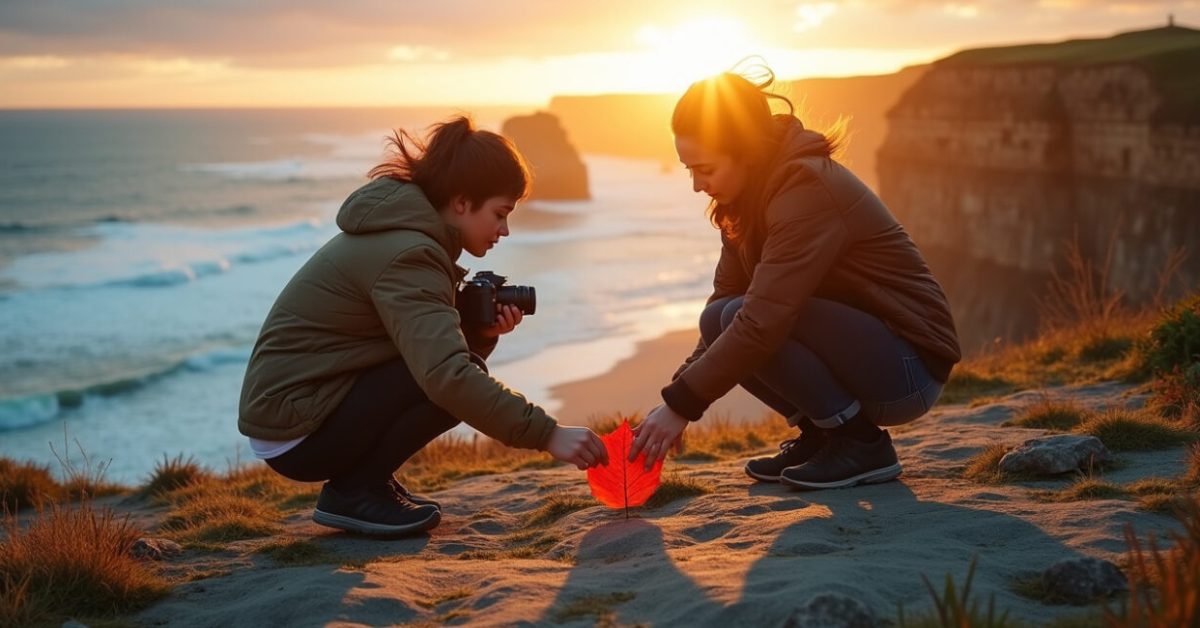

At the cliff’s edge, a failed photo looked like a postcard gone flat. Then a friend crouched, placed a bright leaf in the foreground and tilted the camera. Suddenly the view popped — depth, tension, a reason to stop scrolling. That quick change is the heart of landscape composition: small angle and frame choices that turn nice scenes into images people click on.
The Single Tweak That Lifts a Flat Scene
One small change in angle often does more than a new lens. Move a step left, drop 18 inches, or switch to a low angle and foreground elements stretch toward the horizon. That creates depth. In travel photography, that shift is the difference between a pretty snap and a Discover-ready image. landscape composition is about privileging relationships — between foreground, midground and sky — not just pretty light.
How Foregrounds Become Storytelling Tools
Foregrounds are not props; they are the first sentence of your photo. Use rocks, plants, tents, or a person to lead the eye. A pebble at the bottom corner can make a mountain feel vast. Foregrounds create scale and emotional entry points.
- Place foreground objects near the lower third for stronger leads.
- Use color contrast to separate foreground from background.
- Let foregrounds touch the frame edge — it feels immediate.
When practicing landscape composition, walk the scene and test three foregrounds before settling.

Framing That Guides — Natural Frames and Tight Crops
Natural frames — branches, doorways, arches — focus attention fast. A tight crop around a framed subject removes distractions and intensifies the story. Framing acts like a signpost: it tells the viewer exactly where to look. In travel shots, frames also add context: a window frame hints at human presence, while overhanging cliffs emphasize isolation. Try both wide and tight frames; the best angle often comes from combining them.
Perspective Shifts: When to Go Low, High, or Diagonal
Changing perspective changes how viewers feel. Low angles empower foregrounds and make skies dramatic. High angles shrink foreground scale and reveal patterns. Diagonal compositions add motion and tension. In landscape composition, choose perspective to match mood: heroic, calm, or dynamic. An expectation/realidade comparison helps: most people expect a straight horizon; diagonal lines surprise and engage.
Composition Rules to Break (and Why)
Rules exist to help quick choices, but breaking them can create signature shots. The rule of thirds works often, but centering can feel monumental for symmetrical scenes. Know the rules so you can break them with intent.
- Rule of thirds — use when you want balance.
- Centering — choose for reflections or symmetry.
- Negative space — use to isolate and calm the viewer.
Common mistakes to avoid: ignoring the foreground, cutting important elements at the edge, and leaving horizons dead center when nothing symmetrical supports it.
A Mini-story: The Two-minute Rescue of a Wasted Sunset
We arrived at a famous overlook and the sunset looked underwhelming. People framed the whole sky and got flat color. I crouched, added a colorful jacket on a rock in the foreground, and tilted the camera slightly upward. The jacket gave scale and a pop of color; the new angle emphasized cloud texture. The image went from forgettable to one of the best shots of the trip. That small intervention — foreground and angle — is the exact craft of landscape composition.
Practical Checklist Before You Press the Shutter
Use this quick checklist on location:
- Scan for a foreground that adds scale or story.
- Test three angles: low, eye-level, high.
- Frame with natural elements if available.
- Watch your horizon — purposeful placement beats default centering.
- Remove or reposition distracting items where you can.
These steps make your travel shots purposeful and far more likely to stop a thumb in a feed. For technical backup on exposure and color, trusted resources like National Park Service photography tips and photography courses at reputable universities help refine craft and safety in the field.
Landscape composition is not a checklist you follow blindly. It’s a set of choices you make to create a feeling. Choose deliberately, and your next travel photo will do what the best Discover pieces do: it will make someone stop, feel, and click.
How Do I Choose the Right Foreground for a Landscape?
Pick a foreground that adds scale, color, or a narrative hint. Look for objects that differ in texture or tone from the background — a wet rock against dry plains, a bright jacket against muted cliffs. Position the object low and near a corner to lead the eye into the frame. If nothing interesting exists naturally, create one quickly: move a jacket, place a hat, or set down a small sign. The goal is to give the viewer a starting point in the scene and a sense of depth.
When Should I Break the Rule of Thirds in Landscape Composition?
Break the rule of thirds when the scene benefits from symmetry, reflection, or monumentality. Center the horizon for mirrored lakes or when the sky and ground hold equal importance. Use centered compositions for strong vertical subjects like tall trees or towers. The key is intention: if centering enhances the story or the emotional impact, it’s the right choice. Always test both centered and off-center versions — often the better one appears only after a quick comparison on your camera.
What Focal Length Works Best for Travel Landscapes?
There’s no single best focal length; it depends on the scene and your intent. Wide angles (14–35mm) emphasize foregrounds and create immersive depth, ideal for landscape composition that needs drama. Standard lenses (35–70mm) compress elements and suit intimate scenes or travel portraits with background context. Telephoto lenses (70mm+) isolate details and layer distant elements for compressed perspective. Bring one versatile lens or two options and prioritize composition choices over gear alone.

How Do I Avoid Flat Skies in Landscape Photos?
Flat skies happen when nothing in the frame competes with the sky or when exposure is balanced to mid-tones. Use filters or bracket exposures to preserve clouds and texture. Change your angle: a lower perspective shows more foreground and less bland sky. Include elements that break the sky — a tree line, cliff edge, or person — to add interest. Post-process selectively: darken highlights, recover cloud detail, and add subtle contrast rather than oversaturating, which looks artificial and can hurt engagement.
Which Post-processing Tweaks Best Enhance Composition?
Post-processing should reinforce the composition you created on location. Crop to strengthen leading lines or remove edge distractions. Use selective contrast and clarity to separate foreground from background, and dodge/burn to guide the eye. Adjust perspective with careful lens correction to fix horizon tilt or converging lines. Avoid heavy-handed saturation; instead, refine tones so focal elements stand out. The aim is clarity of intent: editing should make the chosen angle and story read immediately to anyone scrolling fast.