

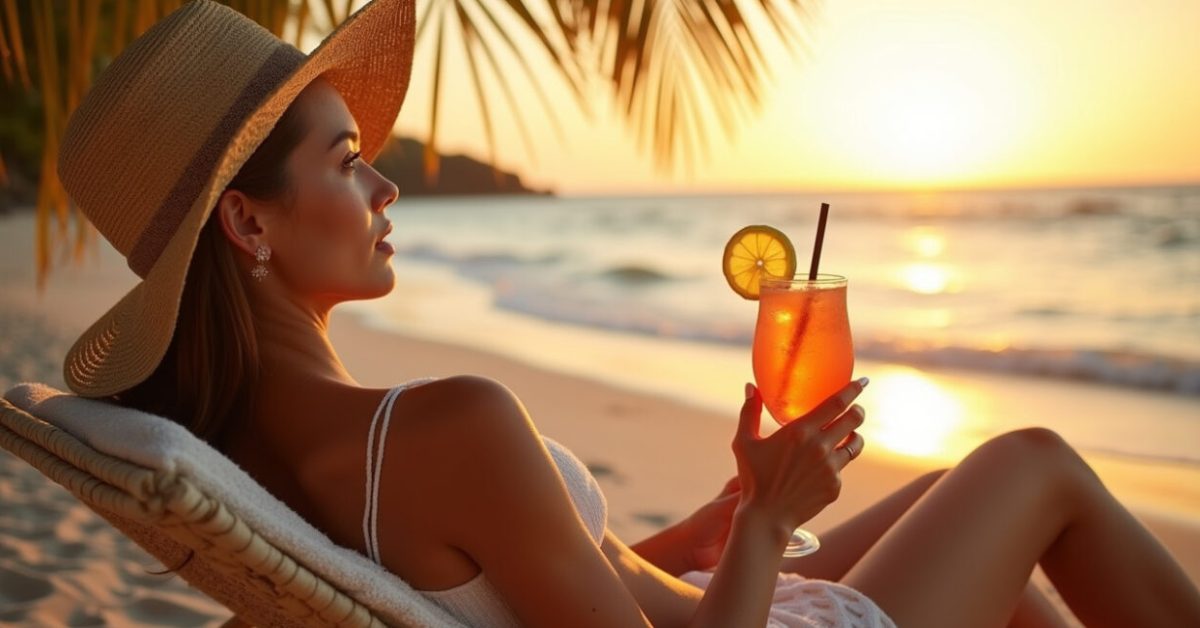

Waves breaking, a palm shadow cutting across your towel, the sun at that exact angle that makes everything glow—now freeze that moment. Not with luck, but with method. If you want island vacation photos that stop the scroll, you need a short playbook of moves the pros use without thinking. Read this like a set of commands: small changes, big results.
1. The Single Trick That Makes Any Shot Look Editorial
Use one light source and one clean subject. On islands, that light source is almost always the sun. Pick your subject—a person, a hammock, a cocktail—and commit. Position them so the sun sculpts edges and creates depth. For island vacation photos, that means backlight at golden hour, side light at sunrise, and shade for noon. The effect is immediate: subjects pop, backgrounds stay dreamy, and your image reads like a page from a travel magazine.
2. Frame Like a Director: Small Moves, Huge Payoff
Professional photographers move their feet, not their zoom. Three steps left, one step down, a crouch—tiny adjustments change everything. For island vacation photos, try these quick framing techniques:
- Foreground layering: put leaves, a rock, or your sunglasses close to the lens to add depth.
- Rule-of-thirds + negative space: leave breathing room toward where the subject is looking.
- Frame within a frame: doorways, palms, or boat rails make the subject feel placed, not posed.
The surprise: a two-inch shift can turn a snapshot into a story.

3. Light Control: The 3-hour Window That Beats Any Filter
There’s a simple truth for island vacation photos: the three hours around sunrise and sunset beat artificial edits. Use golden hour for warmth and soft shadows. Use blue hour for calm tones and silhouettes. If you must shoot at midday, find shade, use reflectors (or a white towel), and expose for highlights to avoid blown-out skies. Good light hides many sins—plan your shots around it.
4. Composition Rules Pros Break (and When to Break Them)
Pros learn rules to know when to break them. For island vacation photos, expect to use and break these:
- Centering: Center the subject for symmetry—great for reflections or architectural elements.
- Minimalism: One strong subject, lots of empty sea—powerful and calm.
- Motion blur: Slow shutter for moving water to feel cinematic.
Comparison: expectation vs. reality—expectation says follow rules; reality is that breaking a rule at the right moment gives an image character. Test it: take two versions and keep the one with emotion.
5. Color and Mood: How to Pick Palettes That Resonate
Island vacation photos win when colors feel intentional. Warm sand + teal water = classic. But try a limited palette: only blues and warm neutrals, or a pop color like red in a sea of green. Use clothing and props to create contrast. If the scene feels flat, adjust white balance warmer by a few degrees for emotional impact. Color is mood; pick one and stick with it across a set of shots.
6. Quick Edits That Look Handcrafted, Not Filtered
Editing should be invisible. For island vacation photos, follow an 11-step short routine pros love:
- Crop for stronger composition
- Correct exposure (+/-)
- Recover highlights
- Lift shadows slightly
- Adjust white balance (warmth)
- Increase contrast modestly
- Boost clarity a bit
- Saturate selectively (skin tones less)
- Sharpen only where needed
- Remove distractions with a healing tool
- Export at high quality for social
Do each step with restraint. The goal: magazine polish, not a neon poster.
7. What to Avoid: The Top Mistakes People Make on Islands
Here are common errors that kill island vacation photos—and how to dodge them:
- Over-editing: neon skies and orange skin. Keep edits subtle.
- Ignoring the horizon: never cut it through a subject’s head. Level it.
- Shooting straight into the sun at noon: results are flat or blown-out.
- Too many props: clutter kills focus. One prop is usually enough.
- Stiff posing: tell people to move slowly; candid beats rigid every time.
Mini-story: On a tiny cay, I saw a couple fighting with a tripod while the tide turned. I suggested they sit, breathe, and talk. Two minutes later, a single candid frame—mud on her heel, him laughing—became their favorite photo. The lesson: relax the plan; let the moment arrive.
Extras worth bookmarking: practical gear choices (a small point-and-shoot with RAW, a phone with manual controls, a microfiber cloth), quick backup routines, and a two-shot rule: one posed, one candid. For technical references on exposure and imaging standards, consult NIST imaging resources and guidance on coastal travel from NOAA. These sources ground technique in solid science and safe travel practices.
Now stop scrolling and go test one move. Take the same scene three ways: centered, rule-of-thirds, and with a foreground. One will surprise you. Keep the surprising one.
How Do I Get Sharp Photos on a Windy Beach?
Wind makes everything move—but you can fight it. Use a faster shutter (1/500s or faster) to freeze motion for island vacation photos when subjects are moving. If you’re shooting portraits, ask the subject to face away from the wind to avoid hair in the face. Anchor your tripod low, use a heavier bag as ballast, or brace your stance and lens against a solid object. For creative blur, lower shutter speed and steady the camera with a monopod. Small changes give sharp results without heavy gear.

What Settings Should I Use on My Phone for Pro-looking Island Shots?
Modern phones are powerful. For island vacation photos, tap to set focus and exposure, then slightly lower exposure if highlights clip. Use HDR for balanced skies and shadows, or shoot in RAW if available for more editing headroom. Lock focus for portraits and use portrait mode sparingly; check edges for haloing. Keep the lens clean—salt spray kills clarity. Finally, shoot multiple frames quickly; phones choose the sharpest image for you. These small steps lift phone shots closer to pro level.
How Do I Protect Gear from Sand and Salt Without Losing Shots?
Salt and sand are silent killers of camera gear. For island vacation photos, use a ziplock or waterproof pouch between shoots. Carry a lens cloth and a blower; never wipe sand directly—blow it off first. Rinse metal parts with fresh water after the day (camera off and battery removed). For phones, a thin clear case and a cloth pocket are lifesavers. Work quickly and plan a safe spot for gear while you shoot. Prevention keeps you shooting longer and avoids costly repairs.
What Composition Tricks Make Small Islands Look Expansive?
To make a tiny island feel vast in your island vacation photos, use wide foreground elements and low camera angles. Place a strong object—rock, person, or palm—close to the lens to create depth. Include a broad sky or long shoreline to give negative space. Leading lines, like a jetty or shoreline curve, guide the eye outward. Use a wide lens but avoid extreme distortion near the frame edges. These techniques turn compact scenes into cinematic landscapes without clever editing.
How Fast Should I Edit and Post to Keep the Story Alive?
Timing matters. For island vacation photos, edit within 24 hours while the memory and light conditions are fresh. Quick edits keep the mood and color consistent across a series. Batch process similar shots to maintain a unified look. For social, a 1–3 hour turnaround hits both novelty and quality sweet spots. Don’t rush to over-edit; aim for authenticity. Fast, thoughtful edits preserve the moment and make your posts feel timely without sacrificing craft.