
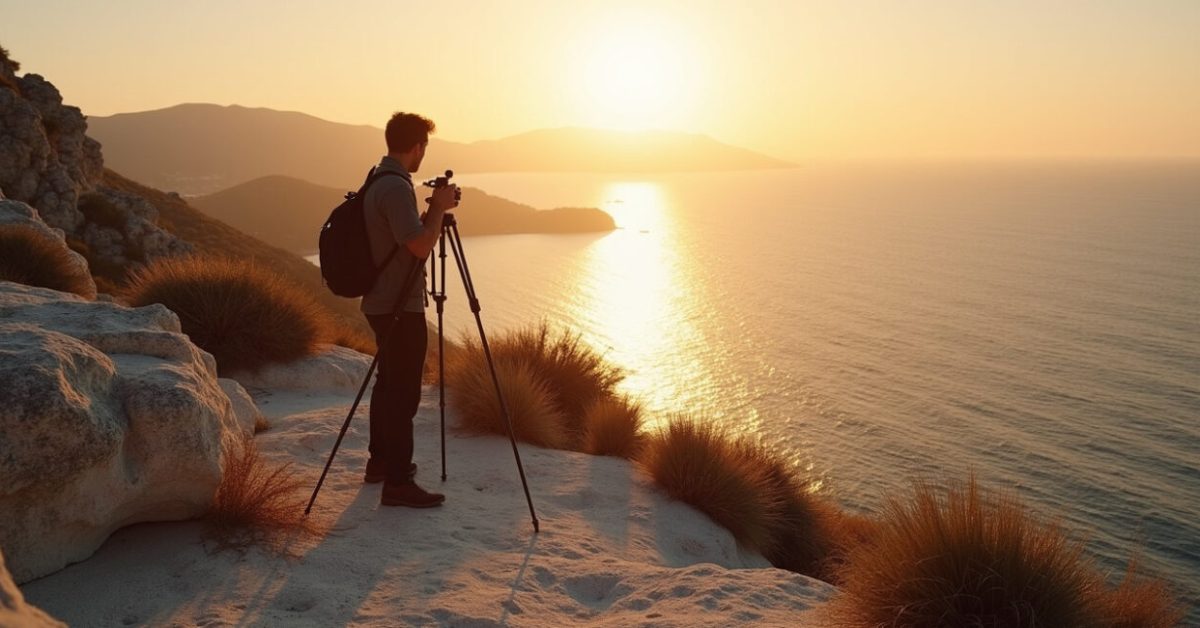

The light flips in a heartbeat: one moment the Aegean is flat gray, the next it glows like hammered gold. If you want that warm, textured seascape—where rock, water and sky sing—you need timing, coast choice and a few camera moves. This short guide to island golden hour tells you when the light changes across Greek islands, which coasts favor sunrise or sunset, and simple settings to get that cinematic look.
When the Island Golden Hour Actually Happens (and Why the Clock Lies)
Sunrise and sunset times on your phone are fine, but they miss the nuance. Golden hour starts earlier and lasts longer near the sea because of low humidity and clean horizons. On the Cyclades, expect a crisp 40–60 minute window either side of sunrise or sunset in summer. In shoulder seasons the light lingers; in winter it compresses to 20–30 minutes. Blue hour follows immediately after sunset and before sunrise—use it for moody silhouettes and long exposures.
Which Greek Coasts Work Best for Sunrise Versus Sunset
Coastline orientation is everything. East-facing shores like Naxos’ and parts of Rhodes catch the first clean light—perfect for soft, warm sunrises. West-facing cliffs on Santorini and Kefalonia give dramatic, saturated sunsets. Plan your shoot by map, not romance. If you want reflections and warm side-light on rock textures, pick a coast where the sun rises or sets at a low angle to the shore. For panoramic sky color, choose unobstructed horizons—no trees, no high buildings.

The Practical Rhythm: Timing Your Shoot Across Islands
Travel days eat time. Build a simple rhythm: arrive 45 minutes before golden hour, scout for 15–20 minutes, shoot for 30–45 minutes, then switch to blue hour work. That pattern works across the islands. On small islets or windy shores, add buffer for access and safety. If you’re hopping islands, check local ferry times and moon phase—moonlight can compete with blue hour. Being early wins: set up, meter the scene, and wait for the light to layer the landscape.
Camera Settings That Consistently Nail Warm, Textured Seascapes
Forget guessing. Start with these reliable settings: ISO 100–200, aperture f/8–f/11 for sharpness, and shutter speed to taste—1/125s to freeze waves, 1–2s for silky water with ND filters. Shoot RAW. Use spot or center-weighted metering on the sunlit rocks, then bracket ±1 to +2 stops for highlights. Polarizer + graduated ND filter = instant depth. For blue hour, open up to f/4–f/5.6 and raise ISO to 400–800 to keep exposures reasonable without killing detail.
Composition and Light Tricks That Make Island Golden Hour Sing
Layer foreground texture, middle-ground interest, and sky drama. Seek low angles to emphasize rock texture; use leading lines like reefs or headlands toward the sun. When the sun is strong, shoot into the light for rim-lit waves; when it’s soft, put the sun at the edge of frame for long, warm shadows. One surprising trick: underexpose a touch to deepen colors and rescue highlights in post. Comparison: the same bay at +0 EV looks flat; at –0.7 EV it pops with texture and tone.
Common Mistakes Photographers Make During Golden and Blue Hours
People assume golden hour = easy. It’s not. Here are the top errors to avoid:
- Arriving late—missing the best 15 minutes.
- Overdoing HDR/bracketing—losing natural contrast.
- Using too small an aperture for foreground detail (f/16 causes diffraction).
- Ignoring coast orientation—shooting sunrise on a west coast.
- Forgetting to clean ND and polarizer filters—spots show up on smooth water.
A Short On-location Scene: How One Evening Turned Into a Portfolio Image
The boat broke down an hour before sunset. We were stranded on a little spit of rock, wind cutting through layers. When the sun slid low, it backlit spray into gold dust. I had only a 24–70 and an ND; no tripod. I braced on the rock, used 1/60s to keep motion, and underexposed a stop to save the sky. The result: a textured seascape that felt staged but was pure luck and quick decisions. That’s island golden hour—unforgiving but generous if you move fast.
For tide tables and nautical light timing, check reliable sources like the Hellenic Navy Hydrographic Service and the U.S. Naval Observatory for sun times. For atmospheric clarity and climate patterns across the Aegean, the Hellenic National Meteorological Service offers solid regional data. These help you plan more than a generic sunrise alert.
Now here’s the last thought: the light you chase on the islands is brief by design. Arrive early, pick the right coast, and respect the moment—and you’ll turn a scroll-stopping frame into a memory that lasts.
When is the Best Month for Golden Hour on Greek Islands?
Late spring to early autumn—May through September—gives the longest, cleanest golden-hour windows on most Greek islands. Summer offers stable skies and longer evenings, which means richer, warmer sunsets and more forgiving atmospheric clarity. Shoulder months like April and October can be magical for crisp light and fewer crowds, but weather becomes less predictable. Winter compresses the golden window and increases haze in some areas, so plan flexibility into your schedule when chasing island golden hour outside peak season.
How Do I Choose Between Sunrise and Sunset for a Shoot?
Choose sunrise for calm seas, soft cool-to-warm transitions, and east-facing coasts where you get side light on cliffs. Pick sunset for saturated colors, dramatic silhouettes, and west-facing shores where the sun hits subjects from behind. Also consider logistics—sunrise means early starts and often fewer people; sunset requires scouting for crowds and parking. Evaluate coast orientation on a map, check wind and tide, and be honest about your tolerance for early mornings versus late evenings when planning your island golden hour shoot.
What Lenses and Filters Are Must-haves for Island Golden Hour?
A wide-angle (16–35mm) and a short tele (70–200mm) cover landscape and detail. A standard zoom (24–70mm) is the single best walk-around lens. Filters: a circular polarizer to reduce glare and deepen skies; variable ND for long exposures; and a 3-stop graduated ND if the sky is much brighter than foreground. Bring a sturdy tripod for blue hour. Clean filter surfaces religiously—salt spray shows as soft spots at low shutter speeds during island golden hour shoots.
How Do I Expose for Sunlit Rocks Without Blowing Out the Sky?
Use spot or center-weighted metering on the brightest sunlit rock you want to keep detail in, then underexpose slightly (–0.5 to –1 EV) to protect highlights. Bracket with one or two stops to capture a wider dynamic range. If dynamic range is extreme, shoot RAW and merge exposures or use a graduated ND to darken the sky. Keep an eye on the histogram—aim for highlights just left of clipping. This approach keeps texture in rocks while retaining color in the sky during island golden hour.
How Should I Shoot During Blue Hour for Best Color and Detail?
Blue hour needs steadiness and patience: use a tripod, aperture around f/5.6–f/8 for sharpness, and ISO 200–800 depending on light. Longer exposures (2–30s) render water smooth and capture ambient glow. White balance around 3200–4200K keeps the deep blue without going too cyan; shoot RAW so you can tweak in post. Compose with strong silhouettes or reflections to add contrast. Blue hour is about texture, tone, and subtlety—don’t over-process those delicate blues after the island golden hour fades.