

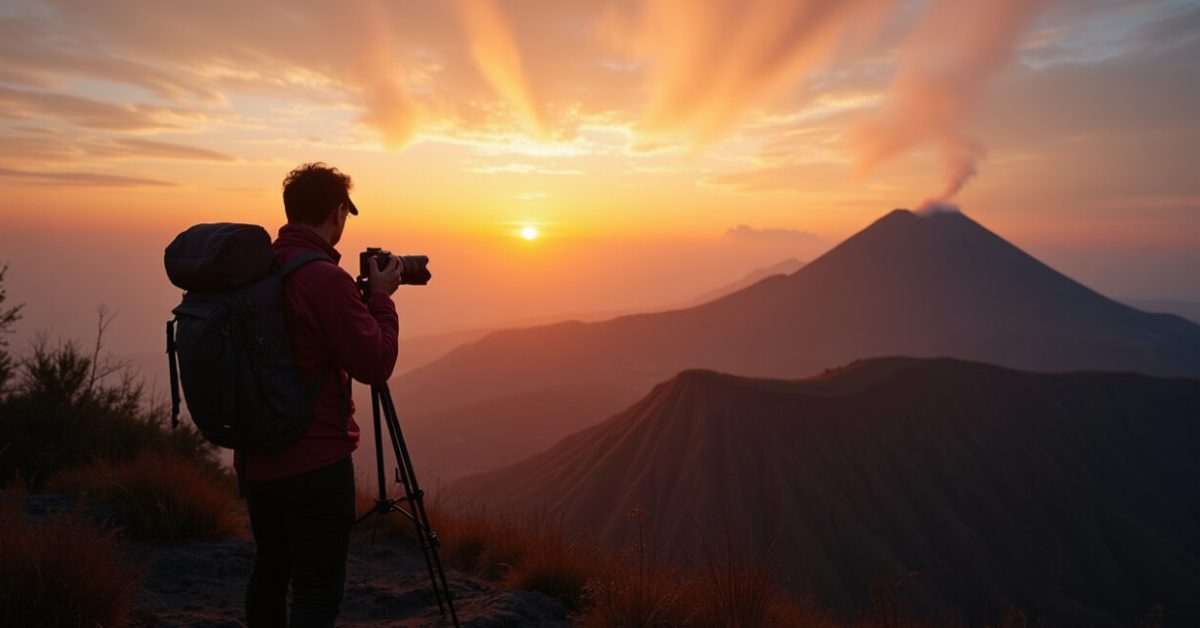

The sky above Mount Bromo went from ink to molten orange in nine minutes. By the time most tourists fumbled their phones, the light had already painted ridges and smoke into something cinematic. That hurry — catching a fleeting moment in raw nature — is exactly what makes Indonesia landscape photography addictive and brutally honest. If you want images that stop a feed, you must plan like a scientist and shoot like a poet.
The Single Kit Choice That Changes Everything for Indonesia Landscape Photography
Sharp, wide, and reliable beats fancy and fragile. For most Indonesian landscapes you want a sturdy wide-angle (16–35mm full-frame or equivalent), a 24–70mm for versatility, and a 70–200mm if you chase distant volcano action. A weather-sealed body matters: salt spray, ash and jungle humidity will punish cheap sealing. Indonesia landscape photography thrives on dynamic range — bring a camera with strong RAW files and use a steady tripod for long exposures.
Pro tip: carry two batteries in warm pockets; cold mornings drain power fast. And a small cleaning kit for lens salt and ash is non-negotiable.
Where to Point Your Lens This Season: Islands, Volcanoes and Hidden Coasts
Location is the promise; timing is the delivery. Bali’s coastline and Nusa Penida are obvious, but add Bromo-Tengger-Semeru for volcano drama, Ijen for the blue fire at night, and Raja Ampat for reef panoramas. Sumatra’s jungles and Lake Toba give moody water-and-mist scenes. Plan around weather windows: dry season (May–September) yields clearer volcano views; transitional months produce dramatic storms and light.
Indonesia landscape photography rewards small detours. That abandoned rice terrace road can outshine a famous viewpoint if you catch mist at dawn.

The Composition Rules That Make Ordinary Scenes Look Cinematic
Forget symmetry; hunt for tension. Use leading lines (rice terraces, ridgelines, lava flows) and foreground interest (plants, rocks, water) to pull viewers into the frame. Shoot low to exaggerate scale against volcanoes. For beaches, place the horizon off-center and use long exposures to smooth waves into silk. Indonesia landscape photography is about scale: include a person or boat to show how colossal a caldera or reef really is.
- Rule of thirds is a starting point — break it often.
- Layer the scene: foreground, midground, background.
- Mind the light direction — side light reveals texture.
The Seasonal Timing and Weather Reads Pro Photographers Use
The best light often comes when the forecast looks messy. Golden hours are predictable; dramatic skies are not. Monsoon edge days bring heavy clouds and shafts of light that create depth. Use local forecast sources and satellite imagery on the morning of the shoot. For volcano photography, check ash plumes and wind direction — a clear sunrise with light ash can be far more evocative than spotless blue skies.
Comparison: expectation vs reality — you might expect clear blue volcano shots in dry season, but misty, ash-filled mornings often yield more emotion and context for Indonesia landscape photography.
Permits, Local Rules, and the Practical Etiquette That Saves Shoots
Ignoring permits wastes time and sometimes money. Many protected sites require entry fees or guide permits. Trekking to active crater rims can require local rangers or village permission. Respect local customs: modest dress near temples, ask before photographing people, and pay for local guides when required. Bringing a print or small gift for a village elder can unlock better access and stories.
Two useful links for permits and park info: Indonesia’s official tourism site and park pages like regional conservation portals for rules and contact details.
Common Mistakes and What to Avoid on Indonesian Shoots
Most failures aren’t technical — they’re choices you can avoid. Common errors include: relying only on automatic modes, ignoring weather variables, failing to scout locations, overpacking gear, and not backing up files daily. A short list of what NOT to do:
- Do not shoot only at noon; the light is dead then.
- Do not trust a single forecast; have plan B locations.
- Do not leave memory cards in checked luggage; carry them with you.
- Do not photograph sacred rituals without permission.
Small decisions — skipping a tripod, not checking tide times, or ignoring local advice — can ruin an entire day of Indonesia landscape photography.
Editing Workflow and Sharing: Make Your Images Discoverable
Edit with intention, not overcorrection. Start with global adjustments: exposure, white balance and contrast. Bring out texture in midtones and shadows for volcanic rock and jungle foliage. For beaches and reefs, preserve color accuracy; reefs look fake with oversaturated blues. Export sizes matter: high-res for portfolios, smaller JPEGs (1200–1800px wide) for social shares. Tag locations and include concise context — people click and save stories.
Mini-story: On a wet morning at Ijen I underexposed two frames to save sky detail, then lifted shadows in post to reveal miners returning through blue sulfur haze. The final image earned a local magazine spread because it felt truthful, not stylized.
Light and access are negotiable. Respect and timing are not. If you leave Indonesia with one technical skill and one attitude, let it be: plan like a scientist, shoot like someone who’s fallen in love with the place.
How Do I Pick the Right Time of Year for Volcano Photography in Indonesia?
Choose the dry season (May–September) for clearer summit views and safer trail conditions, but don’t dismiss transitional months. Late April and October often produce dramatic clouds and contrast that add mood to volcano shots. Check local wind and ash forecasts before traveling to an active volcano. Nights can be cold at elevation, so pack layers and bring headlamps. Hiring local guides improves safety and timing — they know the micro-seasons and the best dawn windows for Indonesia landscape photography.
What Lenses Should I Bring for a Two-week Indonesia Landscape Trip?
For a compact, versatile kit bring: a wide-angle (16–35mm or 10–22mm APS-C) for panoramas, a standard zoom (24–70mm) for everyday frames, and a telephoto (70–200mm) if you want compressed perspectives or distant wildlife. Add a lightweight monopod or tripod, polarizer, and ND filter for long exposures. If weight is a concern, a high-quality zoom covering 16–200mm can work. Prioritize weather-sealed gear for humidity and ash when planning Indonesia landscape photography outings.
Are Drones Allowed at Popular Indonesian Landscape Sites?
Drone rules vary by region and are often strict near airports, military areas, and protected parks. Some parks allow drones with permits; others ban them completely. Always check national civil aviation rules and local park regulations in advance. Respect privacy and cultural sensitivities, especially near temples and villages. Fines and confiscations are possible for illegal flights. When in doubt, contact local tourism offices or guides to confirm whether your drone can be used for Indonesia landscape photography at that location.
How Do I Protect Gear from Ash, Salt, and Jungle Humidity?
Keep equipment in sealed bags and use silica packs inside dry cases. Wipe gear often with a microfiber cloth and use lens caps. After ash exposure, change lenses and blow out particles with a rocket blower before attaching anything to the camera. For humidity, store gear in airtight bags with desiccant when not in use and avoid rapid temperature changes to prevent condensation. Regular backups to SSDs and cloud storage each evening protect your Indonesia landscape photography files from loss or damage.
What’s the Quickest Way to Get Legal Access to Remote Photo Spots?
Start with local guides and community contacts; they often handle permits and speed up access. National park offices list contact emails and permit requirements online. For cultural or village sites, ask for permission through local tourism boards or a guide who knows community protocols. Carry cash for permit fees and tipping. Booking through a reputable tour operator can save time and reduce risk, letting you focus on composition and light rather than paperwork while shooting Indonesia landscape photography.