

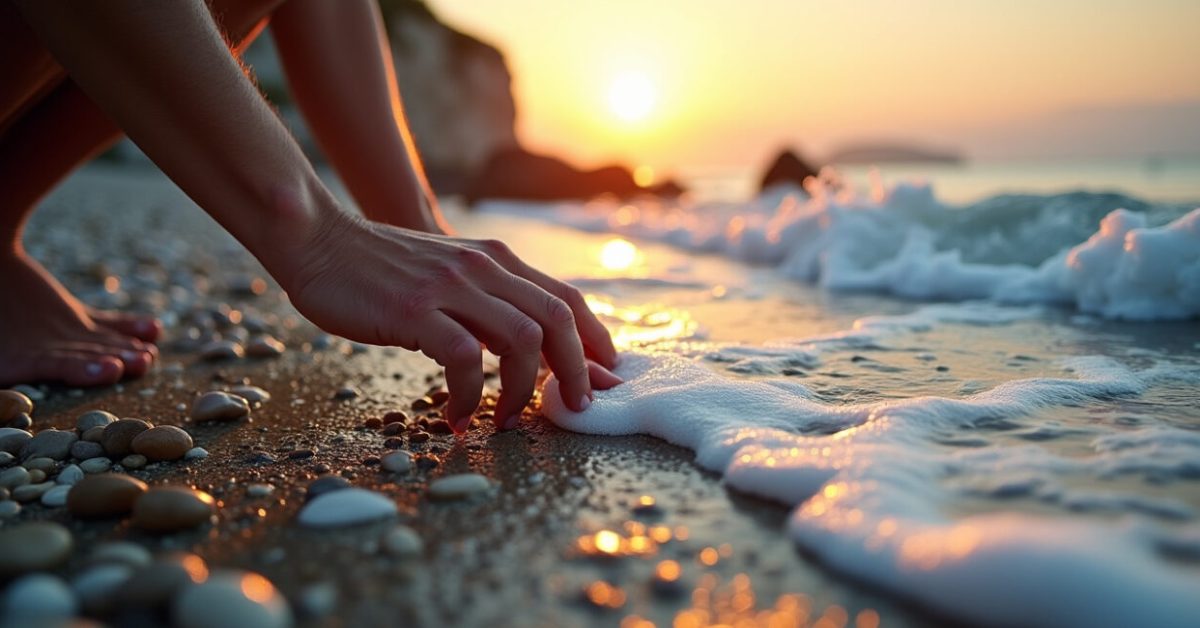

The first time I crouched on a wind-cut headland in Greece, I thought the rocks were just scenery. Ten minutes later my fingers were tracing grooves I hadn’t noticed from the trail. That moment—when a surface stops being background and becomes the story—is exactly what this piece is about. coastal textures are the secret language of Greek shores: the veined marble of a cliff, the frothy lace of foam, the grainy face of a wave-polished pebble. Read on to learn simple, repeatable techniques that make those details sing.
Why Low-angle Light Makes Coastal Textures Pop
Light at a low angle is the single easiest change you can make to reveal coastal textures. Early morning or late afternoon sun skims across rocks and cliffs, casting tiny shadows that map every groove. On bright days, a polarizer cuts glare and brings out color and contrast. For foam and spray, backlight turns motion into translucent ribbons. Try shooting within an hour after sunrise or before sunset to see how the same scene transforms from flat to tactile.
The Focus-stacking Trick Pros Use on Rock Formations
One shot rarely captures the depth of a cliff face and the pebbles at your feet. coastal textures demand depth. Focus stacking—taking several shots at different focus distances and blending them—gives sharp detail from near to far. Use a tripod and small aperture for each frame, then merge in software like Helicon or Lightroom. What looks like one clear photo is often five or six layered images. The result: rock formations that feel touchable, not flat.

Filters That Reveal Grain, Not Gimmicks
Filters can be subtle tools or vain accessories. A circular polarizer removes reflections and deepens color, which helps the eye read coastal textures in wet stone and seaweed. A neutral density filter lets you slow shutter speed to smooth water while preserving the grit of rocks. Avoid heavy HDR processing—overcooked contrast kills texture. Use filters to control light, not to fake it. The goal is tactile truth, not a surreal postcard.
The Close-focus Skills for Foam, Lichen, and Salt Crusts
Texture often hides in small things: salt crystals on a ledge, foam caught on rock. Get close. A macro lens or a good 50mm with extension tubes captures that micro-landscape. coastal textures are especially rewarding when you shoot at a perpendicular angle to the surface; the camera reads bumps and pits more clearly. Use a small aperture and steady support. Close focus turns ordinary shoreline elements into abstract, tactile portraits.
What Most Photographers Get Wrong (and How to Avoid It)
Here are common mistakes that flatten coastal textures and how to fix them:
- Overexposing highlights—use exposure compensation to keep texture in bright foam.
- Shooting midday sun—shift to low-angle light for relief and depth.
- Too wide an aperture when detail matters—stop down for texture.
- Ignoring foreground—add a textured object near the camera to anchor scale.
Avoiding these errors saves shots; practicing these fixes builds your eye. coastal textures reward patience more than expensive gear.
A Mini-story: A Cliff, a Lens, and a Lesson
I remember one windy afternoon on a small Ionian cape. I had a wide lens, no tripod, and little time. I focused on a dark patch of lichen near the cliff edge and slowed my breathing. The light skimmed the rock for ten minutes. I took seven frames—some handheld, some braced—and later stacked them. The final image revealed ridges I hadn’t seen in person. That photo taught me two things: the shore gives up texture if you slow down and look low, and technique matters more than kit.
How to Plan a Shoot on Greek Coasts (checklist and Timing)
Plan with the light and tide in mind. Coastal textures change with water level, wind, and sun angle. A quick checklist:
- Shoot within two hours of sunrise or sunset.
- Check tide charts—exposed rocks at low tide reveal more detail.
- Bring a polarizer and an ND filter.
- Pack a small tripod for focus stacking.
Combine timing and tools, and you turn a nice view into a textural study. For tide and weather data, check official sources like NOAA and geological context via USGS.
Coastal textures are not a niche. They are the fingerprint of place. Once you learn to read light, focus, and surface, Greek shores will stop being just scenery and start being a set of tactile stories. Try one technique at a time. Let the shore surprise you.
How Do I Choose the Best Time of Day to Photograph Coastal Textures?
The best time is within the golden hours—typically the first hour after sunrise and the last hour before sunset—because light is low and casts shadows that emphasize coastal textures. Wind and tide matter too: calm days make foam and small details easier to expose, while a rising or falling tide reveals different rock faces. Check local sunrise/sunset times and tide charts before you go. Aim for the hour after sunrise or before sunset, and arrive early so you can test angles and filters.
Can I Capture Coastal Textures Without a Tripod or Special Lenses?
Yes. While a tripod and macro lens help, you can capture striking coastal textures with basic gear. Use a narrow aperture and higher ISO if needed, brace your elbows against a rock, and shoot multiple frames for stacking later. A polarizer on a kit lens reduces glare and reveals surface grain. Focus on low-angle light and strong foreground elements to create depth. Practice handheld focus bracketing—take several shots with slightly different focus points—to simulate focus stacking without a tripod.
Which Filters Are Essential for Revealing Textures on Wet Rocks?
A circular polarizer is the most essential filter for wet rocks: it cuts surface reflections, deepens color, and exposes the stone’s true texture. A neutral density (ND) filter is also useful; it lets you use longer exposures to soften water while keeping rock detail sharp. Variable NDs can be handy but beware of vignetting. Avoid heavy graduated filters unless you need to balance sky and foreground. Clean the filter often—salt spray will blur detail if left on the glass.
How Do I Balance Exposure Between Bright Foam and Dark Cliffs?
Expose for highlights first—bright foam can clip quickly—then recover shadow detail in post if needed. Use your camera’s histogram to avoid blown peaks. Bracketing exposures and blending them gives the most dynamic range, especially when coastal textures span bright spray and shaded rock. If you prefer a single frame, shoot in RAW and underexpose slightly to preserve highlights, then lift shadows during editing. A polarizer helps by reducing specular highlights on wet surfaces.
What Post-processing Steps Best Enhance Coastal Textures?
Start with basic corrections: white balance, exposure, and contrast. Use localized sharpening and clarity on rock faces to emphasize coastal textures, but apply selectively to avoid amplifying noise in the sky or water. Consider frequency separation or texture-specific masks to boost mid-frequency detail without affecting color. When focus stacking, align and blend carefully, then fine-tune sharpness. Finally, keep edits natural—overdone contrast and saturation ruin the tactile feel you worked to capture in the field.