
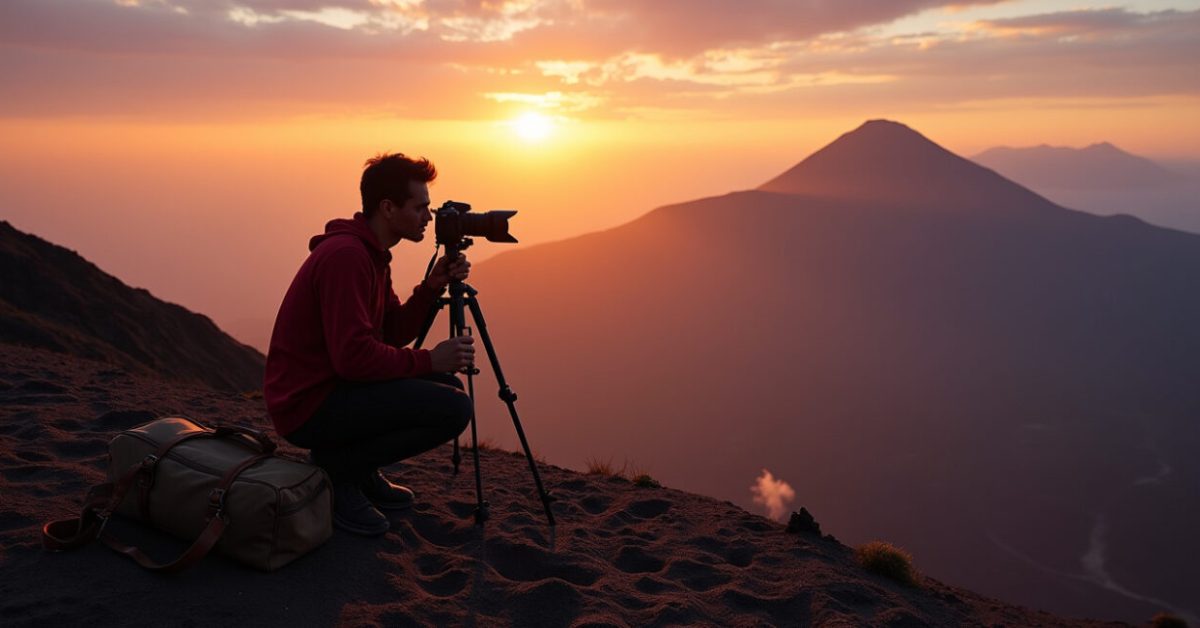

The moment the sky over Mount Bromo goes from bruised purple to molten gold, your photo either sings—or looks like everyone else’s vacation postcard. These Bromo sunrise tips cut to what matters: where to stand, what glass to pack, how to lock your tripod and time the weather so dawn light becomes drama. Read this and your next sunrise will feel deliberate, not lucky.
Why the Right Viewpoint Makes or Breaks the Shot
Most people hike to the same ridge and shoot into the light. The result? Predictable photos. Choosing the right viewpoint changes the story your image tells. Try the ridge north of Penanjakan for wide, layered horizons. Move closer to the crater for intimacy and steam. Angles near Seruni Point give foreground textures—sand tracks, hikers, or shrubs—that catch low light. These small moves turn the same sunrise into very different photos. Bromo sunrise tips start with your feet: don’t follow the crowd.
The Lenses That Actually Work at Bromo
There’s no one-lens rule, but some choices beat others. A 16–35mm gives sweeping panoramas; a 24–70mm covers most situations; bring a 70–200mm for compressed ridgelines and crater detail. I skip ultra-telephotos unless I plan to isolate distant peaks. For compact kits, prioritize aperture over zoom range: f/2.8 helps for low light and astrophotography before dawn. Bromo sunrise tips: pack two bodies or one body plus a prime to switch fast when light changes.

Tripod Setup and Stability Hacks That Save Shots
Winds at sunrise can ruin sharpness. Use a sturdy tripod, lower the center column, and hang your bag from the hook for ballast. Spread legs wide on the sand and use spikes if it’s loose. If you shoot with long lenses, tether a hand to the tripod while using the remote shutter. Bring a small level and a wrist strap. These cheap habits reduce blur and frustration. Bromo sunrise tips include practicing quick setup in the dark—your hands will thank you.
Timing, Weather Cues, and How to Read the Sky
Sunrise timing is simple math but tricky in practice. Look for clear eastern skies with some mid-level clouds; they reflect color. Check local forecasts and the BMKG updates for wind and visibility before you hike. Arrive 45–60 minutes before sunrise to set up and watch pre-dawn colors. If fog sits low, stay—fog can lift into magical shafts of light. If heavy haze kills contrast, move to a closer viewpoint or wait for clouds to thin. Bromo sunrise tips: patience beats panic.
Composition Cues That Turn Soft Dawn Into Drama
Light alone won’t save a weak composition. Use leading lines—sand tracks, ridgelines, or fences—to pull the eye toward the crater and sun. Layer your frame: foreground texture, middle ground with people or fumaroles, and far ridges. Try low angles to exaggerate foreground details, or a telephoto to compress layers and make colors feel denser. Negative space works too; a minimalist sky can make the crater silhouette powerful. Bromo sunrise tips: compose before the light peaks, then refine.
Common Mistakes to Avoid (and Why They Cost You the Shot)
People make the same avoidable errors at Bromo. Don’t overexpose highlights; don’t stand with the sun directly behind you; don’t shoot without checking your lens for sand. Common errors list:
- Waiting until sunrise to set up—arrive early.
- Using flimsy tripods—bring a real one.
- Ignoring weather reports—visibility matters.
- Shooting only mid-frame panoramas—use foreground.
A Short Moment That Taught Me Everything About Bromo Light
We hiked in near-dark, three cameras and two thermoses of coffee. A fog bank sat low and stubborn. For thirty minutes, nothing happened—just grey. Then a thin ribbon of gold slit the horizon. I dropped to my knees, framed a cracked sand track, and fired. The fog rose like a curtain. The photo I thought would be average became the one festival judges loved. The lesson: stay when others leave; light changes fast and favors the patient. Bromo sunrise tips include staying until your fingers say no.
For local weather details check the BMKG. For geology and park information, see National Geographic’s guide.
Which of these tips will you try first? Go pick a viewpoint, set a proper tripod, and let the dawn teach you. The best Bromo photos aren’t made by luck—they’re made by decisions. Make them deliberately.
How Early Should I Arrive to Capture the Best Light?
Arrive at least 45–60 minutes before official sunrise. That gives time to hike, find a composition, set up equipment, and test exposure as the sky shifts. Pre-dawn light often creates the most interesting colors and textures—sometimes 20–30 minutes before sunrise. If you plan a specific viewpoint like Penanjakan or Seruni Point, add extra time for crowds and last-minute movement. Being early also allows you to react when fog or clouds change quickly.
Which Camera Settings Work Best for Bromo Sunrises?
Start with a low ISO (100–400), aperture around f/8–f/11 for landscape sharpness, and shutter speed to match the light—use a tripod when slower than 1/125s. Bracket exposures by 1–2 stops to capture dynamic range and consider shooting RAW for better recoverability. For silky steam, try a longer exposure and neutral density filters. Check your histogram and protect highlights. These settings help you manage contrast and retain color in changing dawn light.
Can I Shoot Without a Full Tripod Kit?
A solid tripod is strongly recommended, but you can manage without in a pinch. Use stable surfaces—rocks, your backpack, or the ground—to brace the camera. Increase ISO slightly to allow faster shutter speeds and reduce blur. A compact travel tripod can be a good compromise if you want portability. Remember: wind and loose sand make handheld shots risky at low shutter speeds. Bromo sunrise tips favor stability; borrow or rent gear if possible.
What Should I Pack to Protect Gear from Sand and Steam?
Bring lens cloths, silica gel packs, and a microfiber towel. Use a weather-sealed camera if you have one, and keep lenses capped when not shooting. A simple plastic bag or rain cover protects gear from steam and sudden drizzle. After shooting, blow out sand with a blower—avoid compressed air. Change lenses minimally and point the lens down when swapping. These small steps prevent mechanical issues and keep your kit working through salty steam and fine volcanic sand.
How Do I Balance Including People for Scale Without Making It a Tourist Photo?
Use people as purposeful scale elements rather than crowd fillers. Place one or two subjects at a distance—on a ridge line or walking a sand track—to create a sense of scale and story. Shoot wide to include landscape context, or use a longer lens to isolate a silhouetted figure against colorful sky. Time the shot so the person’s pose looks natural—walking, looking, or pausing. Bromo sunrise tips suggest scouting positions where people add drama, not distraction.