

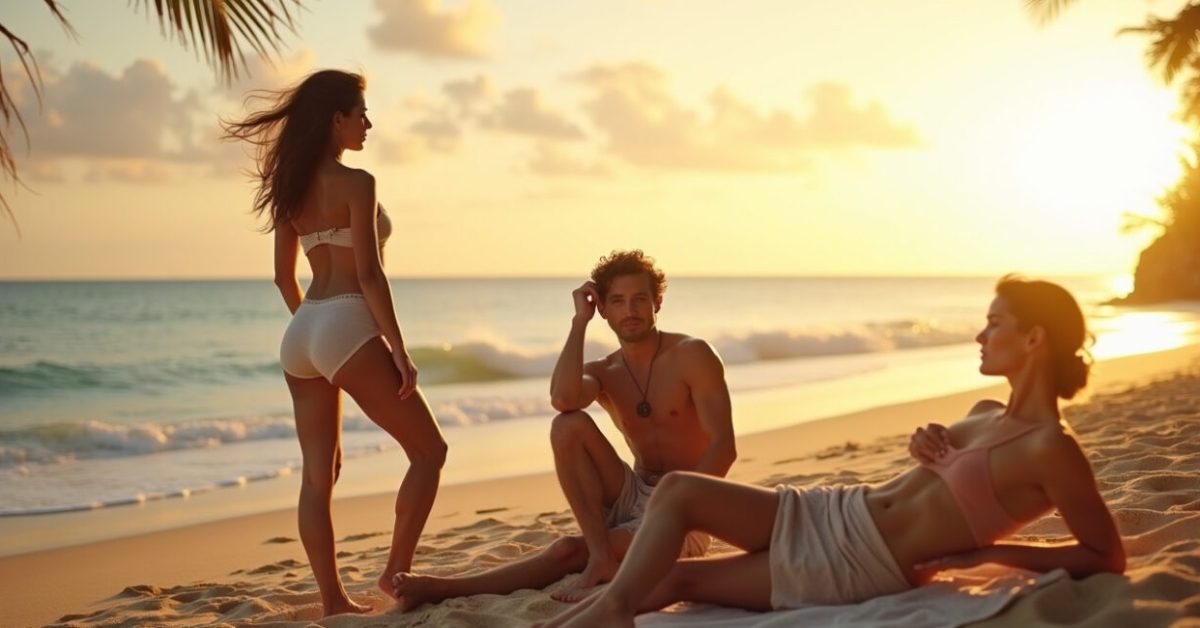

The sun is low, the sand still warm, and one swipe could make that island moment immortal — or forgettable. If you want photos that stop a scroll, you need beach poses that feel effortless, not staged. These are ten simple beach poses designed to flatter every body, mood, and group size. Read fast, try one, and watch how a single frame changes the whole day.
Why These Beach Poses Actually Work (not Tricks)
Good poses do one thing: create tension and ease at the same time. That contrast — a relaxed shoulder with a deliberate hand — gives images depth. Beach poses use the horizon, wind, and props to make small moves look editorial. Photographers lean on posture, angles, and negative space; you get the job if you follow a few rules. Try a pose, then move just 10 degrees. The tiny change often makes the difference between awkward and iconic.
The 10 Island-friendly Poses You Can Do Right Now
Here are the core beach poses. Each is quick to learn and easy to vary for singles, couples, and groups.
- Walk-and-look — Walk toward or along the shoreline, glance off-camera.
- Sitting throne — Sit slightly turned, one knee up, chin forward.
- Back-to-camera over-the-shoulder — Show the back, look back softly.
- Lean on prop — Use a palm tree or surfboard for casual weight.
- Wind sweep — Let hair or fabric catch the breeze.
- Close whisper (couples) — Foreheads or cheek-to-cheek, eyes closed.
- Triangle group — Stagger people at different heights for depth.
- Frame with hands — Create a window with arms around face.
- Knee-dip — One knee in the sand, body angled to camera.
- Sun silhouette — Shoot at golden hour for strong shapes.
Each pose can be softened or strengthened depending on your expression, props, and the lens choice. Practice these and mix them into your shoot.

Variations for Singles, Couples, and Groups
Context changes everything. A single person can own the frame with a confident walk-and-look. Couples should focus on small contact — a hand at the lower back, a knee touch — which reads intimate on camera. Groups work best with a leader; pick one person to anchor the composition and build staggered levels around them.
- Singles: use long lines — extend an arm or leg to elongate the silhouette.
- Couples: trade gazes — eyes to each other, then to camera for variety.
- Groups: arrange in triangles; avoid lining everyone in a row.
Framing Tips and Simple Gear That Lift Every Shot
Framing turns good poses into magazine-worthy images. Rule of thirds, foreground elements, and leading lines (like a shoreline) pull the eye. Use a low angle for drama. Add small, portable props: a straw hat, a bright sarong, a wooden surfboard. These give hands something to do and add texture to the frame.
For authority on light and exposure, see resources at National Park Service photography tips and guidelines about safe beach photography at NOAA.
What to Avoid: Common Mistakes That Kill a Beach Shot
Bad posture, stiff hands, and ignoring light are the usual killers. People often pull shoulders up, hide both hands, or face the sun flat on. Avoid these errors:
- Too much symmetry — it looks posed and boring.
- Frozen smiles — they read fake in photos.
- Ignoring background clutter — move a few steps and reframe.
A quick fix: breathe, drop your shoulders, and find the light. Small shifts make a huge difference.
A Surprising Before/after: How One Twist Changes Everything
Expectation: stand straight and smile. Reality: a slight twist of the torso and a lowered chin create a slimmer, more dynamic image. I watched a friend go from textbook tourist to editorial model in thirty seconds. She turned her hips 15 degrees, put weight on her back foot, and let her hair fall naturally. The camera loved it. That single adjustment transformed posture, expression, and mood.
Mini-stories, Quick Prompts, and What to Say to Your Photographer
Say less, suggest more. Tell your photographer one mood word: “playful,” “cinematic,” or “soft.” Use prompts that create motion: “Walk like you’re late for a boat” or “Lean into the wind like you’re listening.” A 3–4 line mini-story often works: imagine arriving at a tiny island cafe, eyes on the horizon, laughing at something off-frame. Those prompts create natural reactions and better beach poses than rigid direction.
Now go try two poses: one you think fits you and one that scares you a little. The safe one will give you an image you like. The bold one will give you an image you love.
How Do I Choose Outfits That Work with Beach Poses?
Pick clothes with motion and simple shapes. Lightweight fabrics like linen and cotton catch the breeze and add life to beach poses. Avoid tight patterns that distract; choose one standout color or a neutral palette. Swimwear with a cover-up offers quick changes between poses. Think layers: a sarong, a hat, or a denim jacket gives you more options on the spot. Bring at least one textured item — straw, lace, or crochet — to add depth without stealing focus.
What Lens or Phone Settings Make Beach Photos Better?
For phones, use portrait mode sparingly and favor backlighting at golden hour. On a camera, a 35mm–85mm lens flatters most people on the beach. Lower your aperture for a soft background (f/2.8–f/5.6). Expose for highlights — sand can blow out quickly — and use spot metering on faces. If you’re unsure, shoot RAW to recover details later. Hold steady, use a small tripod, and bracket a couple of shots to ensure you get one with perfect exposure.
How Do I Make Group Beach Poses Look Natural?
Mix levels and actions. Ask one person to sit, another to lean, and another to walk slowly. Give each person a small prop: sunglasses, hat, drink. Stagger distances from the camera to create depth. Avoid lining people up; instead, form a loose triangle or arc. Keep instructions simple and give one action at a time, like “look at the water” or “whisper to the person on your left.” That keeps faces candid and interactions real without chaos.

Can I Get Editorial-looking Images with a Phone?
Yes. Use natural light, shoot at golden hour, and get closer to your subject rather than zooming. Use portrait or wide modes to control depth. Keep the horizon straight and use foreground elements like rocks or grasses to frame the shot. Encourage movement — a toss of hair, a step forward — and take burst shots to catch the peak moment. Small edits in a phone app (contrast, highlights, and a touch of warmth) take a good phone photo to editorial fast.
How Do I Pose If I’m Uncomfortable in Front of the Camera?
Start with small actions and avoid staring directly at the lens. Use the walk-and-look or lean-on-prop poses; they give you a task so you’re less self-conscious. Bring a friend or partner to create interaction. Keep sentences short when directing yourself: “walk, look left, laugh.” Practice in private before the trip to find your best angles. Remember: the camera records how you move, not how you think — relaxed movement beats forced perfection every time.