
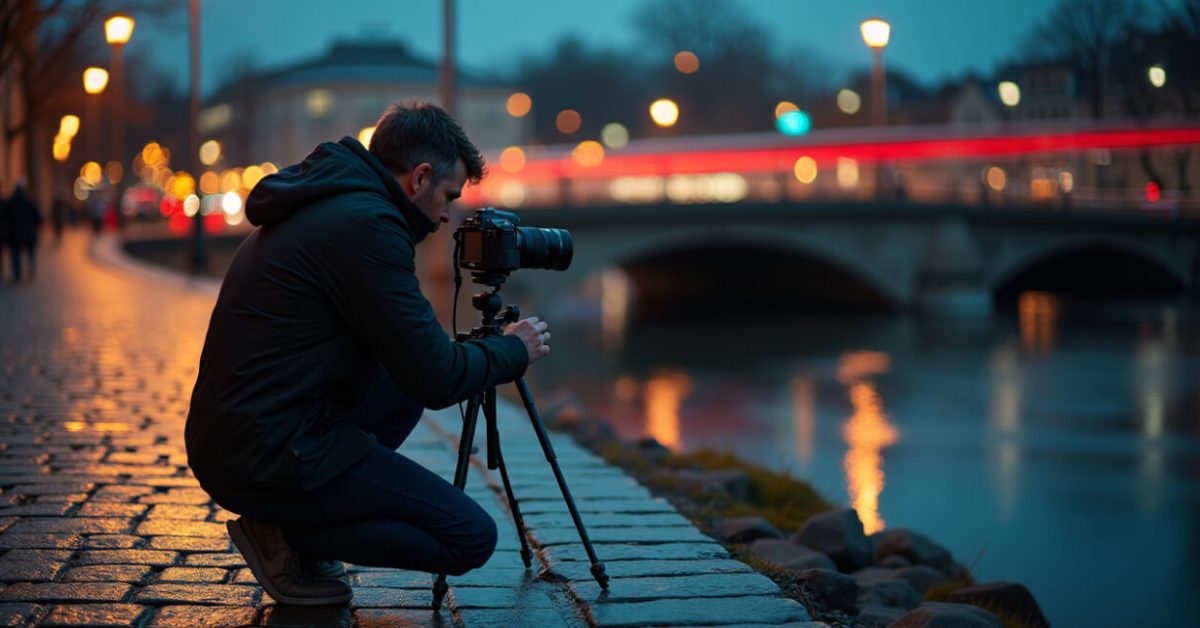

The streetlamp blurs into a river of color until you mount a tripod and the same scene snaps into crisp, cinematic clarity. That quick flip — from shaky to still — is the exact moment the tripod vs handheld debate becomes real. Whether you’re chasing stars, neon, or a friend’s smile at dusk, knowing when to set down your camera or trust your hands changes both the image and the story it tells.
When a Tripod Makes Shots You Simply Can’t Get Handheld
Long exposures, pin-sharp cityscapes and star trails demand what your hands can’t give. In low light, a tripod turns seconds of exposure into usable images without cranking ISO. For night panoramas, light painting, or Milky Way arcs, tripod vs handheld isn’t theoretical — it’s the difference between a usable photo and noise soup. Mount a camera, dial long shutter speeds, and you can expose for subtle highlights and textures that handheld stabilization and high ISO still can’t recover.
The Surprising Situations Where Handheld Beats a Tripod
Motion and speed often favor agility over absolute stability. When the subject moves — dancers, traffic, surf — handheld lets you react, reframe and keep the motion feeling alive. Low-light portraits with a wide lens and a fast lens (f/1.4–f/2.8) can look more natural handheld because you can follow expressions and shift angles. In other words, tripod vs handheld is not about clarity alone: sometimes the shot’s life depends on the nimbleness your hands provide.

The Stabilization Tech That Narrows the Gap
IBIS, gimbals and lens stabilization have rewritten what’s possible handheld. Modern in-body image stabilization (IBIS) and optical stabilization can buy you 2–6 stops. That means many night scenes once reserved for tripods are now within reach handheld. Still, stabilization fails with very long exposures or when you want absolute repeatability for stacking. Think of tripod vs handheld as a continuum: stabilization tech shifts the boundary, but doesn’t erase it.
How ISO, Shutter Speed and Aperture Tip the Balance
Exposure settings are the chessboard where tripod vs handheld wins or loses. Crank ISO and you get faster shutters but more noise. Stop down and you gain depth of field but need longer exposures. If you need to freeze motion, handheld plus high ISO is often better. If you want detail, texture and minimal noise, the tripod lets you use low ISO and longer shutter. Match your goal: sharpness and low noise → tripod. Freeze action or capture candids → handheld.
Common Mistakes Photographers Make After Dark (and How to Avoid Them)
Most errors aren’t technical — they’re choices made in the dark. People bring tripods but forget to level, secure loose legs, or use a remote release; others try handheld without testing ISO limits and lose detail to noise. Avoid these mistakes:
- Not tightening tripod head or locking mirror (if DSLR).
- Relying on stabilization but ignoring shutter speed rules of thumb.
- Using excessively high ISO before trying longer exposure with a tripod.
- Forgetting to check focus at 100% for critical night shots.
A Compact Comparison That Surprises: Myth Vs Reality
Myth: tripods are always better at night. Reality: it depends on the goal. Expectation: airborne detail, static scenes, no noise. Reality: tripods excel at static, low-noise imaging; handheld wins when movement, speed or mobility matter. Consider this quick before/after:
- Before (handheld, high ISO): bright but grainy portrait, motion freeze.
- After (tripod, low ISO): clean, textured scene, longer shutter motion blur when desired.
Mini-case: A Three-minute Decision That Saved a Wedding Album
They wanted night portraits under a string of bulbs. I had a tripod and only a few minutes before the next toast. I set the tripod, dialed down ISO and used a 2-second exposure with a tiny burst of flash to freeze faces while keeping warm ambient trails. The result: soft environment glow with crisp smiles — something handheld attempts couldn’t match without painful noise. That quick pivot shows how tripod vs handheld choices change not just technical quality, but the feeling of the photograph.
For technical best practices and safety around equipment, see guidelines from reputable institutions like the National Park Service. For sensor noise and exposure fundamentals, educational resources such as university-level or industry guides can be useful references.
Choose based on story, not habit. When you make the tripod vs handheld call by asking what the image needs — motion, texture, noise level, or mobility — your results follow. Tonight, test one scene both ways and let the photos decide.
How Do I Know When to Use a Tripod Instead of Handheld?
Choose a tripod if your shot needs low noise, long exposure, or precise framing. If you want star trails, light painting, deep cityscapes or to use very low ISO, a tripod converts seconds into usable detail. If the subject is static and you can’t accept motion blur, set the camera on a tripod, level it, and use a remote or timer. Conversely, pick handheld when mobility, speed, or subjects in motion are essential and when a fast lens and higher ISO will preserve image quality.
Can Modern Stabilization Replace a Tripod for Night Photography?
Stabilization helps, but it does not fully replace a tripod for every night shot. IBIS and optical stabilization often buy several stops, letting you shoot slower than before without blur. They’re excellent for short exposures and low-motion scenes. However, for exposures of several seconds, star stacking, or absolute low-noise needs, a tripod remains superior. Use stabilization to expand handheld possibilities, but switch to a tripod when you need repeatable, noise-free long exposures or precise compositional control.
What Shutter Speed is Safe Handheld at Night?
Safe handheld shutter speed depends on focal length and stabilization. A classic rule is 1/(focal length) second — for a 50mm lens, 1/50s — but stabilization can add 2–6 stops. For night work, if you can open the aperture and increase ISO without unacceptable noise, aim for shutter speeds faster than 1/60s to limit blur for moving subjects. Test your gear: take a sequence at different speeds to see the slowest shutter you can handhold reliably. If detail is critical, choose a tripod.
How Should I Set ISO When Choosing Between Tripod Vs Handheld?
Let your goal guide ISO. If you use a tripod, keep ISO as low as possible to minimize noise and emphasize dynamic range. Without a tripod, raise ISO until your shutter speed can freeze the action or reduce camera shake. Modern cameras handle high ISO well, but higher values still reduce highlight detail and add texture. A practical approach: decide acceptable noise, then choose ISO that gives a shutter speed compatible with either handheld limits or tripod-enabled long exposures.
Are There Quick Tripod Setups or Alternatives for Fast Night Shots?
Yes. Compact travel tripods, tabletop tripods, or stable supports like walls and railings let you gain stability fast. A monopod or a gimbal offers a middle ground: improved steadiness with mobility. You can also brace your camera against solid objects or use a beanbag for improvised support. For truly quick work, combine a fast lens, higher ISO and stabilization. Always carry a small tripod or flexible support — it takes seconds to improve your night images dramatically when the moment arrives.