

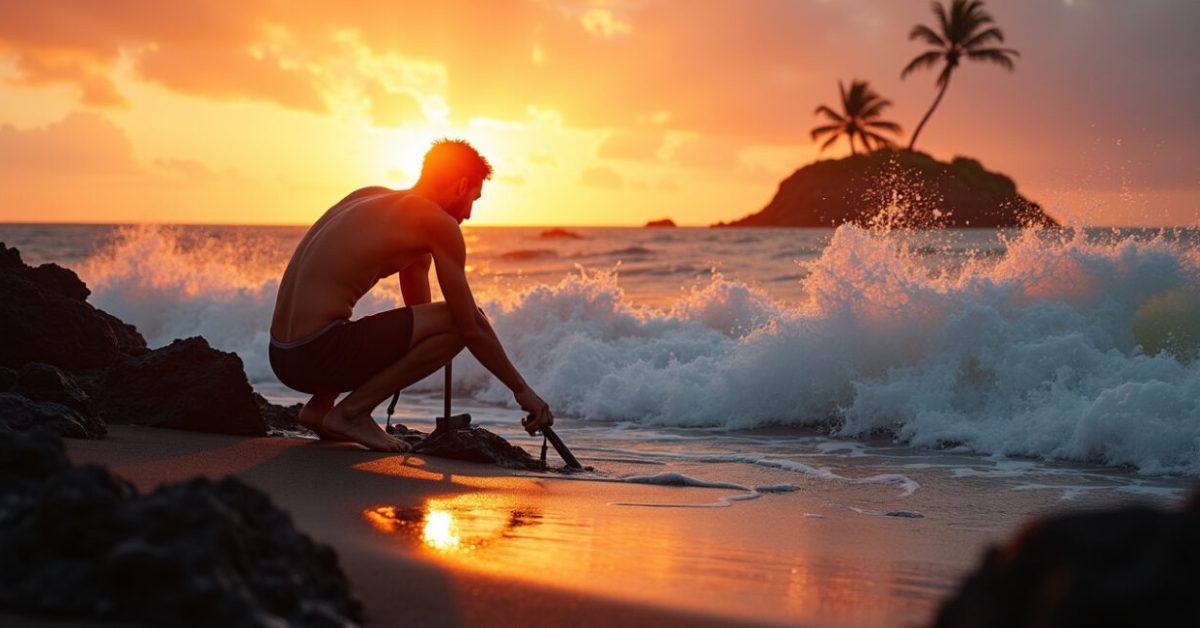

The wave broke, the palm silhouette sharpened, and the light did something almost unfair: it pulled color out of the water and made skin look like silk. That moment — when the island goes from ordinary to cinematic — is what photographers chase. This piece zeroes in on the most powerful five minutes of golden hour timing for island shots, and gives quick, usable steps to lock it down: where to stand, what to tweak, and what to avoid.
The Five-minute Window That Defines an Island Photo
The single most powerful five minutes happens just after the sun kisses the horizon or right before it slips away. On islands, humidity, salt haze, and reflective water compress that magic. In those five minutes color temperature jumps, contrast drops, and reflections pop. You’ll see rapid change: warm orange to deep coral in 60–300 seconds. Use golden hour timing to anticipate that shift: set composition early, lock exposure, and be ready to make one decisive frame when the light peels into place.
How the Light Changes — Second by Second
Golden hour timing on islands is not linear. Light softens, then a thin band of glow intensifies, then it collapses. Expect these phases:
- Minute 0–60: soft wraparound light, low contrast.
- Minute 60–240: peak color saturation, strong rim light on water.
- Final 60 seconds: dramatic silhouettes and long shadows.
Mastering the shift means knowing which of those seconds suits your story — portrait, landscape, or a water reflection shot — and committing to that chosen moment.

Where to Position Your Subject for Maximum Impact
Placement is everything. On islands, use backlight and reflections to add depth. Position options that work in golden hour timing:
- Backlit at waist level to get rim light and hair glow.
- Near wet sand to capture mirror-like reflections.
- Framed by rocks or palms to add scale and texture.
Place your subject so the light strikes edges, not the face, then tweak exposure for mood. For faces, use a 1-stop positive fill (reflector or flash) if you want detail; for drama, let the face fall into shadow.
Quick Exposure and White Balance Tweaks That Change Everything
The five minutes demand fast choices. My go-to tweaks for golden hour timing:
- Expose for highlights if you want bold color; pull shadows in post.
- Dial white balance 200–400K warmer than Auto for richer golds.
- Shoot RAW always — you’ll need the latitude.
A practical setup: AE on manual, shutter for movement, aperture for depth, and ISO low — then bracket one frame +1/3 and -1/3 EV. That gives a safety net during the brief peak.
Common Mistakes That Ruin the Five-minute Shot
People waste the best seconds with tiny avoidable errors. Here are the top offenders in golden hour timing:
- Chasing the sun instead of composing ahead of time.
- Leaving WB on Auto and trusting the camera’s guess.
- Overcomplicating settings — moving pieces slow you down.
Don’t react; prepare. If you arrive ten minutes early, set baseline exposure, choose anchor frames, and lock focus. That discipline converts fleeting light into one killer frame.
A Surprising Comparison: Expectation Vs. Reality on Island Shoots
Expectation: golden hour gives even, painterly light for ten blissful minutes. Reality: island weather, haze, and reflections turn light into a fast, wild beast. In practice, those glorious results often come in a brutal five-minute sprint. I once watched a group wait for “golden hour” for 30 minutes only to miss the peak because they were adjusting gear. The before/after is dramatic: a dull photo at minute -2, a magazine-ready frame at minute +3. Preparation creates that before/after magic.
One Small Story That Teaches a Big Rule
We were on a tiny atoll. Wind came up, and the sun slid fast. I had one subject holding a surfboard. I’d pre-framed, pre-focused on the rippled shore, and set WB a touch warm. At the peak five minutes I asked them to walk two steps into the light and click — one frame. The photo ran as a cover. The rule it taught: if you set everything before the peak, you only need one intentional move to win.
Want calibration you can trust? Check NOAA’s sunrise and sunset times for precise golden hour planning and contrast them with seasonal humidity patterns from a university climatology page to predict haze and color shifts. Those two references will turn guesswork into timing you can bank on.
Golden hour timing on islands rewards preparation, not luck. The five-minute peak is ruthless but repeatable. Show up early, lock down your settings, and be bold for those crucial seconds — then let the light do the rest.
How Long Exactly is the “five-minute” Peak?
The “five-minute peak” is practical shorthand for the most intense, color-rich stretch during golden hour. On islands, it typically lasts between 3 and 7 minutes depending on cloud cover, humidity, and the slope of the horizon. Low humidity and a clear horizon will compress the peak to about three minutes. If there’s thin cloud or haze, the color can smear longer. Track local sun altitude and practice so you learn the typical window for your location.

Should I Meter for Highlights or Shadows During That Window?
Meter for highlights if you want saturated skies and vibrant reflections; this preserves the color that makes island golden hour special. If detail in faces matters, favor the midtones and add subtle fill light. The key with golden hour timing is to prioritize the element that tells your story. Bracketing one frame up and down by 1/3 EV gives options. Always shoot RAW so you can recover shadow detail without killing the tone of the highlights.
What’s the Best White Balance Setting to Use?
Set white balance slightly warmer than Auto — roughly +200 to +400K from daylight — to enhance golds without going orange. On many cameras the “Cloudy” preset works well; custom Kelvin around 5600–6200K often nails it. The golden hour timing changes WB fast, so once you pick a setting, commit and adjust only if the scene’s dominant color shifts. RAW lets you fine-tune, but getting a strong in-camera base saves editing time and preserves natural-looking skin tones.
How Do I Use Reflections and Water to My Advantage?
Reflections double the effect of golden hour timing. Position low and close to the wet sand or shallow water to get mirror-like foregrounds. Compose so the reflection echoes the subject or the sky’s color band. Use a small aperture (f/8–f/11) for sharpness across the frame, and keep your shutter fast enough to freeze small ripples, or slow it for smooth glass. The right angle and timing turn a simple shoreline into a dramatic, layered image.
Can I Rely on Weather Forecasts to Plan the Five-minute Shot?
Weather forecasts help but don’t guarantee the peak. Forecasts give wind, cloud cover, and general humidity trends that influence golden hour timing. Local microclimates on islands can change quickly, so combine forecast data with real-time observation. Use a reliable source like the NOAA sunrise/sunset tables for timing and a regional climate page for humidity patterns. Arrive early and watch the sky — the best five minutes often come as a surprise, even on days labeled “clear.”