

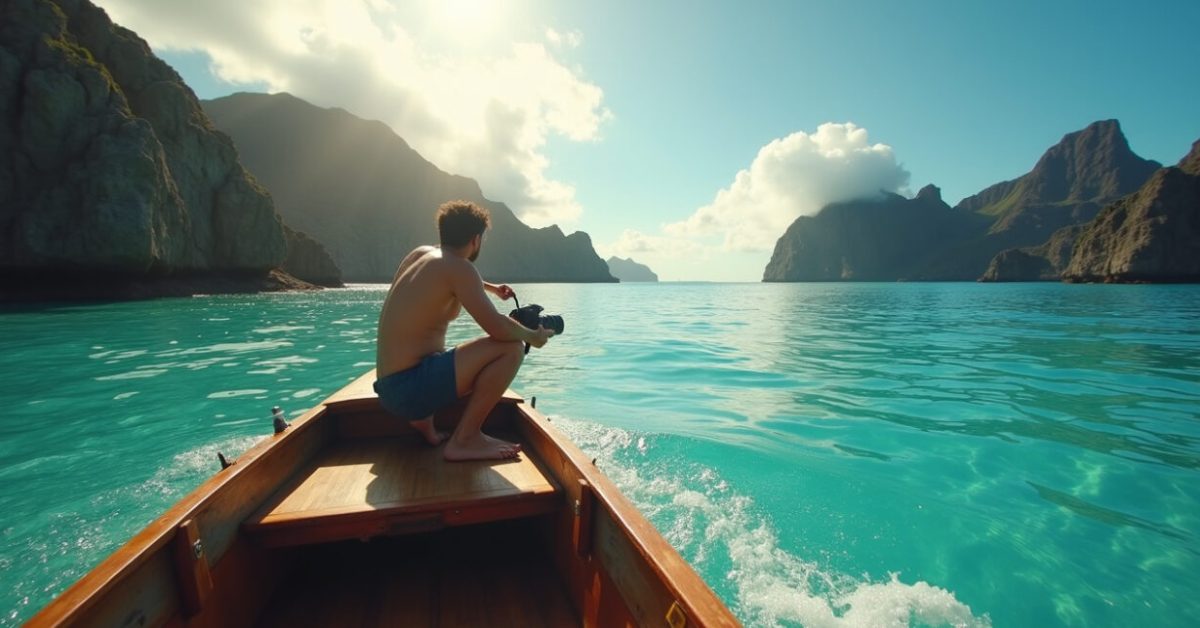

The water hit the hull with a sound like glass being wiped clean. I was already framing a rock—too close, too high—when the light changed and the whole scene exploded. That shift is the secret of Komodo seascapes: one breath and the shot either works or it doesn’t. If you want water like crystal and rock texture that snaps, you need timing, the right tools, and a few rules you mustn’t break.
Where to Go First: Three Islands That Outshoot the REST
Not all islands are equal for Komodo seascapes. Padar, Kelor, and Kanawa deliver vastly different moods: panoramic bays, sculpted limestone, and hidden lagoons. Padar gives wide, dramatic ridgelines best at sunrise. Kelor’s low cliffs suit close-up rock detail and long exposures. Kanawa has calm water and coral lines perfect for reflections. Bring a polarizer to each. Expect crowds at Padar at sunrise; plan a boat departure before dawn. For calmer, less-trodden shores, ask local captains about early-morning stops.
Golden-hour Strategies That Transform Flat Blue Into Glowing Depth
Golden hour isn’t just pretty; it sculpts texture. On Komodo seascapes, shoot the 20 minutes before and after sunrise/sunset. Use a 24–70mm for scenes that need context and a 70–200mm to compress islands against light. Expose for highlights on the water and let shadows render rock texture. Try bracketed exposures for HDR or use a single exposure with +1/3 EV to keep water detail. Move fast: the color shifts in minutes. Keep ISO low and trust a tripod for slow shutter speeds.

Filters and Long Exposures: How to Make Water Look Glassy Without Losing Rock Detail
Long exposures make Komodo seascapes cinematic, but they blur the very rock detail you want. Start with a strong neutral-density (ND) filter—6 to 10 stops depending on light. Add a circular polarizer first to cut glare and reveal submerged textures. Stack carefully: polarizer before ND, then test for vignetting at wide angles. For exposed rocks, use a 2–4 second exposure to smooth water while keeping texture. For silky water, go 15–30 seconds and blend a sharp, short exposure of the rocks in post.
Drone Approaches: Composition, Altitude, and Safety over Komodo Waters
Drones unlock angles you can’t get from a boat. For Komodo seascapes, fly low and slow for texture, then climb for island context. Keep altitude under local limits and 50 meters when over people. Be decisive: plan your path, bring spare batteries, and always check wind and bird activity. The park has strict rules—respect them. Use point-of-interest mode around islets and avoid hovering near nesting birds. If the wind kicks, land immediately. A well-timed drone arc at golden hour can be the hero shot of the trip.
Exposure Tricks and White Balance: Make Water Color Sing, Not Lie
White balance can flatten Komodo seascapes or make them sing. Start in RAW and set WB to daylight as a baseline. Use a custom Kelvin when the light is warm—around 5200–6000K at sunrise; cooler at noon. Shoot a gray card or take a reference frame to correct in post. For vivid turquoise, underexpose by 1/3 stop to keep highlights and boost saturation carefully in post. Beware of oversaturating blue—keep skin tones and clouds believable when people appear in the frame.
Composition Hacks: Texture, Foreground, and the Rule You Should Break
Texture sells Komodo seascapes. Look for foreground rocks, tide pools, or foam trails that lead the eye. Place the horizon off-center and use diagonal rock lines to pull viewers into the frame. One rule to break: sometimes centering the island creates a powerful, symmetrical scene—use it deliberately. Mini-story: I once framed a tidal pool that mirrored a cloud bank; the centered island behind made the shot feel like a painting. That image got twice the engagement of my other work that week. Trust what the scene asks for.
What to Avoid: Common Mistakes That Ruin Seascape Images
Most mistakes are avoidable. Here’s what I see most on Komodo seascapes and how to fix them:
- Overexposed highlights — use exposure compensation and check histograms.
- Flat midday light — move to golden hour or use polarizers to add contrast.
- Shaky long exposures — bring a sturdy tripod and remote trigger.
- Ignoring tide timing — research tides to reveal rock formations or pools.
- Drone complacency — know park rules and wildlife sensitivity.
Avoid these, and your images will improve overnight.
For park rules and updated regulations, check the official Komodo National Park resources and local government updates. According to research on island biodiversity, timing and route choices also affect wildlife encounters; plan with conservation in mind by consulting reputable sources like Komodo National Park and scientific articles hosted on university sites such as relevant marine research portals.
Now, leave your comfort zone. The difference between an okay photo and an unforgettable Komodo seascape is one deliberate choice—timing, tool, or angle. Make it count.
How Do I Pick the Best Island for Sunrise or Sunset Shots?
Choose Padar for sunrise panoramas and dramatic ridgelines. Kelor works well for sunrise too but favors close rock detail and reflections. Kanawa and Rinca give calmer waters and coral lines for sunset reflections. Time matters more than island: arrive 30–45 minutes before golden hour to scout angles, test exposures, and set filters. If you want fewer people in frame, opt for smaller islets or ask your boat operator for hidden coves. Always check local wind and tide to ensure safe access and the look you want.
What ND and Polarizer Combo Should I Bring for Long-exposure Water Shots?
A good kit: a variable polarizer or circular polarizer plus a set of ND filters (6, 8, and 10 stops) or a high-quality 10-stop variable ND. Use the polarizer to cut glare and reveal submerged rocks before adding ND for longer exposure times. Stack with care—polarizer first, then ND—to avoid vignetting on wide-angle lenses. Test exposures on site: start with 2–4 seconds for subtle smoothing and move to 15–30 seconds for silkier water. Bring lens cloths; spray from waves will spoil the effect fast.
Are Drones Allowed Around Komodo, and What Safety Rules Should I Follow?
Drones are subject to strict park regulations and may be limited or banned in certain zones to protect wildlife and visitors. Always check current rules with park authorities and your boat operator before flying. When allowed, keep altitudes reasonable, don’t fly over nesting birds or large groups, and avoid startling wildlife. Plan flights during calm wind windows and land immediately if birds approach. Bring spare batteries and a reliable GPS return-to-home setting. Respecting rules protects the environment and keeps drones permitted for future photographers.
How Do I Preserve Rock Detail When Using Long Exposures on Bright Days?
Preserving texture starts with exposure and blending. Use a polarizer to reduce glare and reveal surface detail, then apply an ND filter for longer shutter speeds. For bright scenes, take one short exposure (1/125–1/500s) to capture sharp rock texture and one long exposure (2–30s) for smooth water. Blend the sharp rock layer over the smooth-water layer in post using masks. Keep ISO low to reduce noise, and use spot metering or histogram checks to avoid blown highlights on wet rock surfaces that lose texture when clipped.

What’s the Best Workflow for Editing Komodo Seascapes to Keep Images Natural?
Start with RAW files. Correct white balance using a reference shot or Kelvin adjustments. Recover highlights and lift shadows to bring out rock texture without flattening contrast. Use localized clarity and texture boosts on rocks but reduce those on water to keep it smooth. Apply selective color adjustments to enhance turquoise without oversaturating skies. If you blended exposures, match grain and color between layers. Finally, sharpen at output size and keep edits subtle—preserving the scene’s reality keeps Komodo seascapes believable and shareable.