



Right in the middle of a noisy airport terminal, you unzip your carry-on and pull out a tiny arm that unfolds into a pro-grade stabilizer. No checked bag, no sweat, just crisp motion control. That’s the promise of compact gimbals: serious stabilization that fits in overhead bins. If you travel with a mirrorless kit, this is the gear that saves shoots and sanity.
Why Compact Gimbals Are the Secret Weapon for Travel Shooters
Compact gimbals shrink your kit without killing performance. They let you move faster and shoot steadier. For travel filmmakers, size is not cosmetic — it’s the difference between making a shot or missing it. Modern compact gimbals fold into the length of a water bottle and still hold 2–3 kg of camera and lens.
Think of them as surgical tools: light in hand, heavy in capability. They reduce setup time, and that equals more usable footage. Many models now include pro features like follow focus ports, long battery life, and quick-release plates that pair with Arca-type tripods.
The Build-quality Features That Separate Toys from Tools
Material and motor design tell the real story. Aluminum frames, sealed motors, and metal axis locks survive airline abuse. Cheap compact gimbals flex, hum, and drift. Good ones feel solid in your grip and quiet under load.
- Look for CNC-machined mounts and anodized finishes.
- Check torque specs — those indicate how much real weight the gimbal can control.
- Test axis locks and fold points for play or wiggle.
Brands publish load limits, but real-world proof matters: read user tests and pro reviews from reputable sources like well-known tech reviews and manufacturer whitepapers often linked from university film programs.
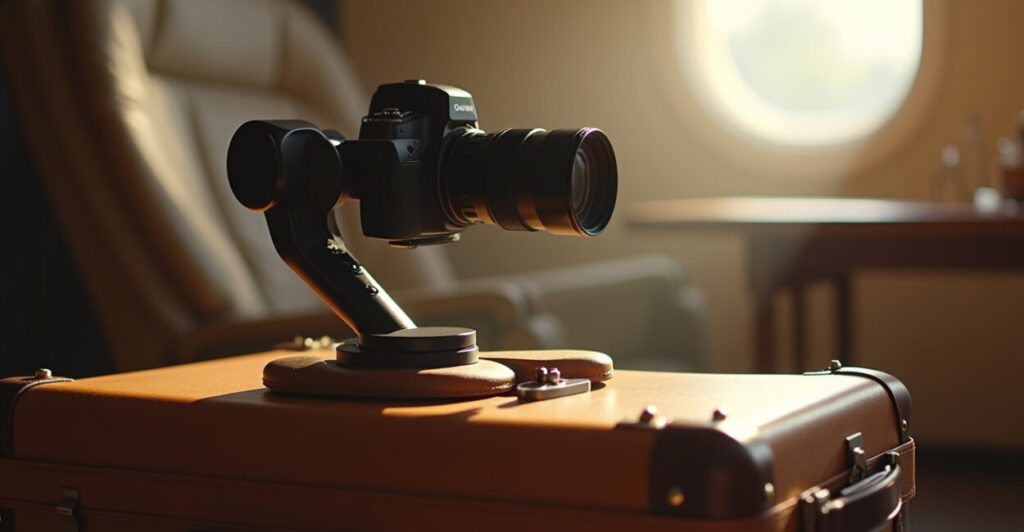
Foldability: Design Tricks That Make a Gimbal Travel-friendly
Not all folding mechanisms are equal. Some gimbals collapse neatly into a compact cylinder. Others require awkward disassembly. The best systems fold with motors locked and no rebalancing required.
Key design ideas to watch for:
- Locking pins vs. friction latches — pins are more secure in flight.
- Quick-release plates that dock without tools.
- Removable handles that become mini-tripods.
There’s a surprising trade-off: extreme compactness can limit hand comfort. If you shoot long takes, test the grip. For official travel rules, the TSA lists battery and carry-on size guidance on its site, which helps plan your kit for domestic flights: TSA carry-on and battery rules.
Which Compact Gimbals Still Tame Larger Mirrorless Cameras
Some compact gimbals handle surprisingly heavy mirrorless setups. Models from major makers now support full-frame bodies with medium zooms. Look for advertised payloads of 2.5–4 kg and user videos showing real rigs.
Examples that commonly work for larger mirrorless cameras:
- Mid-tier units with high-torque motors (2.5–3.5 kg advertised).
- Pro compact models with extended counterweights or arm extensions.
- Hybrid stabilizers that accept small follow-focus modules.
Always balance with your actual lens attached. A Sony a7IV plus a 24-70mm is a different challenge than a crop body with a prime. Real payload performance is best verified in hands-on reviews from institutions or pros you trust.
The Mechanism Nobody Explains (but Should): Motor Torque Vs. Real-world Balance
Torque is the practical number that predicts stability, not marketing load limits. A gimbal with higher torque motors resists inertia from long lenses and heavy batteries better. That means fewer motor strain warnings and longer, smoother pans.
Expectation vs. reality: manufacturers list max payload, but that often assumes perfect center of gravity. In real life, lens extension, battery grip, and mic mounts shift balance. The result: a gimbal rated for 3 kg might struggle with a 2.7 kg rig if weight is far forward.
Common Mistakes to Avoid When Choosing or Packing Compact Gimbals
Four errors wreck shoots faster than rain or missed flights.
- Buying solely by weight rating without testing balance.
- Assuming foldable equals durable — folding joints are wear points.
- Bringing non-approved batteries in checked luggage.
- Neglecting counterweights or compatible quick-release plates.
One small, often-overlooked fix: carry a spare small battery and a wrist strap. Those two items save more shoots than an extra tripod leg.

How Compact Gimbals Change Your Workflow — A Short Travel Scene
The real benefit is how they change decisions on the road. Imagine landing in Lisbon, pulling the gimbal from your carry-on in two minutes, and walking straight to a sunset alley. You skip the rental car, skip complicated setups, and get the golden-hour shot.
A quick anecdote: on a business trip, a director swapped a full rig for a compact gimbal. They filmed a five-minute continuous walk through a market, and the director called the result “the best spontaneous sequence we’ve shot all year.” The camera choice didn’t limit the idea; the gimbal did the heavy lifting.
Compact gimbals are not magic — they’re choices. Choose models with honest torque specs, smart folding, and solid mounts. Pack batteries and plates like you mean it, and you’ll turn carry-on space into a mobile studio.
Ready to trim your bag without trimming your professionalism? Try a field test: balance your heaviest mirrorless kit on a compact gimbal and walk a block. If your footage stays smooth and your hands don’t ache, you’ve found a keeper.
How Much Payload Can a Compact Gimbal Realistically Handle?
Most compact gimbals realistically handle 2.5 to 3.5 kg in everyday use, but that number depends on balance and lens length. Manufacturers often state a maximum payload that assumes perfect balance and minimal accessories. In real shoots, battery grips, mics, and lens hoods add forward weight and stress motors. Always test your exact camera+lens setup before a job. If you frequently use longer zooms or EVF extenders, choose a gimbal with higher torque margins to avoid overheating and drift.
Are Compact Gimbals Allowed in Carry-on Luggage on International Flights?
Compact gimbals are generally allowed in carry-on bags, but battery rules differ by airline and country. Lithium-ion batteries usually must be in your carry-on and under a certain watt-hour rating. Some carriers limit spare batteries per passenger. Check airline policies before travel and pack batteries in protective cases. For authoritative battery and baggage guidance consult official transportation sites and regulations, since they update rules periodically and enforcement can vary by airport and carrier.
Do Compact Gimbals Sacrifice Stabilization Quality Compared to Larger Models?
Not necessarily. Modern compact gimbals use stronger motors and better algorithms, so stabilization can rival larger models for most handheld shots. The main trade-offs are runtime, cooling, and torque reserve. Larger gimbals may handle extreme payloads and extended takes better, but for run-and-gun filmmaking, compact models deliver professional results. If you shoot long takes with heavy lenses, consider a higher-torque compact or use counterweights. For travel and documentary work, the convenience usually outweighs marginal stability differences.
What Accessories Matter Most for Using a Compact Gimbal with a Mirrorless Camera?
The right accessories make a compact gimbal practical: a quality quick-release plate, small counterweights, a handheld mini tripod, and spare batteries. A lightweight external monitor or articulating arm helps framing without stressing the gimbal. Also consider a padded carry case that organizes plates and cables. Don’t skip a wrist strap or leash — a dropped gimbal is an expensive mistake. Prioritize small items that improve balance and reduce reconfiguration time between shots.
How Do I Choose Between Competing Compact Gimbal Models?
Compare torque ratings, folding design, and real-world user tests instead of marketing photos. Look for CNC construction, sealed motors, and robust axis locks. Test how each gimbal handles your actual camera+lens combo, including accessories. Check battery runtime and spare battery options. Read reviews from trusted outlets and university film departments that test durability. Finally, consider service and firmware update frequency; a responsive company often turns a good purchase into a long-term tool.