

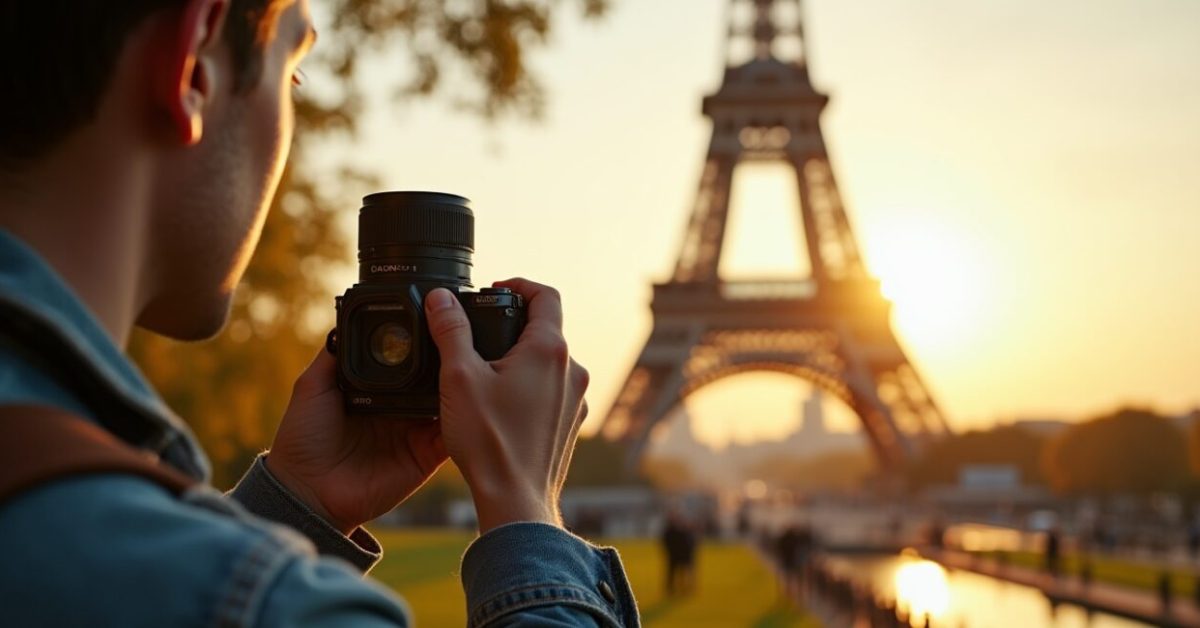

The first scroll-stopping shot hits before you realize why: an unexpected object in the foreground, perfectly placed, and the Eiffel framed like a punctuation mark. Eiffel foregrounds are dominating feeds because they turn a familiar monument into a fresh story — and you can reproduce the effect in a single walk around Champ de Mars.
Below I break down the composition tricks, the gear and timing that actually work, and the quick edits that make these images pop on Instagram and Discover. Read the parts that matter to you first — there’s a neat before/after you can copy in minutes.
Why a Foreground Can Triple Engagement (and How to Think Like an Editor)
A disruptive foreground forces the eye and the algorithm to pause. On a feed full of flat tourist snaps, a deliberate foreground — a hand holding a vintage camera, a lamppost sliced in half, a splash of color from a market umbrella — creates depth and curiosity. Think of it as a headline: it promises a story. Use contrast (color, texture, scale) to make the foreground read instantly against the iconic silhouette of the tower.
The Compositional Rule Most Creators Ignore (and the One That Wins)
Forget strict centered symmetry — use layered thirds. Place the Eiffel on an intersecting third, but introduce a foreground object on a nearer third plane to create tension. A surprising comparison: expectation = Eiffel dead center; reality = Eiffel offset with an oversized foreground object covering 20–40% of frame. That overlap creates a push/pull that keeps viewers looking longer.
Best Lenses and Camera Setups for Viral Eiffel Foregrounds
Prime lenses between 35mm and 85mm are the sweet spot. A 35mm gives context and dramatic foregrounds with environmental storytelling; a 50mm isolates subject and compresses the tower; an 85mm lets you blur foregrounds into painterly shapes. If you shoot on phone, use portrait mode and step closer to the foreground element. Keep aperture wide (f/1.8–f/4) for separation; use a small tripod for dusk exposures.
Timing and Light: When the Foreground Becomes Magic
Golden hour is obvious — blue hour is where the mood lives. Shoot 30 minutes before sunset for warm edge light on your foreground and silhouette on the tower. For a moodier feed, blue hour gives neon, reflections, and a clean sky that makes foreground bokeh glow. Also try early morning: fewer tourists, cleaner compositions, and soft side light that sculpts texture.
Simple Edits That Recreate the Trending Look (no Photoshop Degree Required)
A fast recipe: contrast + selective clarity + color pop. Work in this order: crop for stronger overlap, increase midtone contrast, add +10–20 clarity selectively on the foreground, reduce highlights on the sky, and push a color split (warm highlights, cool shadows). Use a vignette to guide the eye. The goal is not hyperrealism but a believable spotlight on the foreground while preserving the tower’s shape.
Common Mistakes People Make (and What to Avoid)
The biggest error is treating the foreground as decoration instead of a story element. Typical pitfalls:
- Too-large foreground that blocks the tower entirely.
- Foreground and tower sharing the same color range, creating camouflage.
- Using extreme wide-angle without correcting distortion, which makes the tower bow oddly.
- Shooting at noon with harsh shadows that flatten depth.
The Micro-story That Sells a Shot (a 3-line Blueprint You Can Use)
Hook: a human element in the foreground implies a narrative the viewer wants to finish. I was on a bench, rain-slick cobbles, a red umbrella in hand — the umbrella’s tip pointed at the Eiffel like a subtitle. Viewers guessed the rest: a rainy rendezvous, a delayed train, a stolen moment. Use a single, clear prop that suggests motion or emotion; that tiny narrative leap is what makes people tap and save.
Two reliable sources back up why visual novelty matters for feed engagement: brain studies on visual salience show we respond to unexpected contrasts, and platform reports emphasize retention tied to curiosity-driven images. For design context, see research at NCBI and creative trend analysis from a major media portal like The New York Times.
Try this on your next walk: pick one prop, choose a lens, shoot at dusk, and edit with the three-step recipe. If it doesn’t stop a scroll, you learned exactly what not to do — and that’s half the battle.
How Do I Position a Foreground Object Without Blocking the Eiffel?
Place the foreground so it partially overlaps but still allows the Eiffel’s shape to read. Aim for the foreground to occupy roughly 20–40% of the frame; use depth (foreground close, Eiffel midground, sky background) to keep separation. If the object is large, step back and use a longer focal length to compress the scene. Adjust your exposure to preserve tower detail, and rely on shape and contrast rather than full visibility of the monument to sell the composition.
What Phone Settings Mimic a 50mm Look for Eiffel Foregrounds?
Use portrait mode if available and move physically closer to the foreground element while keeping the Eiffel farther away — that approximates a 50mm compression. Lock focus on the foreground and reduce exposure slightly to preserve highlights. If your phone allows manual controls, set ISO low, shutter speed fast enough to avoid shake, and use the widest aperture equivalent. Post-edit: add slight clarity to the foreground and a subtle vignette to replicate depth from a prime lens.
Can I Create This Look at Midday When Light is Harsh?
Yes — but you’ll need to control contrast. Seek shade to avoid direct sun on faces, use the foreground to block harsh highlights, and expose for the sky to prevent blown areas. Convert to black-and-white if color is chaotic, or use split-tone edits to separate foreground and tower hues. Reflectors or a simple diffuser can soften light on a subject, and graduated exposure adjustments in post help balance a blown sky with detailed foregrounds.
Which Props Work Best and Which Should I Avoid?
Best props are simple, high-contrast, and suggestive: umbrellas, colorful scarves, vintage cameras, suitcases, or market fruit baskets. Avoid props that mimic the tower’s lines or color (metallic grey objects) which can create visual confusion. Also skip overly busy items that compete with the scene; the prop should make a single, strong statement. Props that imply motion — a scarf mid-toss, a hand reaching — tend to perform better than static, featureless objects.

How Do I Caption These Images to Maximize Clicks on Discover?
Write captions that complete the tiny narrative implied by your foreground: use a short, provocative line plus a specific detail (time, place, sensory word). Example: “Sunset, one red umbrella, and a city that forgives late arrivals.” Keep it personal and concrete; tie the visual surprise to an emotion or action. Pairing a caption with a subtle location tag boosts relevance on platforms and helps Discover match the image to curious readers.