
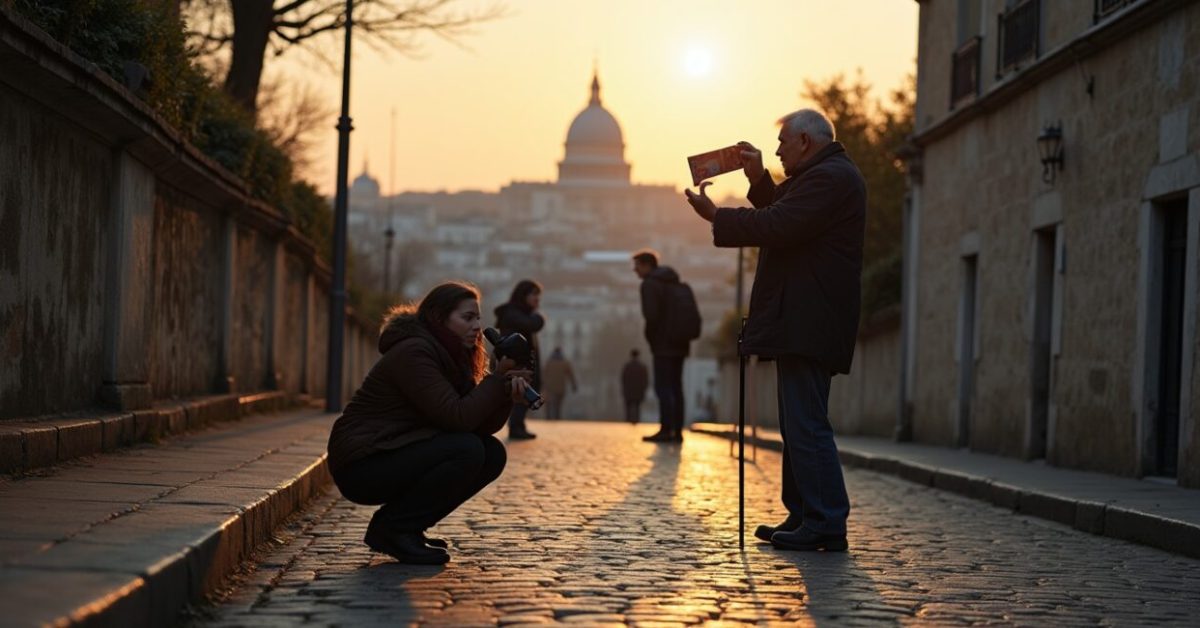

The line of people on Rue du Chevalier de la Barre didn’t used to spark arguments—now strangers argue over angles like it’s a sport. In the past month Montmartre views have become a flashpoint online: photographers praising the crisp new framing while locals and purists say the perspective flattens the hill’s soul. This is about more than aesthetics; it’s about who gets to frame Paris for the world.
Why Photographers Swear by the New Montmartre Views
The new framings emphasize contrast and negative space in ways older postcards never did. Shoot at dawn from the stepped alleys and you get a skyline that reads like a minimalist painting: Sacré‑Cœur jutting out of muted rooftops, a clean separation between subject and background. Photographers love that because it simplifies storytelling—one strong silhouette, one emotion. It’s faster to process, easier to share, and it plays incredibly well on mobile feeds where clutter loses.
Why Purists Push Back: What’s Being Lost
Critics argue those same framings trade context for clicks. The problem isn’t the Sacré‑Cœur itself; it’s what disappears around it—the street vendors, the worn plaster, the perspective that hinted at a lived-in neighborhood. When you crop Montmartre into a graphic icon, you risk turning a layered quarter into décor. That irritates local historians and longtime residents who see an erasure of texture and memory in favor of a “clean” online aesthetic.
The Vantage Points That Suddenly Went Viral
Three spots exploded in popularity almost overnight: the Rue de l’Abreuvoir overlook, the steps near Le Consulat, and the narrow choke-point on Rue Pavée. Each offers a slightly different relationship to the basilica—one frames it behind ivy, another elevates a single rooftop line, a third isolates a silhouette against sky. Knowing which angle went viral helps you understand why feeds look so similar now: they all prioritize a bold foreground element with Sacré‑Cœur as punctuation.
The Mechanism Most People Don’t Explain: Why an Angle Becomes “the” Angle
There’s a pattern: an influential photographer posts an image, aesthetic accounts reshare, and the angle becomes a template. Platforms reward recognizability; similar images get grouped, boosting reach. It’s a social-algorithmic feedback loop. Compare expectation vs. reality: you expect variety in a place like Montmartre, but the reality is homogeneity—because the metrics favor the same clean geometry. That loop is the real force shaping what people now call “Montmartre views.”
How to Shoot Portraits That Stand Out Against the Skyline
Make the subject fight for attention, don’t let the skyline dominate by default. Practical moves:
- Use a wider aperture to blur the basilica slightly—create depth.
- Shoot backlit at golden hour so the model becomes a rim-lit subject.
- Introduce a foreground prop or gesture to break the silhouette monotony.
- Vary scale: place the subject off-center and closer to camera to reclaim spatial storytelling.
Common Mistakes (what to Avoid) When Framing Montmartre Views
People repeat the same errors: over‑cropping the neighborhood, shooting only at head height, relying on preset filters, ignoring local life, and forcing symmetry. Avoid these traps:
- Don’t flatten the scene—include foreground context.
- Don’t shoot only at peak tourist hours when spaces are cluttered.
- Don’t default to the viral spot without asking what you want to say.
A Short Scene That Explains Everything—and What to Do Instead
She arrived with a vintage coat and a film camera. Instead of joining the cluster at the famous railing, she stepped into a side alley, let a laundromat sign frame the left edge, and asked her friend to laugh mid‑sentence. The resulting shot had grit, motion, and Sacré‑Cœur as a whisper—more Paris than postcard. That’s the comparison that matters: viral expectation (perfect stillness) versus lived reality (noise, smell, movement). Choose the latter and your photos will stop blending in.
For readers who want data-driven context, note how digital attention shapes places: similar phenomena are documented in urban tourism studies and platform-economy research. See analysis from urban researchers at Brookings Institution and visual culture insights from university archives like UC Irvine Humanities.
Montmartre views are a mirror showing how modern attention works: they can either flatten a neighborhood into an icon or reveal a new, honest layer—depending on the photographer’s choices. Next time you lift the camera, ask whether you’re copying the feed or composing a claim on the place.
Is It Disrespectful to Photograph Montmartre in a Stylized Way?
Stylized photos aren’t inherently disrespectful, but respect depends on context and intent. If your image erases people, local businesses, or the everyday textures that define Montmartre, it contributes to a sanitized vision that benefits tourist aesthetics over residents. Conversely, a stylized shot that amplifies a local story or highlights craftsmanship can be celebratory. The ethical line is about representation: does your photo add to the neighborhood’s narrative or replace it with a flat, exportable image?
Which Times of Day Give the Most Distinctive Montmartre Views?
Golden hour and the blue hour are the obvious winners for color and atmosphere, but dawn has a different virtue: solitude. Early mornings strip away tourist clutter and capture the neighborhood’s true tempo—deliveries, café prep, and workers arriving. Midday can be useful for high-contrast, graphic rooftop shots that emphasize geometry. The time you choose should serve your intent: drama (golden hour), quiet intimacy (dawn), or stark composition (midday).
How Can I Photograph Montmartre Without Copying Viral Angles?
Start by changing your relationship to the place: walk away from the hotspots and spend time in side streets, markets, and stairwells. Use gestures, props, or movement to create a focal point that’s not the basilica. Try unconventional lenses—tilt-shift or a 50mm close focus—to alter perspective. Collaborate with locals for authenticity, and favor imperfect light or weather; those conditions make images singular, not repeatable templates that look the same on every feed.
Are There Legal or Ethical Rules for Shooting in Montmartre?
Photography in public Paris spaces is generally allowed, but be mindful of privacy and commercial use. If you’re photographing identifiable people for commercial purposes, obtain model releases. Respect private property signs and do not obstruct businesses or sidewalks. Ethically, prioritize consent when your subject is a resident or vendor. When in doubt, ask; a quick conversation can lead to better images and preserves trust between photographers and the community they photograph.
What Gear and Settings Work Best to Capture Unique Skyline Portraits?
You don’t need the latest camera to stand out—intent beats specs. A fast prime (35mm or 50mm) with a wide aperture (f/1.8–f/2.8) helps separate subject from skyline. Use subtle backlighting for rim light, and consider fill light with a reflector or phone flash for balance. For composition, shoot slightly off-center and vary focal lengths. If you want texture in the background, stop down a bit; to isolate your subject, open up the aperture. Experimentation yields signature looks.