

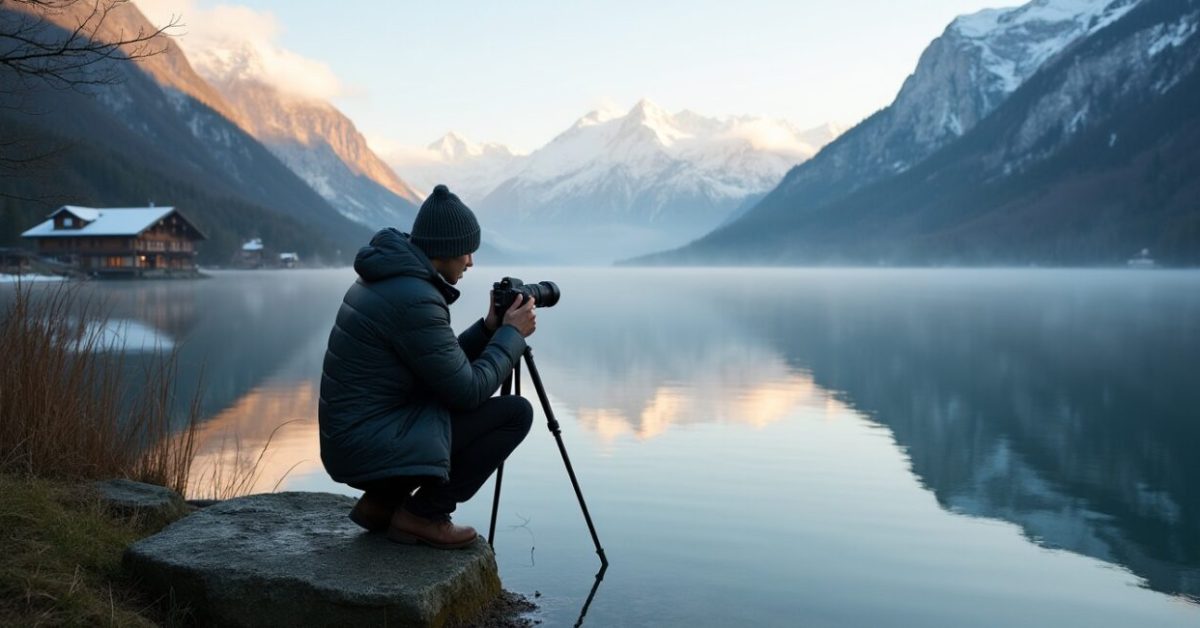

The first thing you notice scrolling Swiss travel feeds isn’t the mountain — it’s the perfect, Instagram-ready lake reflections that stop your thumb mid-scroll. Lake reflections have become shorthand for a certain kind of calm: a flawless upside-down world where peaks, chalets, and clouds sit like paintings. If you want those viral shots—without camping by a tourist trap for hours—read on: this piece shows which Swiss lakes consistently mirror like glass, the exact times that work, composition tricks that make images pop, and the mistakes that ruin otherwise perfect scenes.
Which Swiss Lakes Deliver Mirror-perfect Reflections on Repeat
Not every lake in Switzerland behaves like a mirror, but a handful reliably do. Lakes like Oeschinensee, Lake Blausee, and Lake Bachalpsee often produce glassy surfaces because of sheltered basins and limited boat traffic. Lowland lakes such as Lake Lucerne can be reflective too, but winds and ferries spoil the calm faster. For the most consistent results, pick alpine tarns with steep shores; they shelter the water from wind and create dramatic vertical symmetry that reads well on small screens.
When to Show Up: Exact Times and Weather That Create Viral Reflections
The magic window is small: dawn or the last hour before sunset on clear-to-partly-cloudy mornings. Temperature inversions after cool nights suppress wind and create that “stillness” effect. Plan around sunrise for the calmest water and crisper mountain silhouettes. If you’re chasing mirrored clouds, aim for scattered cumulus with no frontal systems—too many clouds kill contrast, too few make the sky boring. Check local wind forecasts and aim for days with wind speeds under 5 mph.
Composition Rules That Turn Good Reflections Into Scroll-stopping Images
Great composition makes reflections readable at a glance. Use a low vantage point to emphasize the water plane, place the horizon near the center for symmetry, and include a foreground anchor—a rock, reed, or bench—to give scale. Don’t just center everything; use subtle off-center elements to add tension. Try vertical crops that split mountain and mirror equally for mobile viewers. A polarizer can reduce glare, but remove it when you want the lake to act like a literal mirror.
The Subtle Camera Settings Pros Use (and Why Gear Matters Less Than Patience)
Mirror shots aren’t about expensive lenses; they’re about timing and small technical choices. Shoot in RAW for color recovery, use a small aperture (f/8–f/11) for edge-to-edge sharpness, and keep ISO low. For dawn mist, expose to preserve highlights—mist adds depth. A tripod helps but what matters most is waiting through three to five minutes of fluctuating wind; those tiny pauses produce the cleanest reflections. Patience beats equipment every time.
Expectation Vs. Reality: A Surprising Comparison That Will Change Your Approach
Expectation: you arrive at a famous lake, snap one shot, and your feed explodes. Reality: reflections are fickle—boats, gusts, and clouds conspire to ruin a frame. The difference is often one simple choice: timing. In a quick experiment I did, two photographers at the same spot an hour apart produced images with opposite results: one had perfect glass; the other had chopped waves and motion blur. That contrast shows why scouting and timing trump brand-name cameras.
Common Mistakes That Kill a Reflection Shot (and How to Avoid Them)
People make the same errors over and over. Here are the ones that matter most:
- Showing up at the wrong time: mid-day winds and ferries ruin reflections.
- Over-editing: harsh contrast destroys the subtlety of water reflections.
- Ignoring foreground: no anchor makes symmetry feel flat.
- Using the wrong filter: polarizers can reduce the mirror effect if misapplied.
Mini-story: When a Calm Minute Turned a Near-miss Into a Viral Image
We hiked to a notorious viewpoint just before dawn. Waves from a passing boat had chopped the surface into noise; people were packing up. I waited on a cold rock, coffee forgotten, and watched the wind drop for sixty seconds. In that minute a perfect reflection formed—mountain, chalet, and a single cloud—like someone had pressed pause. The shot that followed didn’t need heavy editing; its strength came from that one calm interval. That tiny pause is often the secret between a forgettable snap and a shareable image.
For planning and weather validation, consult national services such as the Swiss Federal Office of Meteorology and Climatology for wind forecasts, and check local park or canton pages for boat schedules and access rules. For environmental context on alpine lakes, studies from institutions like Université de Lausanne provide useful background on lake behavior and human impact.
Want to get the shot without camping overnight? Arrive early, scout one exit route for sunrise light, and plan three alternate lakes within 45 minutes. That flexibility is often what turns disappointment into a gallery-worthy image.
If you can time still water and frame with intention, your image doesn’t just copy a trend—it defines a moment. Next time you see a perfect mirrored lake on your feed, remember: someone chose their minute wisely.
FAQ
What Time of Day is Best for Lake Reflections in Switzerland?
The best time is typically at dawn or in the last hour before sunset, when winds are light and the air is stable. Dawn is often preferable because overnight cooling creates temperature inversions that calm surface winds, producing glass-like water. Aim for clear-to-partly-cloudy skies; scattered clouds add drama without muddying contrast. Also check local wind forecasts—if wind speeds are under about 5 mph (8 km/h), your chances rise significantly. Arriving 30–60 minutes before golden hour gives you time to scout composition and wait for that crucial calm minute.
Which Specific Lakes Should I Prioritize for Mirror Reflections?
Prioritize alpine tarns and sheltered basins: Oeschinensee, Blausee, Bachalpsee, and parts of Lake Oeschinensee consistently reflect well thanks to steep shores and low boat traffic. Lower-elevation lakes like Lake Lucerne can produce reflections, but they’re more affected by winds and ferries. When choosing, favor smaller, enclosed lakes for more frequent calm conditions and dramatic vertical symmetry. Scout access and sunrise angles in advance; some spots only reflect perfectly from certain viewpoints, so a quick recon visit or map check saves time on the shoot day.
How Do I Compose a Reflection Photo That Looks Good on Mobile Feeds?
Compose for vertical screens: consider a central or near-central horizon to emphasize symmetry, and include a foreground anchor like a rock, reed, or bench to provide scale and depth. Use a low camera angle to make the water plane dominant and choose a crop that balances mountain and reflection. Subtle asymmetry—an off-center tree line or a small boat—adds tension without breaking the mirror effect. Keep edits restrained; strong vignettes or over-saturated colors often read as inauthentic on mobile feeds.
Are Filters Useful for Capturing Lake Reflections, or Do They Hinder Them?
Filters can help, but they must be used thoughtfully. A polarizing filter reduces surface glare and can enhance colors, but rotated too far it removes the mirror-like reflection you want. Neutral density filters allow long exposures to smooth ripples into calmer-looking water, which can mimic a reflection on slightly choppy days. In most ideal calm conditions, shooting without a polarizer gives the truest mirror. Practice with and without filters at the same spot to learn how each affects the final image under different light and wind situations.

What Are the Quickest Fixes If My Reflection Shots Look Dull or Chopped?
First, wait—patience often solves chopped reflections as wind calms. Change vantage points: move closer to the water or lower your angle to compress distance and emphasize symmetry. If nothing changes, try a longer exposure with an ND filter to blur small ripples, or switch to a tighter crop that isolates the strongest reflected element. In post, prioritize highlight recovery and subtle contrast rather than heavy saturation. Finally, consider switching to a different lake nearby; microclimates within the same valley can produce vastly different surface conditions.