

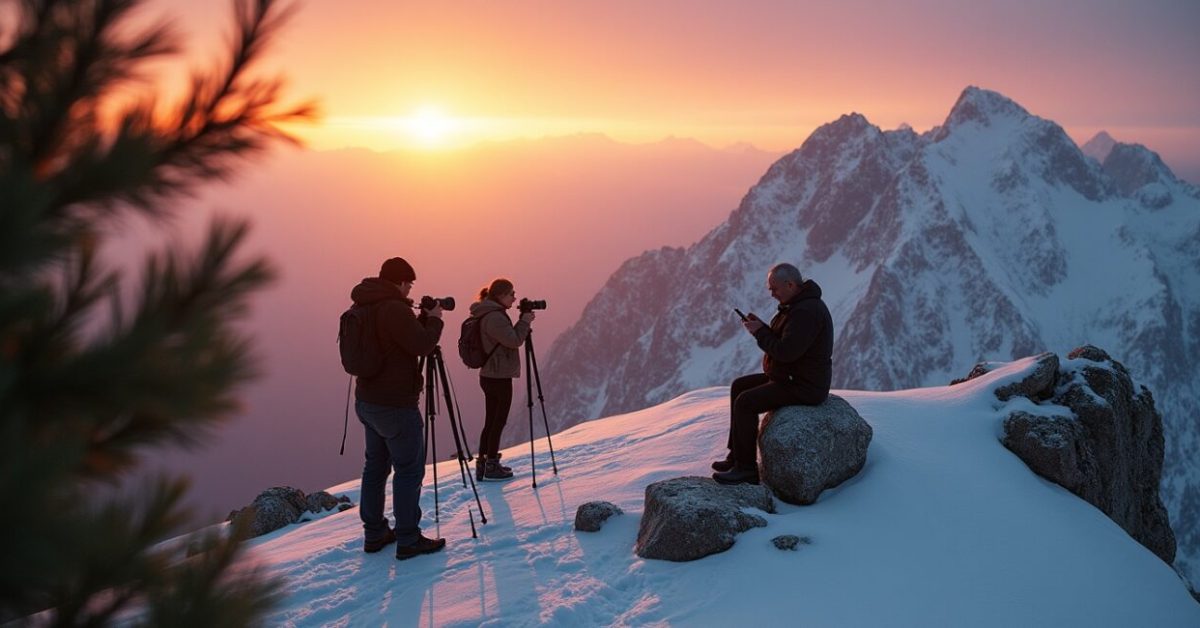

Snow rims of a ridge turn molten copper. A valley fills with an impossible thin light that lasts—then vanishes in minutes. Photographers are calling it the Alpine golden hour, and it’s become the kind of trend that makes people argue loudly in huts, on Instagram threads, and on mountain ridgelines.
Some shots look like fine art. Others look staged, overcooked, or simply timed wrong. The debate isn’t just taste: it’s about technique, ecological impact, and whether chasing those 10–20 minutes actually improves your photography or just makes good pictures look predictable.
Why the Alpine Golden Hour is Sharpening Opinion
Strong light polarizes taste. The Alpine golden hour exaggerates textures—rock faces, seracs, and lichen—as if someone dialed up contrast and saturation. That’s why some photographers call it a gift: natural color grading without heavy post-processing. But others see the trend as a visual shortcut, where context and story are sacrificed for one showy frame.
Beyond aesthetics, there’s social pressure: group shoots timed to the same light, influencers repeating the same frame, and a market that rewards the signature “burning ridge” image. That repetition is what turns a beautiful phenomenon into a polarizing trend.
The Technical Trick That’s Fueling the Controversy
There’s a repeatable technique behind many viral Alpine golden hour images: shoot wide, expose for highlights, and use a graduated filter or multiple exposures to protect midtones. Expose for the highlights—then pull back the shadows in post is the shorthand. That produces luminous skies without crushing foreground detail.
- Wide-angle lens to capture scale.
- Bracketed exposures for HDR blending.
- Gradient filters or careful masking in Lightroom/Photoshop.
When done transparently, it’s craftsmanship. When done to fake warmth or to hide poor composition, it feels like theater.
When Alpine Golden Hour Actually Improves a Shot
Not every mountain scene benefits. The golden window adds meaning when it ties to a narrative: a shepherd’s trail lit from the side, a glacier edge revealing stratified layers, or a village bell tower highlighted against blue shadow. It improves shots that need drama, texture, or emotional color contrast.
Use it when:
- the light sculpts the subject (faces, ridges, crests);
- the background is simple and benefits from color contrast;
- you can stay and wait—those minutes are earned, not invented.
Expectation Vs. Reality: A Quick Comparison
Expectation: arrive, golden ridge, perfect frame, viral shot. Reality: scrambled hikers, clouds rolling in, exhausted battery, and a 12-minute window of usable light. The before/after comparison shows more than color—it shows intent.
Before: a generic ridge at noon, flat shadows, weak texture. After: side-lit texture, long shadows, warm rim light. But the “after” only wins if composition, foreground interest, and timing were considered beforehand. Otherwise you just made a pretty postcard, not a memorable photograph.
Common Mistakes People Make Chasing the Light
Everyone loves a checklist; here’s what NOT to do.
- Rushing to the popular viewpoint and copying the clichéd angle.
- Shooting only one frame and relying on post to fix exposure mistakes.
- Ignoring safety—wet scree, late descents, and underestimating cold.
- Over-using saturation and clarity sliders until skin tones and rock look unnatural.
- Disturbing fragile alpine flora for a “foreground element.”
Those errors turn a natural gift into a shallow, sometimes harmful exercise.
A Mini-story: The Shot That Changed a Guide’s Mind
He arrived grumpy, expecting yet another Instagram tableau. Clouds hid the sun for most of the hike; the group considered turning back. Ten minutes before the end of the trek the sky broke: a low, honeyed beam hit a mossy scree and a tiny alpine flower—one little subject—but the guide lifted his camera, shot three frames, and smiled. He later said the moment reminded him why timing matters more than trend.
That small moment is the difference between chasing a fad and honoring a fleeting truth in the landscape.
Should You Chase the Alpine Golden Hour Now?
Short answer: yes—if you know why you’re chasing it and you do it responsibly. If your goal is to learn how light shapes form, practice patience and technique. If your goal is a viral image, examine whether the image will add anything new or if it simply copies what’s already abundant online.
Balance practical concerns: weather forecasting, ethical behavior on trails, backup batteries, and leave-no-trace. The light is free; the access cost and environmental impact are not.
For reading on light and landscape perception, see National Geographic’s guide to golden hour photography, and for atmospheric optics background check resources from NOAA on atmospheric scattering.
Final thought: The Alpine golden hour is a tool, not a style police. Used thoughtfully it lifts a photograph into something memorable; used unthinkingly it becomes a predictable trope. Go chase the light—but bring judgment, respect, and a fresh angle.
Is the Alpine Golden Hour Different from a Regular Golden Hour?
The Alpine golden hour shares the same low-sun warmth as any golden hour, but altitude and mountain geometry amplify effects: thinner air, higher contrast between sunlit ridges and shaded valleys, and sharper rim light on snow and rock. These variables make colors more saturated and shadows longer, meaning exposures and white balance need quicker adjustments. In short, it’s the same phenomenon under harsher, more dramatic conditions, which is why photographers often treat alpine shoots as a distinct skill set requiring weather sense and fast technical choices.
What Gear and Settings Work Best for Alpine Golden Hour?
Essential gear: a sturdy tripod, wide-angle lens, neutral density grads or filters, extra batteries, and a compact reflector for close subjects. Settings often include shooting RAW, using low ISO for cleaner shadows, and bracketing exposures for later blending. Fast lenses help with low-light action, but sharpness and depth usually come from aperture balance (f/8–f/11) in landscapes. Preparation beats heroics—pack spares, charge batteries cold drains them faster, and anticipate changing exposure across the scene.
How Do I Find the Best Spots Without Copying Everyone Else?
Start by scouting in person at different times rather than relying only on social media angles. Use topographic maps and apps to check ridge orientations and sun paths; identify unique foregrounds like cairns, streams, or a lone tree. Try approaching from unexpected directions—side valleys or lower slopes—to discover less-seen perspectives. The trick is to combine knowledge of light behavior with curiosity about overlooked elements; that’s how you keep the golden hour from becoming a copied postcard.
Can Golden Hour Techniques Harm Alpine Environments?
Yes—crowds moving off-trail to reach the “perfect” foreground can trample vegetation, disturb nesting birds, and accelerate erosion on fragile alpine soils. Time pressure during short light windows makes these impacts more likely. Responsible photographers practice leave-no-trace, avoid trampling rare plants, and choose durable surfaces for setups. Consider whether you need to step closer for a shot or if compositional choices can preserve the site. Ethical choices protect access for everyone and preserve those moments for future photographers.
When Should I Skip Chasing the Alpine Golden Hour?
Skip it when safety, weather, or storytelling reasons outweigh the aesthetic payoff. If forecasts show unstable clouds or high winds, the light window can be dangerous or nonexistent. If the scene’s narrative depends on diffuse, moody light—storms, fog, or blue hour—forcing golden-hour color can betray the story. Also avoid chasing it if access would threaten fragile terrain or local regulations forbid off-trail movement. Good photography sometimes means choosing the right light—and the right time to walk away.