

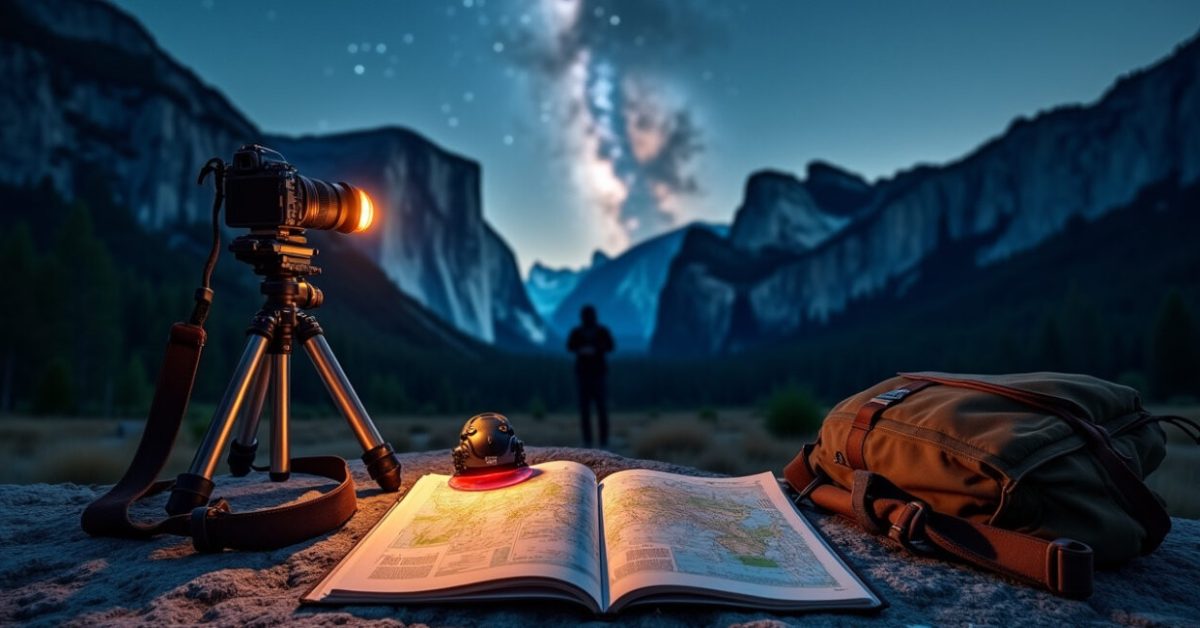

Yosemite photography invites you to capture vast granite monoliths, roaring waterfalls, and infinite night skies. Learn how to shoot star trails near El Capitan or Glacier Point and try a 30s exposure for Milky Way arcs for dramatic, gallery-ready images.
This guide focuses on practical techniques, site choices, and creative tips for Yosemite photography that work for beginners and pros. Expect mobile-first, scannable advice tuned to Google Discover, SEO, UX, and EEAT.
Read on to discover precise camera settings, optimal vistas, safety notes, and compositional approaches to make nightscapes — and daytime masterpieces — that resonate emotionally and technically.
Plan Your Shoot: Timing, Permits, and Weather
Scout nights and moon phases to maximize Milky Way visibility while minimizing light pollution. Yosemite photography needs timing, patience, and local awareness.
Best Months and Moon Phases
Late spring through early fall offers Milky Way cores visible after midnight. Check moon calendars and aim for new moon windows for darkest skies.
Pack for temperature swings: high desert nights can be chilly, so bring layers and a headlamp with red mode to preserve night vision.
Permits, Park Rules, and Safety
Confirm any permit requirements for night operations, tripod use, or commercial photography within Yosemite National Park boundaries to avoid fines.
Stay on trails, register in trailhead logs, and let someone know your route. Wildlife and cliffs demand vigilance during long night shoots.
Essential Gear for Nightscapes and Long Exposures
Bring a sturdy tripod, wide fast lens, and remote release. Yosemite photography benefits from stable support and precise control over exposures.
- Camera: full-frame or APS-C with good high-ISO performance.
- Lenses: 14–24mm or 16–35mm f/2.8 for wide Milky Way arcs.
- Accessories: spare batteries, headlamp, intervalometer.
Tripod and Stabilization Tips
Use a low-center-of-gravity tripod and tighten all locks before a long exposure. Wind on exposed cliffs can ruin a single frame.
Weigh the tripod with a bag or use ground spikes on soft soil to keep stability during 30s and stacked exposures.
Camera Settings and Exposure Basics
Start with manual mode: 30s exposure, wide aperture (f/2.8), ISO 1600–6400. Adjust based on noise and histogram clipping.
For star trails, layer multiple shorter exposures and stack to minimize noise while preserving movement and arc clarity.

Composition Strategies: El Capitan, Glacier Point, and Classic Vistas
Compose with foreground elements—trees, boulders, or reflections—to anchor the Milky Way arcs. Yosemite photography thrives on scale and emotion.
Foreground Selection and Depth
Include recognizable features like El Capitan to give viewers a sense of scale against the starry sky. Use wide-angle distortion intentionally.

Illuminate foreground subtly with low-level flash or warm LED to create separation without overpowering the stars.
Balancing Sky and Land
Use the rule of thirds or a low horizon to emphasize the Milky Way arc. A lower horizon accentuates the celestial sweep and star trails.
Bracket exposures for a blended final image if the foreground requires different exposure than the sky for a seamless composite.
Night Techniques: Star Trails, Milky Way Arcs, and Stacking
To capture star trails near El Capitan or Glacier Point, try 30s exposures to preserve Milky Way arcs while building trails through stacking. Yosemite photography rewards layered techniques.
- Use intervalometer: continuous 30s shots for 30–90 minutes.
- Stack images in software to reduce noise and produce smooth trails.
- Blend a short-exposure sky with a long-exposure foreground for clarity.
Single Long Exposure Vs. Stacked Method
Single long exposures (30+ minutes) create continuous trails but increase noise and sensor heat. Stacking many 30s frames is cleaner.
Stacking also allows removal of satellites and airplanes by using median or dark frame techniques during post-processing.
Recommended Post-processing Workflow
Align and stack star frames in specialized software, then process Luminance and Color separately to preserve Milky Way detail and minimize noise.
Blend foreground exposures using luminosity masks and gentle dodging to maintain a natural, immersive final image.
| Setting | Starting Point | When to Adjust |
|---|---|---|
| Exposure Time | 30s | Shorten if stars trail in wide focal lengths |
| Aperture | f/2.8 | Stop down for sharper stars or brighter foreground |
| ISO | 1600–6400 | Lower if noise unacceptable, raise for darker skies |
Daytime Yosemite Photography: Waterfalls, Light, and Drama
Golden hour transforms Yosemite’s cliffs and waterfalls. Yosemite photography during daylight requires ND filters, compositions, and patience for peak light.
- Arrive early to secure vantage points and compositions.
- Use ND filters for silky waterfall effects at midday.
- Bracket exposures to preserve highlight detail in falls and sky.
- Compose with leading lines to invite viewers into the scene.
Waterfall Techniques and Shutter Control
Use 0.5–2 second exposures for gentle flow, or longer for dreamy silk effects. Tripod and remote shutter help avoid camera shake.
Neutral density filters allow longer exposures in bright light while maintaining appropriate ISO and aperture settings.
Managing Crowds and Timing
Shoot early morning or late afternoon to avoid tourist congestion at popular viewpoints like Tunnel View and Bridalveil Fall.
Patience pays: wait for hikers to move and for changing light to reveal textures on granite and water highlights.
Sharing, Rights, and Publishing Your Yosemite Work
Respect park regulations and other visitors when shooting. When publishing, attribute location responsibly and follow licensing rules. Yosemite photography reaches wide audiences when paired with strong storytelling.
Licensing and Commercial Considerations
For commercial use, verify permit requirements with the National Park Service and obtain model/release forms when people are identifiable.
Credit-location and use of high-res files may require park permissions; consult official resources before selling prints or licensing images.
Promoting Images and Building Portfolio Authority
Use captions to tell stories—time of night, conditions, and emotional intent. Share technical details to demonstrate expertise and build trust.
Submit to reputable outlets, maintain an image metadata habit, and link to authoritative resources such as the park pages.
Conclusion
Yosemite photography blends technical craft with emotional storytelling—capturing star trails near El Capitan or Glacier Point and practicing 30s exposures for Milky Way arcs yields unforgettable images. Plan, respect the park, and iterate.
Return often: each visit reveals new light, moods, and compositions that deepen your connection to Yosemite and sharpen your photographic voice.
Faq — Frequently Asked Questions
How Do I Capture Star Trails Near El Capitan or Glacier Point?
Begin with a sturdy tripod and intervalometer, shooting continuous 30s exposures for 30–90 minutes. Stack images in software to create smooth trails, and blend a short-exposure foreground for clarity. Watch for park rules and safety when positioning near cliff edges at night. Use red-light headlamps and respect wildlife.
What Camera Settings Work Best for Milky Way Arcs in Yosemite Photography?
Use manual mode: 30s shutter, wide aperture (f/2.8), and ISO 1600–6400. Adjust ISO to manage noise while keeping the histogram away from clipping. For wide lenses, test shorter exposures to prevent star trailing. Bracket and stack when possible for best results.
Are Permits Required for Nighttime Photography in Yosemite?
Commercial or organized shoots may require permits from the National Park Service. Personal photography for non-commercial use is generally allowed, but check current park regulations and seasonal restrictions. Always confirm with official sources to avoid fines and ensure compliance.
How Can I Reduce Noise When Stacking Star Images?
Shoot many short exposures at moderate ISO to avoid sensor heating. Use dark frames and calibration frames when stacking, and apply noise reduction during processing. Stacking software averages noise across frames, improving signal-to-noise while preserving star movement and Milky Way detail.
Where Can I Find Reliable Resources for Planning a Yosemite Night Shoot?
Consult the National Park Service Yosemite pages for rules and alerts (NPS Yosemite). Use astronomy tools like Stellarium or NASA resources for Milky Way timing (NASA). Cross-check weather and moon phases before you go.