

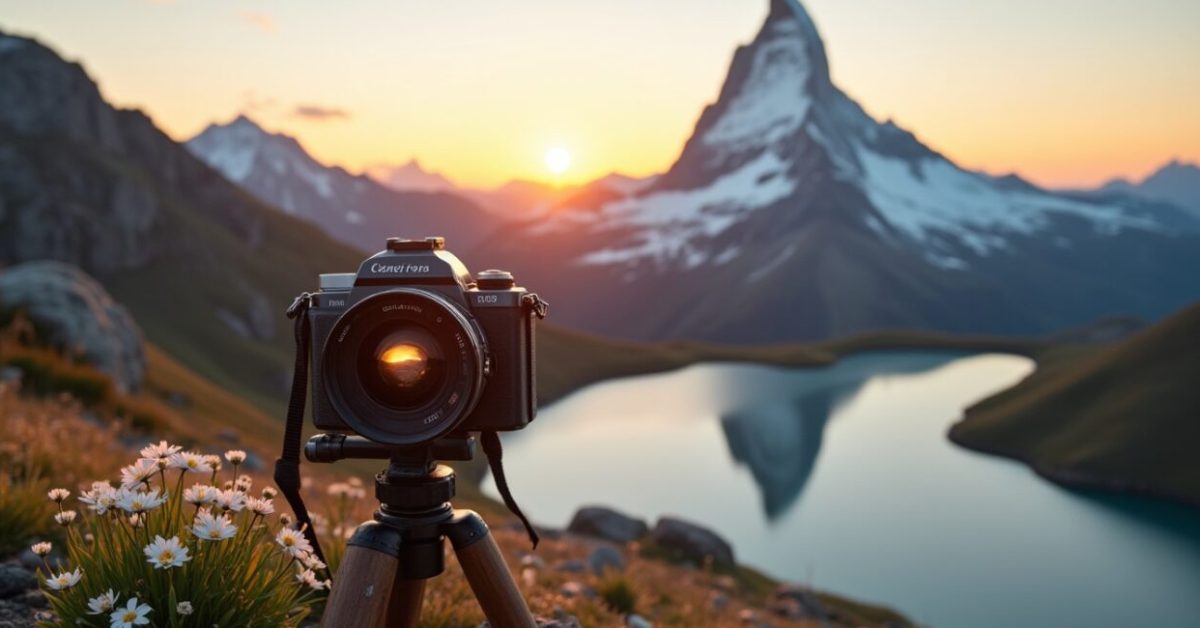

Swiss Alps images capture dramatic peaks, glassy lakes, and intimate village moments that ignite curiosity and wanderlust. This guide shows what makes these photos special, why they matter for Discover, and how to craft shareable work.
Discover fresh 2025 photo ideas in Swiss Alps images, from Matterhorn sunrise shots to Zermatt village compositions. Expect actionable shooting tips, storytelling angles, and mobile-first presentation advice designed for Google Discover optimization and emotional impact.
Matterhorn Sunrise: Capture the Peak’s Golden Moment
Timing and Light Strategy
Plan for first light: arrive 45–60 minutes before sunrise to find foregrounds and set compositions. Swiss Alps images thrive on patient timing and layered light.
Use live histogram and expose for highlights to retain sunrise color. Bracket exposures for HDR when dynamic range overwhelms your sensor.
Framing and Foreground Choices
Choose foregrounds like ridges, alpine flowers, or a reflective lake to add depth and scale to the Matterhorn composition. Move low and experiment with angles.
Include human silhouettes or a hut to emphasize scale. These small elements turn Swiss Alps images into emotional narratives rather than pure landscapes.
Zermatt Village Compositions and Storytelling
Architecture and Alleyway Perspectives
Use narrow streets and timber chalets to frame mountain views. Zermatt compositions turn familiar Swiss Alps images into intimate, local stories.
Balance warm window light with mountain cool tones to create mood. Capture candid residents or skiers for authentic context that engages viewers.
Market Moments and Seasonal Events
Photograph markets, festivals, and après-ski life to add culture to your Swiss Alps images. These moments create emotion and shareability on Discover feeds.
Focus on expressions and small details—hot chocolate steam, patterned mittens—to connect audiences to place and season.
- Scout: Walk the village at golden hour for soft light.
- Blend: Combine wide environmental shots with tight details.
- Respect: Ask permission for portraits to maintain trust.

Alpine Lakes and Reflections: Mirror the Mountains
Best Lakes and Access Tips
Select lakes like Lake Stellisee or Oeschinen for classic reflections. Approach quietly and test angles to avoid ripples that spoil perfect mirrors.
Bring a polarizer to control glare and deepen blues. Swiss Alps images with reflections often perform strongly on mobile screens when composed tightly.
Compositional Techniques for Reflections
Use the rule of thirds with the horizon low or central depending on symmetry. Symmetrical frames amplify emotional calm in Swiss Alps images.
Include leading lines—rocks or shore paths—to guide the viewer’s gaze from foreground reflection to distant peaks.
Seasons and Weather: Creative Opportunities Table
Seasonal Mood and Gear Choices
Master seasonal changes: spring blooms, summer trails, autumn colors, winter snows—all shift palette and gear needs. Adapt ISO and lens choices accordingly.

For snow scenes, expose slightly brighter to avoid gray tones. Swiss Alps images in winter require battery care and layered clothing for long compositions.
Weather-driven Drama
Storms, clouds, and clearing skies create contrast and drama. Embrace volatile weather as a storytelling tool for unforgettable Swiss Alps images.
Use telephoto compression in mixed weather to highlight jagged ridgelines and layered clouds behind peaks.
| Season | Best Time | Camera Settings | Creative Tip |
|---|---|---|---|
| Spring | Late April–June | ISO 100–400, f/8–11 | Include wildflowers for foreground interest |
| Summer | July–August | ISO 100, f/5.6–11 | Shoot golden hour for softer light |
| Autumn | September–October | ISO 100–200, f/8 | Use warm white balance to enhance colors |
| Winter | December–March | ISO 100–800, f/8–16 | Protect gear and brighten exposure slightly |

Camera Gear, Settings, and Practical Tips
Essential Lenses and Accessories
Bring a wide-angle for vistas and a telephoto for compressed mountain scenes. A sturdy tripod and polarizer are essential for sharp Swiss Alps images.
Pack extra batteries and weather protection—cold drains power fast, and sudden showers are common in alpine microclimates.
Settings to Maximize Sharpness and Detail
Shoot RAW for maximum editing flexibility and set base ISO when possible. Use aperture between f/8 and f/11 for optimal landscape sharpness.
Activate mirror lock or use electronic shutter where available. Focus-stack distant foregrounds with careful overlay to improve depth.
- Scout location early for best vantage points.
- Set up tripod and compose low for strong foregrounds.
- Meter the scene and bracket exposures if needed.
- Shoot multiple focal lengths to tell varied stories.
- Review images on-camera and adjust composition.
Composition Tricks and Visual Storytelling
Use of Scale and Human Elements
Add a hiker, chalet, or skier to define scale and create emotional connection. People make Swiss Alps images feel relatable and alive.
Position subjects on thirds and allow negative space toward the mountain peak to guide attention and convey grandeur.
Color, Contrast, and Visual Flow
Balance warm and cool tones to create emotional contrast. Use natural leading lines like ridgelines or rivers to control the viewer’s journey across the frame.
Limit clutter in the scene; simplicity often increases impact. Emphasize a single subject with shallow depth or selective focus when appropriate.
Post-processing, Sharing, and Google Discover Optimization
Editing Workflow for Emotional Impact
Start with basic exposure and color corrections, then enhance contrast and clarity selectively. Emphasize natural tones to preserve authenticity in Swiss Alps images.
Crop for mobile-first formats and test thumbnail legibility. Discover favors striking visuals that read well on small screens.
Metadata, Captions, and Platform Strategy
Add descriptive captions with location and emotional hooks to boost EEAT. Include alt text and structured metadata to improve discoverability for Swiss Alps images.
Share to social platforms with geotags and short narratives. Link back to authoritative sources like Swiss tourism sites for credibility.
- Swiss Tourism Official Site — planning and local rules.
- National Geographic — inspiration and standards for landscape storytelling.
- Lonely Planet Switzerland — travel context and access tips.
Conclusion: Make Your Swiss Alps Images Unforgettable
Swiss Alps images offer endless opportunity to blend technical skill with human stories. Return to the Matterhorn sunrise hook: patient timing and meaningful foregrounds turn good photos into memorable discoveries.
Use these ideas—composition, seasonal planning, and Discover-focused edits—to create images that resonate emotionally and perform strongly on mobile feeds.
Faq
What Camera Settings Are Best for Sunrise Photos of the Matterhorn?
The ideal sunrise settings start with a low ISO (100–200) for minimal noise, aperture around f/8–11 for depth, and shutter speed adjusted to exposure. Bracket shots for HDR to capture dynamic range. Use a tripod and remote release to avoid shake, and check the histogram to protect highlights while enhancing shadow detail.
When is the Best Season to Photograph Alpine Lakes for Reflections?
Late spring through early autumn often provides calm mornings and clear skies ideal for reflections. Early summer still offers snow-capped peaks mirrored in lakes, while autumn adds warm color contrast. Shoot at dawn or dusk for the smoothest water and most balanced light that enhances reflective Swiss Alps images.
How Can I Protect Gear While Shooting in Extreme Alpine Weather?
Use weather-sealed gear or rain covers, keep batteries warm in inner pockets, and carry silica packs. Layer clothing, use a sturdy tripod, and plan short shooting windows during storms. Regularly wipe moisture from lenses and switch to sealed bags to prevent condensation when moving from cold to warm environments.
What Legal or Ethical Considerations Apply When Photographing Villages Like Zermatt?
Respect private property and local regulations, and seek permission for close portraits. Avoid drone use where restricted; check local drone laws. Be mindful of residents’ privacy and cultural sensitivity, and support the community by acknowledging businesses or individuals you feature in your Swiss Alps images.
How Should I Optimize Images for Google Discover and Social Sharing?
Prioritize striking, high-contrast thumbnails that read on mobile devices, add descriptive titles and captions, and use structured metadata and alt text. Keep pages fast-loading, mobile-responsive, and include engaging storytelling to boost EEAT and click-throughs for Swiss Alps images across Discover feeds.